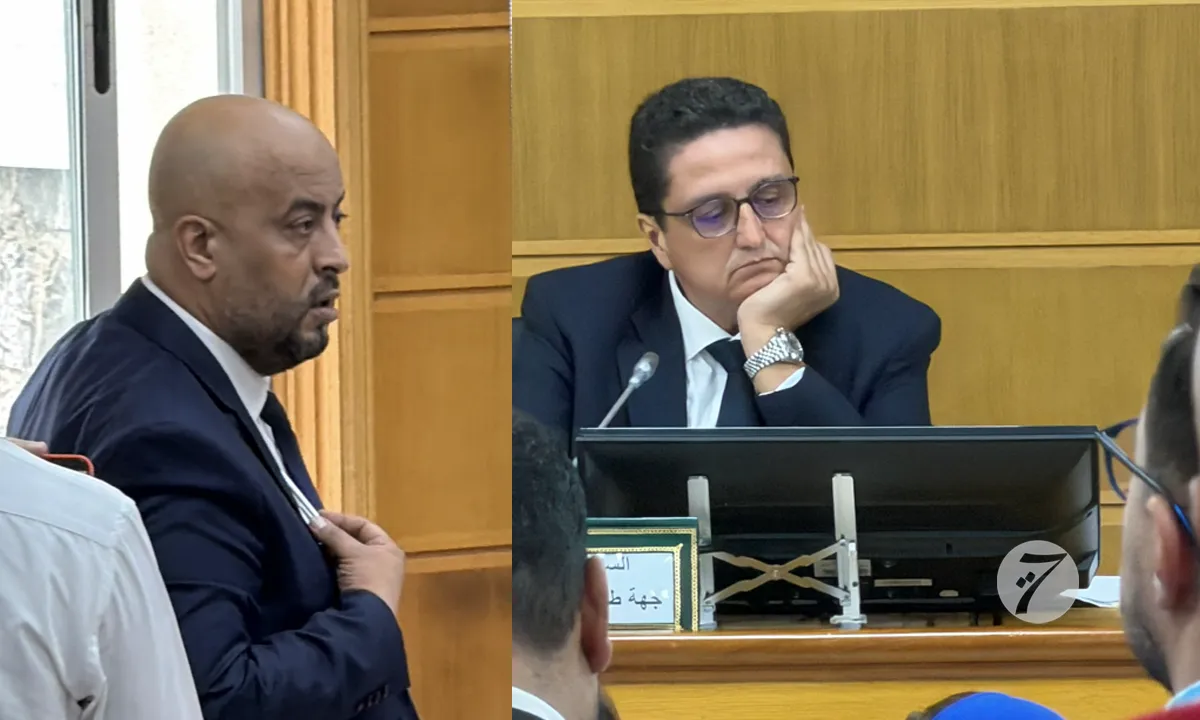
A recent speech by Moroccan councilor Osama Al-Umrani sparked controversy on October 5, as he criticized the management of the Tangier-Tetouan-Al Hoceima regional council. Al-Umrani, deputy head of the education and training committee and a member of the Authenticity and Modernity Party (PAM), expressed concerns over the council's allocation of funds, suggesting that they were distributed based on party affiliation rather than regional needs. He also questioned the effectiveness of the council in achieving its goals.
Al-Umrani's criticism extended beyond the council's management to the PAM itself, accusing the party of not involving its members in decision-making processes. He claimed that meetings of the party's group within the council were not regularly held, and that he, as a member of the party and the council, was unaware of how the party's allocated funds were being used. Al-Umrani called on the council's president, Omar Moro, to disclose the beneficiaries of the PAM's allocated funds.
The councilor expressed disappointment in the council's performance, citing its failure to deliver on promises and achieve significant investments or reductions in unemployment. He also highlighted the growing regional disparities and emphasized the marginalization of the city of Tetouan, which he represents. According to Al-Umrani, Tetouan has not benefited from major projects, and those that were planned have not been implemented.
Al-Umrani likened the regional council to a security institution due to its perceived lack of transparency and tendency to hoard information. He stated that even council members face difficulties in accessing basic information, which hinders their ability to effectively participate in decision-making processes. This opacity, he argued, undermines the council's legitimacy and effectiveness.
The controversy surrounding Al-Umrani's speech highlights the challenges facing the regional council in balancing partisan interests with the needs of local populations. The councilor's call for transparency reflects concerns about the accountability and responsiveness of local governance structures in Morocco. As the country continues to decentralize power and decision-making, the role of regional councils in promoting equitable development and representing local interests is becoming increasingly important.
Al-Umrani's criticism of the council's management and the PAM's internal dynamics has sparked a debate about the party's role in regional politics and its relationship with its members. The party's leadership has yet to respond to Al-Umrani's allegations, but the controversy is likely to have implications for the PAM's internal politics and its standing within the region.
The outcome of this controversy will be closely watched by Moroccans, who are eager to see whether their local governance structures can deliver on promises of transparency, accountability, and equitable development. As the country navigates the complexities of decentralization, the experience of the Tangier-Tetouan-Al Hoceima regional council may serve as a test case for the effectiveness of Morocco's democratic reforms.
Key points
- Moroccan councilor Osama Al-Umrani calls for transparency in allocation of regional funds.