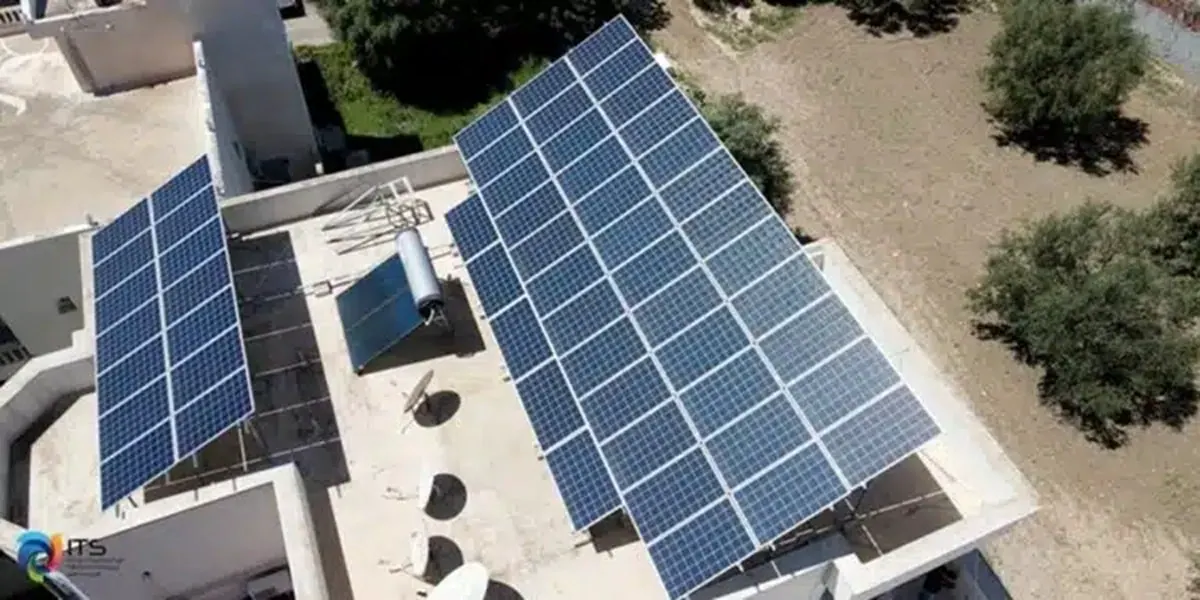
Tunisia's solar industry continues to attract significant investment, with the country's fifth and sixth evaluation rounds resulting in the approval of photovoltaic projects totaling nearly 750 MW. These projects are set to benefit around 500 investors, according to Ali Kanzari, president of the National Photovoltaic Chamber. The approvals were secured in under a year, demonstrating strong interest in Tunisia's solar sector.
However, despite the promising approvals, several hurdles must be overcome before these projects can be implemented. The 750 MW in approved projects do not yet translate to installed or grid-connected capacities. Their realization hinges on securing financing, navigating administrative procedures, and successfully connecting to the grid. Kanzari identifies delays and connection conditions as primary obstacles to photovoltaic development in Tunisia.
A critical issue underlying the integration of these new solar projects is the capacity of Tunisia's electrical grid to absorb and transport the additional power. The anticipated influx of 750 MW in new solar capacity requires not only an increase in grid connections but also a grid capable of handling this surge in production. Kanzari emphasizes the need to address connection delays and costs, as well as enhance the grid's hosting capacity.
The challenge is particularly pressing given that Tunisia's electrical system already faces significant strain during peak consumption periods, especially in the summer. To mitigate these challenges, Kanzari advocates for the evolution of electrical infrastructures in parallel with the growth of solar projects. This involves upgrading the grid to efficiently manage and distribute the increased solar power.
In addition to addressing grid capacity and connection issues, Kanzari proposes several measures to facilitate the growth of the solar sector. These include simplifying and digitalizing administrative procedures to reduce the time between project authorization and realization. He also suggests exempting photovoltaic panels, inverters, and batteries from customs duties and VAT to make solar projects more economically viable.
Another of Kanzari's proposals focuses on revising the autoproduction regime for medium-voltage connected subscribers. This involves lifting the current 30% ceiling and revising conditions for the repurchase of produced electricity. Such measures aim to create a more conducive environment for solar energy production and investment in Tunisia. However, these remain proposals from the industry and have not yet been adopted by authorities.
Looking ahead, Kanzari envisions a national "energy citizenship" program aimed at equipping one million low-income families with free photovoltaic installations over five years, potentially adding 600 MW. With 750 MW in projects already approved, the focus shifts from attracting investors to effectively integrating these projects into the grid while adapting the electrical infrastructure to support the rapid growth of solar energy in Tunisia.
Key points
- The approved projects must overcome financing, administrative, and grid connection challenges.
- Grid capacity and efficient integration of new solar projects are critical concerns.
- Proposed measures include administrative simplifications and fiscal incentives to boost solar development.