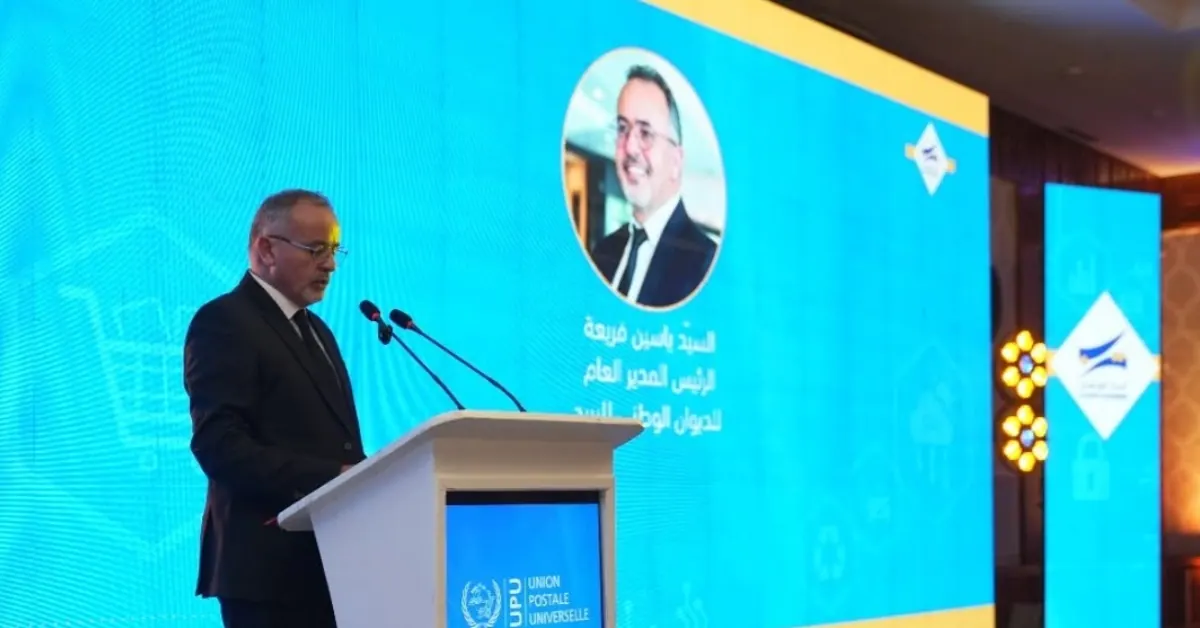
Tunisia's postal service, led by Director General Yassine Friâa, has announced the key features of its new strategy for 2026-2030. The plan focuses on five main areas: developing postal and financial services, modernizing the post office network, promoting financial inclusion, enhancing regional presence, and adapting to technological and economic changes. This strategic overhaul aims to position the postal service for future growth and relevance.
The new strategy prioritizes financial inclusion and the modernization of post office networks, particularly in less developed areas. It also emphasizes digital transformation and the gradual adoption of artificial intelligence to improve postal, financial, and logistical services. By leveraging technology, the postal service seeks to enhance customer experience and streamline operations.
A key component of the strategy is the establishment of a comprehensive e-commerce and logistics platform. This platform is designed to support small and medium-sized enterprises, as well as small investors and artisans, by facilitating their access to external markets and enabling them to export their products. The "Easy Export" program is one such initiative aimed at empowering these businesses.
The strategy also underscores the importance of transitioning to green postal services, with the goal of reducing energy consumption and minimizing the carbon footprint. Furthermore, it highlights the development of human capital through continuous training and capacity building for sector employees. These initiatives are crucial for the postal service's long-term sustainability and competitiveness.
In line with its commitment to international cooperation and strengthening its African presence, the Tunisian postal service has signed a framework agreement with the African Postal Union. This agreement aims to foster the exchange of expertise, experiences, and the development of joint projects with partner postal institutions across Africa.
The postal service is currently implementing two strategic projects. The first involves an integrated management system (ERP), which has already entered its initial phase, covering human resources, inventory management, maintenance, finance, and accounting. The second project involves the launch of the "E-Com Africa" platform, a regional logistics hub developed in collaboration with the Universal Postal Union.
The successful implementation of these projects is expected to significantly enhance the postal service's operational efficiency, customer service, and regional influence. By embracing digital innovation and strengthening partnerships, Tunisia's postal service is poised to play a more pivotal role in the country's economic development and regional trade.
Key points
- The strategy focuses on digital transformation, financial inclusion, and regional presence.
- The "Easy Export" program aims to support small businesses in accessing external markets.
- The postal service is transitioning to green services to reduce its environmental impact.