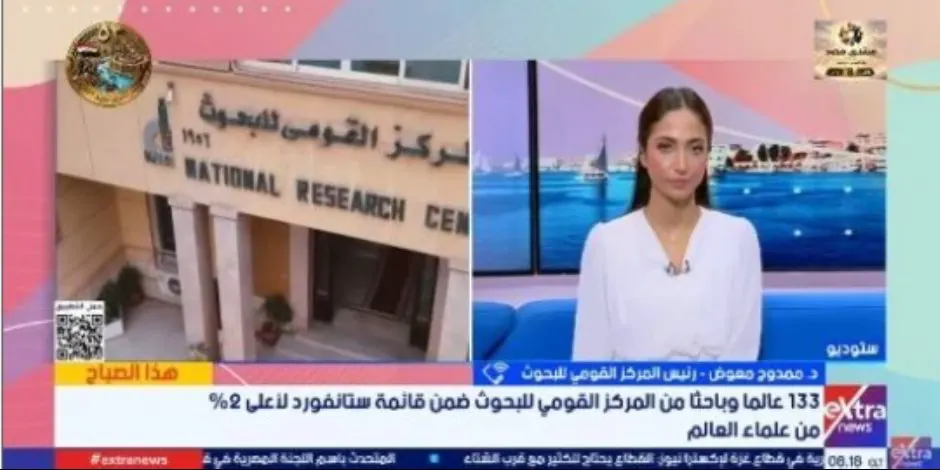
Egypt has witnessed a notable surge in its scientific presence globally, with 133 researchers from the National Research Centre (NRC) being recognized in Stanford University's list of the top 2% most impactful scientists worldwide for 2026. This development was announced by Dr. Mamdouh Ma'awad, the head of the NRC and acting president of the Academy of Scientific Research. He emphasized that this achievement reflects the evolution of scientific research in Egypt.
The number of Egyptian scientists on this prestigious list has seen a considerable increase from 108 in the previous year to 133 in 2026. Dr. Ma'awad attributed this success to the research plans implemented by the NRC, which focus on conducting basic and applied research. These efforts have significantly contributed to enhancing the presence of Egyptian researchers in international databases and classifications.
The National Research Centre has made substantial strides in scientific publishing, with over 3,500 research papers published in international scientific journals in the past year. Extending back more than 70 years, the NRC's research history boasts over 100,000 published studies across various scientific fields. These include chemistry, agriculture, biology, medicine, pharmacy, advanced materials, and modern technologies.
The diversity of research areas undertaken by the NRC plays a crucial role in bolstering its global standing. According to Dr. Ma'awad, the centre adopts a research plan every three years that aligns with the state's sustainable development plan. This plan prioritizes areas closely related to the state's needs and the problems faced by Egyptian citizens.
Key areas of focus in the NRC's research plans include energy, water, food, and the localization of global technology. By concentrating on these priorities, researchers can direct their efforts towards fields most relevant to the state's needs. This strategic approach has been instrumental in increasing the number of NRC scientists featured in global rankings.
The emphasis on knowledge economy in recent years has led to a stronger connection between scientific research, industry, production, and the state's requirements. This linkage ensures that research does not remain purely theoretical but also contributes to achieving economic returns and serving the national economy.
The strategic orientation of research plans towards solving real-world problems and developing applicable solutions has been a significant factor in the increased representation of NRC scientists in global rankings. This approach underscores the centre's commitment to impactful research that addresses pressing national and global challenges.
Key points
- The number of Egyptian researchers in Stanford University's list of top 2% most impactful scientists worldwide increased to 133 in 2026 from 108 in the previous year.
- The National Research Centre published over 3,500 research papers in international scientific journals in the past year.
- The centre's research plans are aligned with Egypt's sustainable development goals and focus on critical areas such as energy, water, and food.