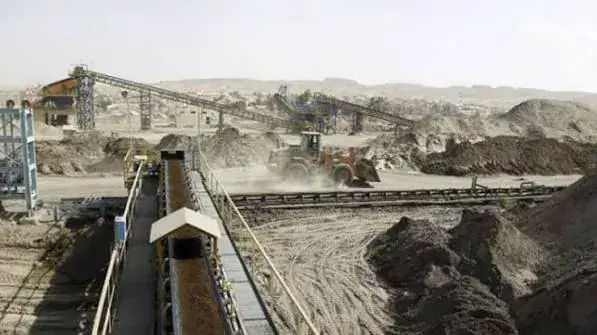
Tunisia's Minister of Industry, Mines and Energy, Salah Zwari, announced that the ministry has implemented an emergency plan to provide necessary funding for the phosphates sector. The plan, spanning three months until January 2027, aims to help the sector recover and meet its obligations to collaborating institutions. This initiative has led to securing loans guaranteed by the state, worth approximately 500 million dinars.
The emergency plan also includes investments of 240 million dinars to support the gradual resumption of activities and improve the performance of concerned facilities. These measures are part of a broader plan to revitalize the phosphates sector, targeting an increase in commercial phosphates production to 4.3 million tons by 2027, up from an expected 2.8 million tons in 2026.
Zwari emphasized that achieving the 2027 target requires providing necessary financial and logistical conditions for the sector's recovery. He noted that challenges facing the sector go beyond production and extraction, encompassing transportation, conversion, and settling debts with collaborating institutions.
Securing funding will help restore confidence among suppliers and collaborating institutions, ensuring the resumption of services related to production, transportation, and conversion. The minister also mentioned that the Tifert factory, also known as Mouzila 2, is expected to start operations in 2027, with a production capacity of around 700,000 tons.
The plan to revitalize the sector extends to 2035 and includes rehabilitating production units and conversion plants, completing unfinished projects, and acquiring necessary equipment. It also involves developing the phosphates transportation system, including hydraulic transportation, and restructuring the Tunisian company for mining materials transportation.
The program incorporates environmental and social aspects, as reviving the sector requires addressing related issues and not just focusing on production and financial aspects. Monitoring the plan's implementation occurs on two levels: bi-weekly meetings at the head of government's level and daily follow-up by the minister, the team in charge, and representatives of the concerned companies.
The goal is to gradually restore production starting in 2027 and reintegrate the sector into its economic role by providing additional resources for the state and enhancing the value added of Tunisian phosphates.
Key points
- The plan aims to increase phosphates production to 4.3 million tons by 2027.
- An emergency plan has been put in place to provide 500 million dinars in loans and 240 million dinars in investments.
- The Tifert factory is expected to start operations in 2027 with a production capacity of 700,000 tons.