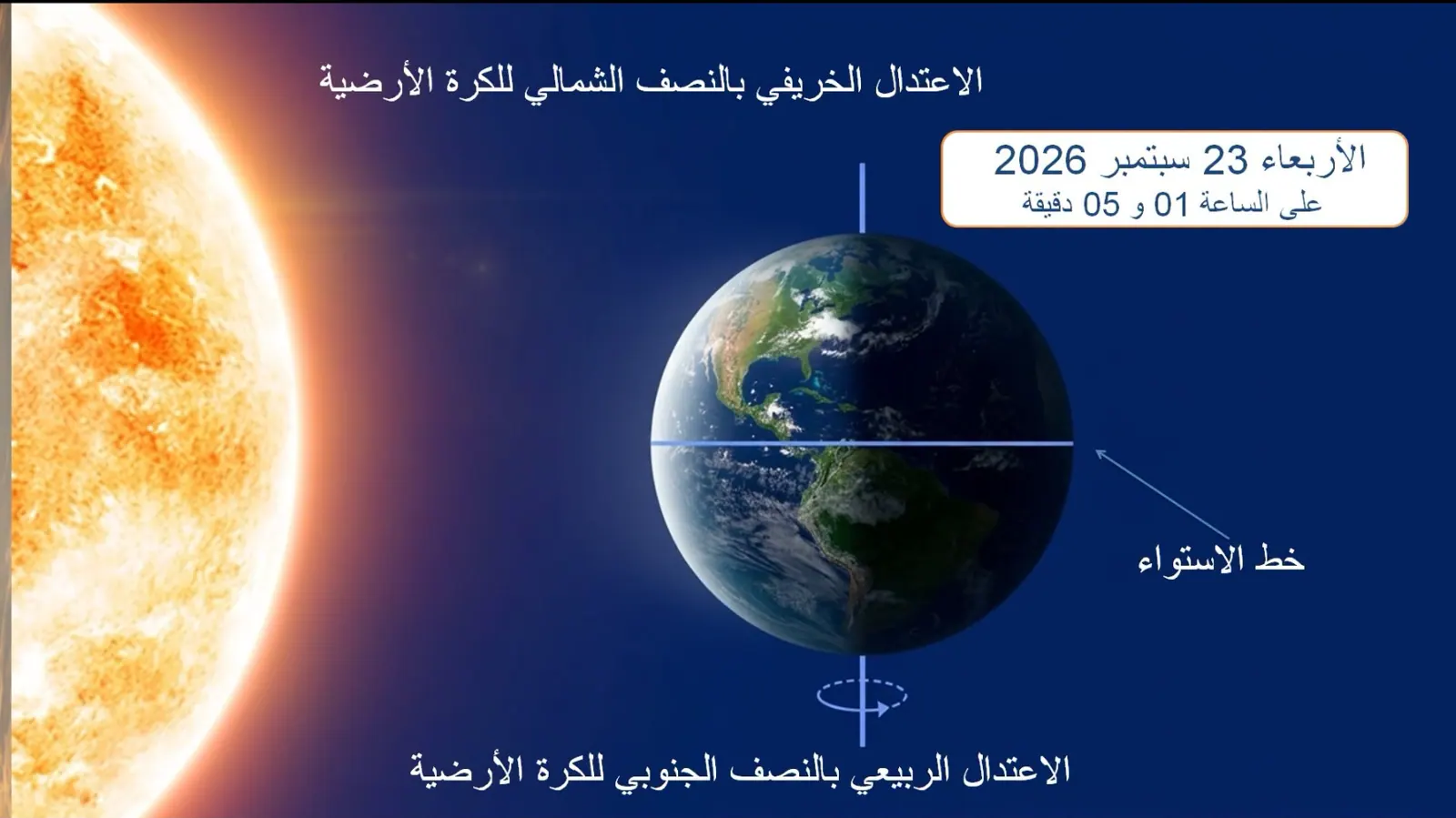
The autumnal equinox, a significant astronomical event, is set to occur on September 23, 2026, at 01:05 local time in Tunisia, as announced by the country's Meteorological Institute. This phenomenon marks the moment when the sun crosses the celestial equator, heading towards the southern hemisphere, and signifies the beginning of fall in the northern hemisphere. The equinox is a crucial event in the astronomical calendar, and its occurrence is eagerly anticipated by scientists and the general public alike.
The Meteorological Institute emphasizes that the exact moment of the equinox is a precise instant, not a full day. After this moment, the sun's apparent position begins to shift towards the southern hemisphere, resulting in a gradual decrease in daylight hours in the northern hemisphere and an increase in nighttime hours. This change is expected to be noticeable in Tunisia over the coming weeks, with the sun appearing lower in the sky and rising later and setting earlier compared to the summer months.
One of the notable aspects of the equinox is the near-equal duration of day and night, which, however, does not necessarily occur on the exact day of the equinox. Due to the Earth's atmospheric conditions and the sun's disk size, the day and night hours are not perfectly balanced on the equinox day. In Tunisia, for the year 2026, the day and night will be approximately equal on September 26, a few days after the equinox.
The autumnal equinox is a direct result of the Earth's movement around the sun and its axial tilt of approximately 23.4 degrees. This tilt is the primary reason behind the changing seasons and the variation in daylight hours throughout the year. As the Earth continues its orbit around the sun, the sun's apparent position in the sky changes, leading to the succession of seasons.
While the equinox marks the beginning of fall in the northern hemisphere, it coincides with the spring equinox in the southern hemisphere. This simultaneous occurrence highlights the symmetry of the Earth's seasons, with the two hemispheres experiencing opposite seasons at the same time. The Meteorological Institute's announcement serves as a reminder of the intricate relationships between the Earth's movements and the resulting changes in our environment.
The changing seasons have significant implications for various aspects of life, including agriculture, climate, and ecosystems. As the seasons transition, it is essential for scientists, policymakers, and the general public to be aware of the expected changes and their potential impacts. The Meteorological Institute's announcement provides valuable information for planning and preparation, enabling individuals and organizations to adapt to the changing environmental conditions.
In conclusion, the autumnal equinox on September 23, 2026, marks an important astronomical event, signifying the beginning of fall in the northern hemisphere and the start of spring in the southern hemisphere. As the Earth continues its orbit around the sun, the changing seasons will bring about various environmental and climatic changes, emphasizing the need for awareness and preparedness.
Key points
- The autumnal equinox will occur on September 23, 2026, at 01:05 local time in Tunisia.
- The equinox marks the beginning of fall in the northern hemisphere and the start of spring in the southern hemisphere.
- The day and night hours will be approximately equal in Tunisia on September 26, 2026.