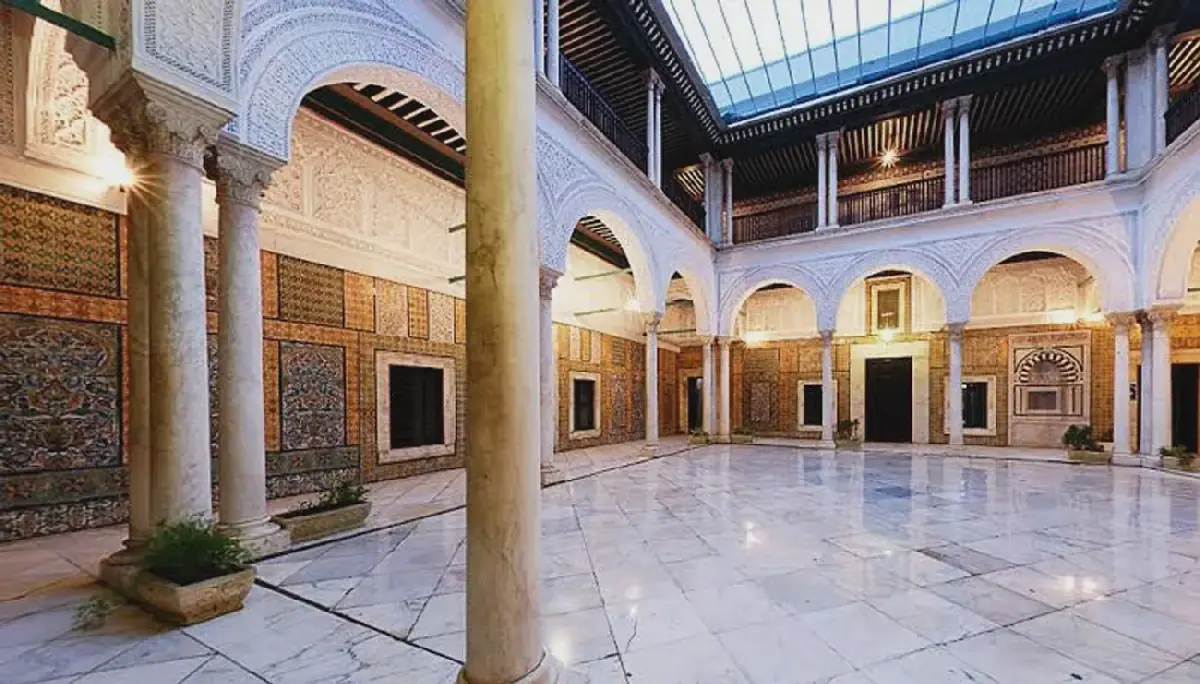
The Tunisian Ministry of Cultural Affairs announced on October 30, 2026, that Dar Hussein palace and the Husseinite Beys burial ground have been inscribed on the Arab League's cultural heritage list. This recognition acknowledges the cultural and historical value of Tunisia's heritage and its Arab radiance. The inscription is part of national efforts to preserve and promote cultural heritage.
The inscription took place during the 11th meeting of the Arab Architectural and Urban Heritage Observatory, held in Cairo from October 25 to 27, 2026. The Observatory is part of the Arab Organization for Education, Culture and Science (ALECSO). The meeting recognized the two historical sites in Tunisia's old city as part of the Arab architectural and urban heritage.
The Ministry of Cultural Affairs emphasized that this recognition is a significant cultural and historical achievement, highlighting the value of Tunisia's historical landmarks and their architectural, artistic, and historical significance. The inscription also reinforces the status of Tunisia's old city as a living space for national memory and a reflection of accumulated cultural and historical heritage.
Dar Hussein palace, which houses the National Heritage Institute, is a prominent example of traditional architecture in Tunisia's old city. The palace features distinctive architectural and decorative elements that reflect the richness of Tunisia's urban heritage. The Husseinite Beys burial ground is a historical and funerary monument of exceptional value, documenting an important aspect of Tunisia's history during the Husseinite period.
The Ministry noted that the inscription goes beyond recognition of the sites' value, as it also promotes their presence on the Arab cultural scene, increases awareness of them, and supports efforts to document, preserve, and promote them. The inscription also offers opportunities for cooperation and exchange of expertise between Arab countries in restoration, maintenance, and management of historical sites.
This recognition is expected to enhance the visibility of Tunisia's heritage, promote cultural tourism, and contribute to highlighting the unique architecture of Tunisia's old city. The Ministry emphasized that the heritage is not just a relic of the past but a living memory of national identity and a shared cultural legacy that requires collective responsibility to preserve for future generations.
The achievement is part of the ongoing efforts of the National Heritage Institute to inventory, document, study, protect, and promote Tunisia's cultural heritage. The Ministry of Cultural Affairs stressed that the heritage is a vital component of national identity and a shared cultural legacy that requires collective responsibility to preserve.
Key points
- Tunisia's Dar Hussein palace and Husseinite Beys burial ground have been inscribed on the Arab League's cultural heritage list.
- The inscription recognizes the cultural and historical value of Tunisia's heritage and its Arab radiance.
- The recognition promotes cultural tourism and highlights the unique architecture of Tunisia's old city.