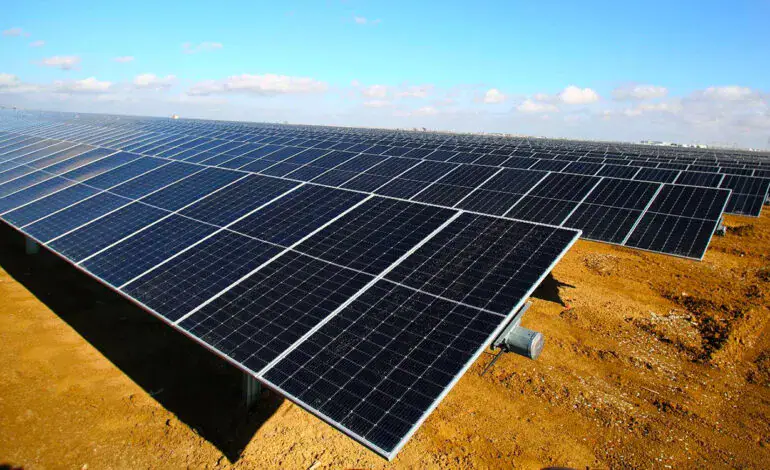
The École Nationale d'Ingénieurs de Tunis (ENIT) has recently put into service a solar power plant with a capacity of 164 KWc. This installation is part of the Transition Énergétique dans les Établissements Publics (TEEP) project led by the Agence Nationale de Maîtrise de l'Energie (ANME). The plant consists of 291 photovoltaic panels and will allow ENIT to cover approximately 30% of its electricity consumption with solar energy.
The TEEP project aims to promote energy transition in public establishments. It covers 373 public establishments across different ministries and institutions, with a total capacity of 39 MW and a budget of 210 million dinars. The project includes not only solar electricity production but also energy efficiency measures in air conditioning and lighting, as well as real-time consumption monitoring.
The solar power plant at ENIT is a significant step towards reducing the institution's energy bill and carbon footprint. Beyond its economic and ecological impact, the plant serves as a technological demonstrator for training and applied research for students and researchers. This aligns with ENIT's commitment to creating a sustainable and eco-friendly campus.
Tunisia has set ambitious targets for renewable energy. The country aims to achieve 35% of its electricity from renewable sources by 2030 and 50% by 2035. To meet these goals, Tunisia plans to establish a total functional capacity of 4850 MW of renewable energy production by 2030 and 8350 MW by 2035, primarily based on solar photovoltaic and wind energy.
The ANME provides professional companies with the necessary support throughout the implementation of the TEEP program. This support ensures the successful execution of energy transition projects in public establishments. The program's progress is crucial for Tunisia's efforts to increase its renewable energy share.
The launch of the solar power plant at ENIT demonstrates the institution's commitment to sustainability and energy efficiency. As a leading engineering school in Tunisia, ENIT's initiative sets an example for other educational institutions and public establishments to follow. The plant's impact will be closely monitored, and its success could be replicated in other TEEP projects.
The TEEP project and ENIT's solar power plant are critical components of Tunisia's strategy to reduce its reliance on fossil fuels and promote renewable energy. As the country works towards its energy transition goals, initiatives like these will play a vital role in achieving a more sustainable energy future. The project's outcomes will be essential in informing future energy policies and strategies.
Key points
- ENIT's solar power plant has a capacity of 164 KWc and will cover 30% of the institution's electricity consumption.