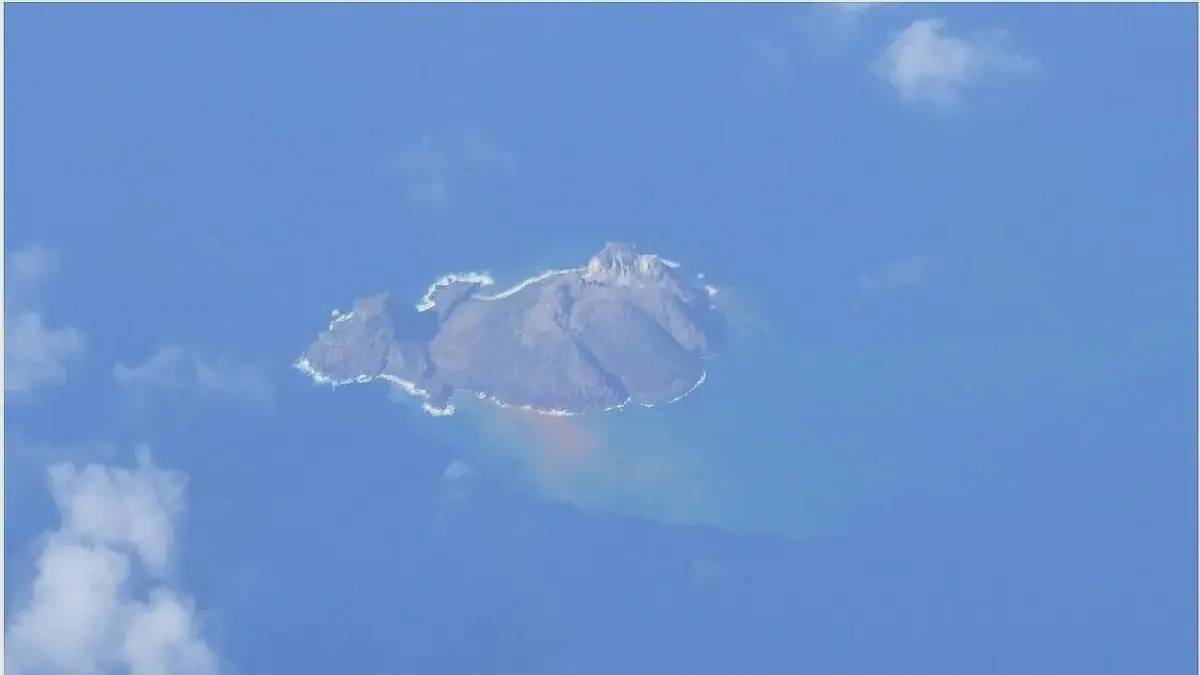
Vanuatu has initiated legal action against France concerning the uninhabited volcanic islands of Matthew and Hunter, located near the French territory of New Caledonia. The islands, historically visited by people from Vanuatu for fishing and ceremonial purposes, are a point of contention between the two countries. The key issue revolves around whether the islands grant France rights over approximately 350,000 square kilometres of surrounding ocean.
The islands of Matthew and Hunter, referred to as Umaenupne and Umaeneg or Leka in Vanuatu, are situated about 280 kilometres southeast of Vanuatu and 445 kilometres east of Grande Terre, New Caledonia's main island. Each island measures less than a square kilometre and is often difficult to access. According to Géraldine Giraudeau, a professor of international law at Paris-Saclay University, even scientists rarely visit the islands, which can be reached by boat but have been accessed by helicopter in the past.
In October, Vanuatu initiated arbitration under the United Nations Convention on the Law of the Sea, requesting an international tribunal to determine whether the islands are classified as rocks. A ruling in favour of Vanuatu would limit France's claims over the surrounding waters, as rocks that lack permanent residents or sustainable economic activity do not establish an exclusive economic zone. The arbitration also involves several reefs, atolls, and Walpole Island, which is part of New Caledonia.
Vanuatu has challenged France's rights over the waters around Walpole but does not claim sovereignty over the island itself. New Caledonia's government has incorporated Matthew and Hunter into the Coral Sea Natural Park, one of the largest marine protected areas globally. This move has added another layer of complexity to the dispute between Vanuatu and France.
On 31 August, Vanuatu requested the International Court of Justice (ICJ) to determine ownership of Matthew and Hunter and the maritime boundary between Vanuatu and New Caledonia. However, the ICJ can only hear the case with France's consent, which had not been granted, as noted by Vanuatu's deputy prime minister, Johnny Koanapo. Vanuatu could still pursue arbitration without French agreement.
France previously withdrew its general acceptance of the ICJ's authority in 1974, following criticism of its nuclear tests. It now decides whether to accept the court's jurisdiction on a case-by-case basis. At the recent Pacific Islands Forum in Palau, France reiterated its claim to the islands, with Éléonore Caroit, France's junior minister for international partnerships, stating that Paris would respond "in due course" to Vanuatu's application regarding the ICJ.
The dispute between Vanuatu and France centres on broader issues of decolonisation and the rights of Vanuatu over the islands it claims. According to legal scholar Mathias Chauchat, "These two islets are of no great importance, but behind them lies our unfinished decolonisation." The case has drawn parallels with the Chagos Archipelago dispute, where the UK's administration was deemed unlawful by the ICJ in 2019.
Key points
- Vanuatu initiates arbitration against France over the uninhabited volcanic islands of Matthew and Hunter.
- The dispute revolves around whether the islands grant France rights over approximately 350,000 square kilometres of surrounding ocean.
- The case has implications for decolonisation and the rights of Vanuatu over the islands it claims.
Reporting sources
- The Dispute Between France and Vanuatu Over Two Uninhabited Volcanic Islands · sierraleonetoday.co.com