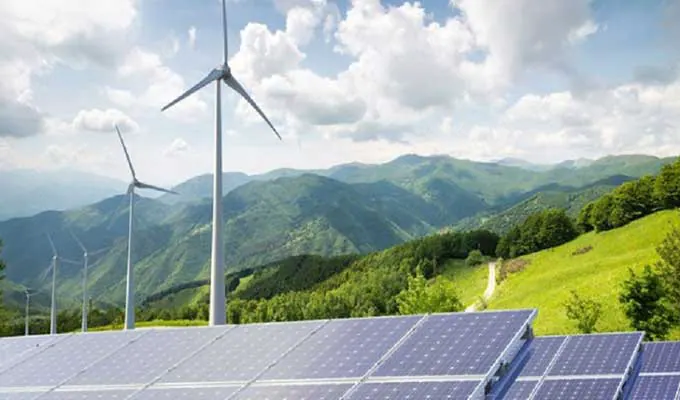
The fourth edition of the International Salon of Energy Transition, SITE 2026, kicked off on October 1, 2026, in Tunis. The event brings together public institutions, industries, international donors, and investors to discuss the country's energy transition. The theme of this year's conference, "Accelerate Energy Transition: Invest, Innovate, Act," reflects the growing recognition that Tunisia's economic stability depends on its ability to shift to renewable energy. With a heavy reliance on imported energy, Tunisia's economic challenges are closely tied to its energy transition.
Tunisia's energy dependence is a significant concern, with over 50% of its primary energy imported, mainly in the form of natural gas. This dependence results in an energy bill that exceeds 7% of the country's GDP, according to reports by the National Agency for Energy Management (ANME) and the Tunisian Electricity and Gas Company (STEG). The country's energy deficit reached nearly 9 billion dinars by the end of August 2026, with import growth of 28.5% over the past year. This has put pressure on the state's budget, which must absorb the shocks through increasing subsidies.
The energy transition is not only an environmental imperative but also a critical factor in Tunisia's economic competitiveness. Industrial enterprises in Tunisia devote between 15% and 30% of their production costs to energy. With increasing international competition, controlling energy costs has become a matter of economic survival. The ANME reports that self-consumption of photovoltaic energy can reduce industrial enterprises' energy costs by up to 40%. SITE 2026 aims to highlight the importance of energy transition in enhancing industrial competitiveness.
International donors, including the World Bank, African Development Bank, and German Development Bank (KfW), are already financing significant portions of Tunisia's energy infrastructure. The World Bank has committed over $300 million to modernizing the grid and integrating renewable energy. However, these donors stress that financing is available, but projects need to be better structured, faster, and more transparent to unlock investments. SITE 2026 provides a platform for public and private actors to align their visions and accelerate project development.
The first day of the conference explored the economic foundations of Tunisia's energy transition. National program leaders, STEG, and ANME officials presented strategies for accelerating photovoltaic development, incentive mechanisms for households and enterprises, and self-consumption programs aimed at reducing pressure on the grid. However, the activation of these tools remains insufficient, and Tunisia needs to move from isolated projects to a coherent and rapid strategy.
The second day of the conference focused on emerging markets, including electric mobility, energy storage, and circular economy. The integration of battery energy storage systems (BESS) can reduce technical losses in the grid by up to 20%. The development of hydroelectric power and pumped storage plants (STEP) can provide essential flexibility to absorb the growth of renewable energy. The green hydrogen project, supported by the Ministry of Agriculture and KfW, has significant export potential.
The SITE 2026 conference comes at a critical time for Tunisia, as the country seeks to reduce its energy dependence and accelerate its transition to renewable energy. With a clear understanding of the challenges and opportunities, stakeholders are working together to unlock investments, drive innovation, and ensure a sustainable energy future for Tunisia. Key players are expected to build on the momentum generated by the conference to drive concrete actions and achieve tangible results in the country's energy transition.
Key points
- Tunisia's energy transition is critical to its economic stability and competitiveness.
- The country aims to reduce its dependence on imported energy and accelerate its shift to renewable energy sources.
- International donors are providing financing for energy infrastructure, but projects need to be better structured to unlock investments.