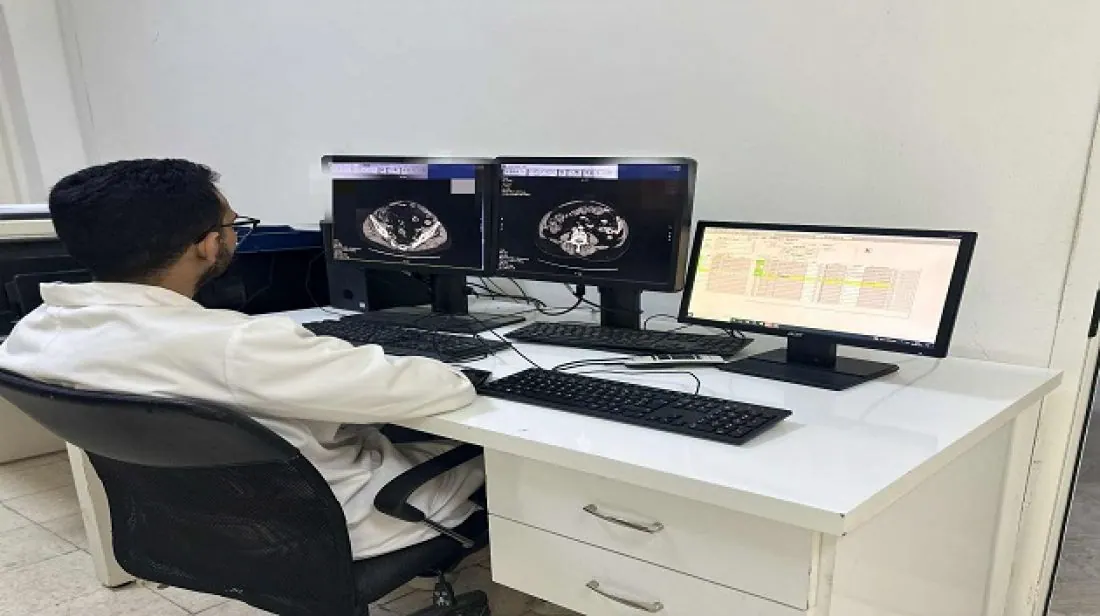
Tunisia's Digital Hospital has completed over 100,000 remote radiology exams for patients since its establishment, approximately a year ago. The hospital's remote medical imaging services have been operating continuously, 24/7, providing patients with accessible medical care. According to the hospital's head of remote medical imaging, the goal is to offer a wide range of medical specialties, including breast imaging and stroke diagnosis.
The hospital's remote medical imaging services aim to reduce the need for patients to travel, making medical care more convenient and accessible. Patients can now receive medical imaging services without having to physically visit the hospital, reducing the burden on patients and the healthcare system. This development is part of Tunisia's efforts to improve its healthcare infrastructure and provide better medical services to its citizens.
The Digital Hospital's remote medical imaging services were highlighted during the opening of the International Conference on Digital Health, "Telehealth Connect 2026". The conference brought together medical professionals and experts to discuss the latest developments and advancements in digital health. The hospital's remote medical imaging services were showcased as a model for providing accessible and efficient medical care.
The hospital's head of remote medical imaging, Seif Boukriba, emphasized that the hospital is working to accelerate medical imaging processes and reduce waiting times for patients. The hospital's goal is to provide patients with timely and efficient medical care, improving health outcomes and patient satisfaction. By leveraging technology, the hospital aims to enhance the quality of medical care and make it more accessible to patients.
The Digital Hospital's remote medical imaging services have been instrumental in improving healthcare outcomes in Tunisia. By providing patients with accessible medical imaging services, the hospital has helped to reduce the burden on the healthcare system and improve patient care. The hospital's services have also helped to reduce healthcare costs and improve the overall efficiency of the healthcare system.
The International Conference on Digital Health, "Telehealth Connect 2026", provided a platform for medical professionals and experts to share knowledge and best practices in digital health. The conference highlighted the importance of technology in improving healthcare outcomes and making medical care more accessible. The Digital Hospital's remote medical imaging services were showcased as a model for providing efficient and effective medical care.
The Digital Hospital's remote medical imaging services are a significant development in Tunisia's healthcare sector. The hospital's use of technology has improved the accessibility and efficiency of medical care, enhancing healthcare outcomes and patient satisfaction. As the hospital continues to expand its services, it is likely to have a positive impact on the healthcare sector and improve the lives of patients in Tunisia.
Key points
- The Digital Hospital has performed over 100,000 remote radiology exams since its inception.
- The hospital's remote medical imaging services operate 24/7, providing patients with accessible medical care.
- The hospital aims to offer a wide range of medical specialties, including breast imaging and stroke diagnosis.