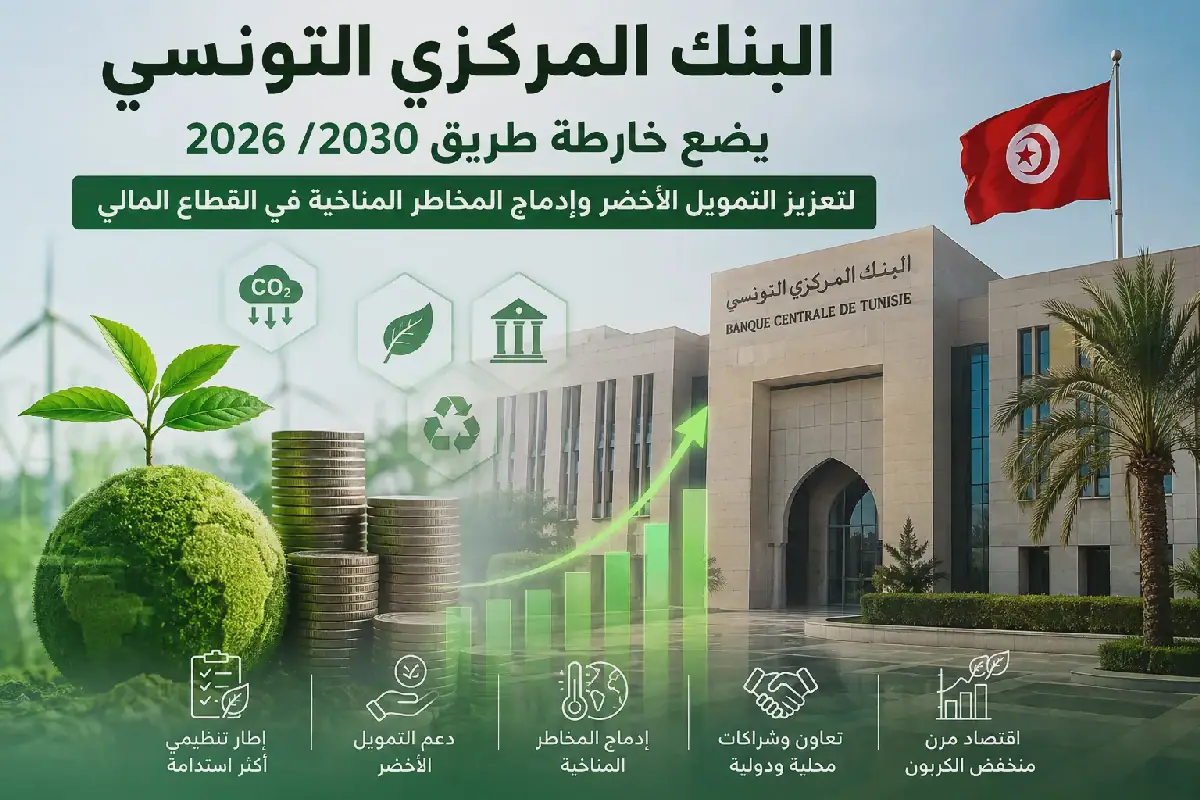
The Central Bank of Tunisia has developed a roadmap for 2026-2030 to bolster green finance and incorporate climate risks into the country's financial sector. Governor Fathi Zohair Nouri announced the initiative aims to protect the financial sector from climate-related risks and facilitate the financing of a green transition. This move is part of efforts to enhance the financial sector's resilience to climate change impacts and support a more sustainable economy.
The roadmap is built on four pillars, including the development of climate risk management frameworks for banks and financial institutions under the central bank's supervision. It also involves setting data and reporting requirements, developing necessary tools and markets for green finance, and promoting coordination and implementation monitoring. Nouri emphasized that this approach seeks to gradually and balancedly strengthen the Tunisian banking system's ability to face climate challenges.
Climate change poses significant risks to financial stability, with physical risks such as droughts, heatwaves, and floods threatening borrowers' ability to repay loans and provide banking guarantees. Nouri highlighted the importance of addressing transition risks related to tightening trade requirements and access to international financing. The central bank is committed to integrating climate risks into its policies and regulatory frameworks.
The governor stressed that effective governance of climate risks is crucial for supporting the resilience of Tunisia's financial system. This involves improving the identification, measurement, and prevention of climate-related risks. By promoting green finance, the central bank aims to support a more sustainable economy and enhance the financial sector's ability to address climate change impacts.
The initiative is part of a broader effort to enhance cooperation between Tunisia and international partners on climate change and sustainable development. The country's financial sector is expected to play a key role in supporting the transition to a more sustainable economy. The central bank's roadmap is seen as a critical step towards achieving this goal.
According to Nouri, the central bank's commitment to addressing climate change is reflected in its efforts to integrate climate risks into its policies and regulatory frameworks. This includes working with banks and financial institutions to develop climate risk management frameworks and promoting the use of green finance instruments.
The development of a green finance roadmap is a significant step towards enhancing Tunisia's financial sector resilience to climate change impacts. The central bank's initiative is expected to support the country's transition to a more sustainable economy and promote cooperation with international partners on climate change and sustainable development.
Key points
- The Central Bank of Tunisia has unveiled a 2026-2030 roadmap to enhance green finance and integrate climate risks into the country's financial sector.
- The roadmap aims to protect the financial sector from climate-related risks and facilitate the financing of a green transition.
- The initiative is part of broader efforts to enhance Tunisia's resilience to climate change impacts and promote sustainable development.