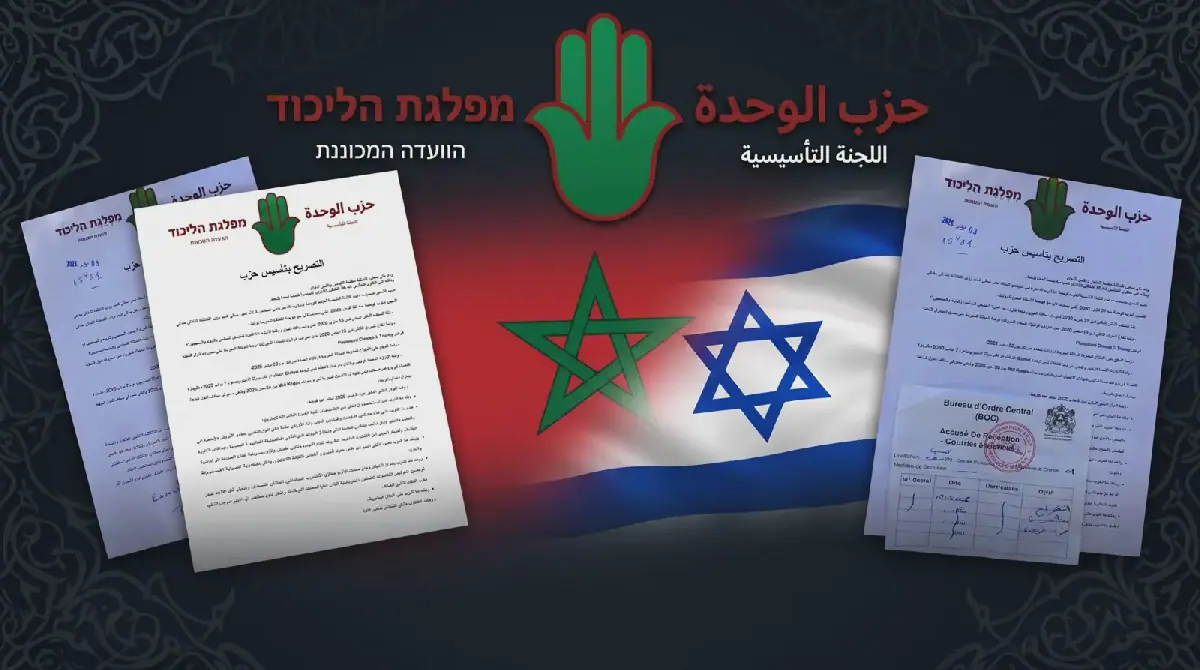
A document dated October 31, 2026, reveals that Hussein Bensous, a Moroccan citizen, has submitted an application to establish a new political party called "The Unity Party with Democratic Foundations and Jewish Reference." The party's name is inspired by the Likud party, which is currently in power in Israel. The document cites Morocco's constitution and the regulatory law on political parties, specifically Article 6, as the basis for the party's establishment.
The proposed party's founders claim that their initiative aims to promote unity among Moroccan citizens, strengthen the role of Moroccans and their descendants abroad, and foster external relations, particularly with the Jewish community. However, the party's reference to Judaism and its adoption of the Likud name have raised concerns about its potential links to Israeli politics and its stance on the Palestinian issue.
The development has sparked a heated debate in Morocco, with some questioning the party's implications for the country's national identity and its relations with Israel. Critics argue that the party's establishment could lead to the erosion of Morocco's sovereignty and its independence in decision-making. The country's experience with normalization with Israel has been contentious, with many Moroccans opposing diplomatic relations with Israel while the Palestinian issue remains unresolved.
The proposed party's emergence has also raised concerns about the potential for external influence on Morocco's internal politics. Some observers have warned that the party's establishment could be a precursor to further Israeli involvement in Moroccan politics and society. The Moroccan government has not yet commented on the party's application, but its establishment could have significant implications for the country's politics and its relations with Israel.
The concept of an "Andalus Nueva" or a new Andalusia has been invoked as a warning about the potential risks of gradual erosion of Morocco's national identity under the influence of cumulative political and cultural changes. This reference to historical memory is particularly relevant given the parallels between historical events and Morocco's current situation, such as issues related to property rights and judicial decisions.
The situation has significant implications for Morocco's future, and the proposed party's establishment has sparked a necessary debate about the country's national identity, sovereignty, and decision-making independence. The Moroccan public's right to know the truth about proposed political projects and to discuss their references and positions on key issues, including the Palestinian question, remains a fundamental aspect of their right to determine their country's future.
Key points
- The proposed party's reference to Judaism and its adoption of the Likud name have raised concerns about its potential links to Israeli politics and its stance on the Palestinian issue.
- The party's establishment has sparked debate and raised questions about Morocco's relations with Israel and its national identity.
- The situation has significant implications for Morocco's future, and the proposed party's establishment has sparked a necessary debate about the country's national identity, sovereignty, and decision-making independence.