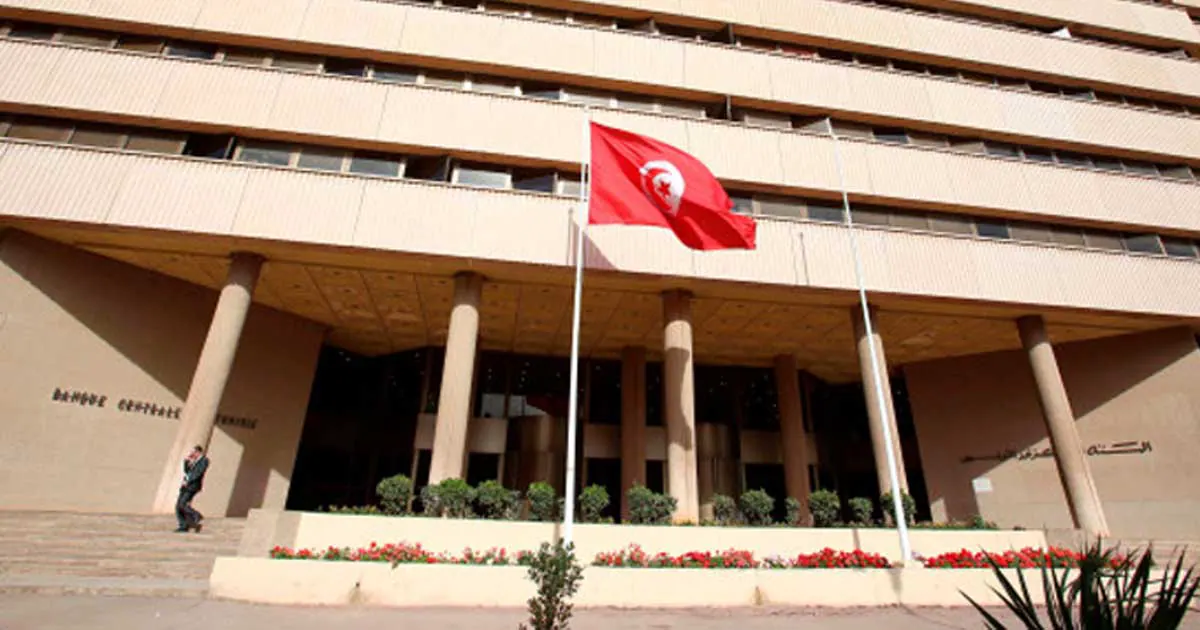
The Central Bank of Tunisia (BCT) has decided to maintain its key interest rate at 7.00%, as announced after a meeting on October 7, 2026. The decision was made after reviewing recent economic, monetary, and financial developments both internationally and nationally. The bank's governing council considered factors such as inflation dynamics and potential risks to the economy. This move comes as the global economy faces challenges, including rising energy prices.
Internationally, energy prices have surged, significantly higher than previously forecast in June. This increase has led to higher production and distribution costs, contributing to global inflation. Many advanced economies' central banks have tightened monetary policies to combat rising inflation and return it to target levels. Domestically, Tunisia's economic growth slowed to 2.3% in the second quarter of 2026, down from 2.6% in the previous quarter. This slowdown is attributed to a decline in industrial activity.
The external sector has also been impacted by rising energy prices, with the import bill for energy increasing to 11.3 billion dinars by the end of August 2026, up from 8.8 billion dinars the previous year. This has led to a wider trade deficit and a larger current account deficit of 4.694 billion dinars, or 2.5% of GDP, in the first eight months of 2026. In contrast, the deficit was 2.724 billion dinars, or 1.6% of GDP, in the same period of 2025.
The country's foreign exchange reserves stand at 23.7 billion dinars, enough for 92 days of imports, as of October 6, 2026. This is down from 24.3 billion dinars and 104 days of imports the previous year. The central bank emphasizes the importance of maintaining adequate foreign exchange reserves, particularly through better management of the energy deficit and its impact on external payments.
Inflation in Tunisia has continued to rise, reaching 5.6% in September 2026, up from 5.4% in August. This increase is mainly due to higher prices for fresh food products, which rose by 13.0% annually, compared to 11.7% the previous month. However, underlying inflation, which excludes fresh food and administered prices, remained steady at 5.1% for the third consecutive month.
Looking ahead, the central bank notes that inflationary pressures, both from external and internal sources, persist. Prolonged high energy prices could reduce the economy's maneuvering room and increase macroeconomic and financial vulnerabilities. The bank will closely monitor price developments, demand, banking liquidity, and external balances, and is prepared to take necessary measures to control inflation and ensure its return to sustainable levels.
The decision to keep the key interest rate unchanged at 7.00% reflects the central bank's cautious approach to managing the economy amid ongoing challenges. The bank's governing council will continue to assess the situation and consider future policy actions as needed to maintain economic stability and control inflation.
Key points
- The Central Bank of Tunisia maintains its key interest rate at 7.00% amid rising inflation and economic uncertainty.
- Tunisia's economic growth slowed to 2.3% in the second quarter of 2026, driven by a decline in industrial activity.
- The country's inflation rate reached 5.6% in September 2026, primarily due to higher prices for fresh food products.