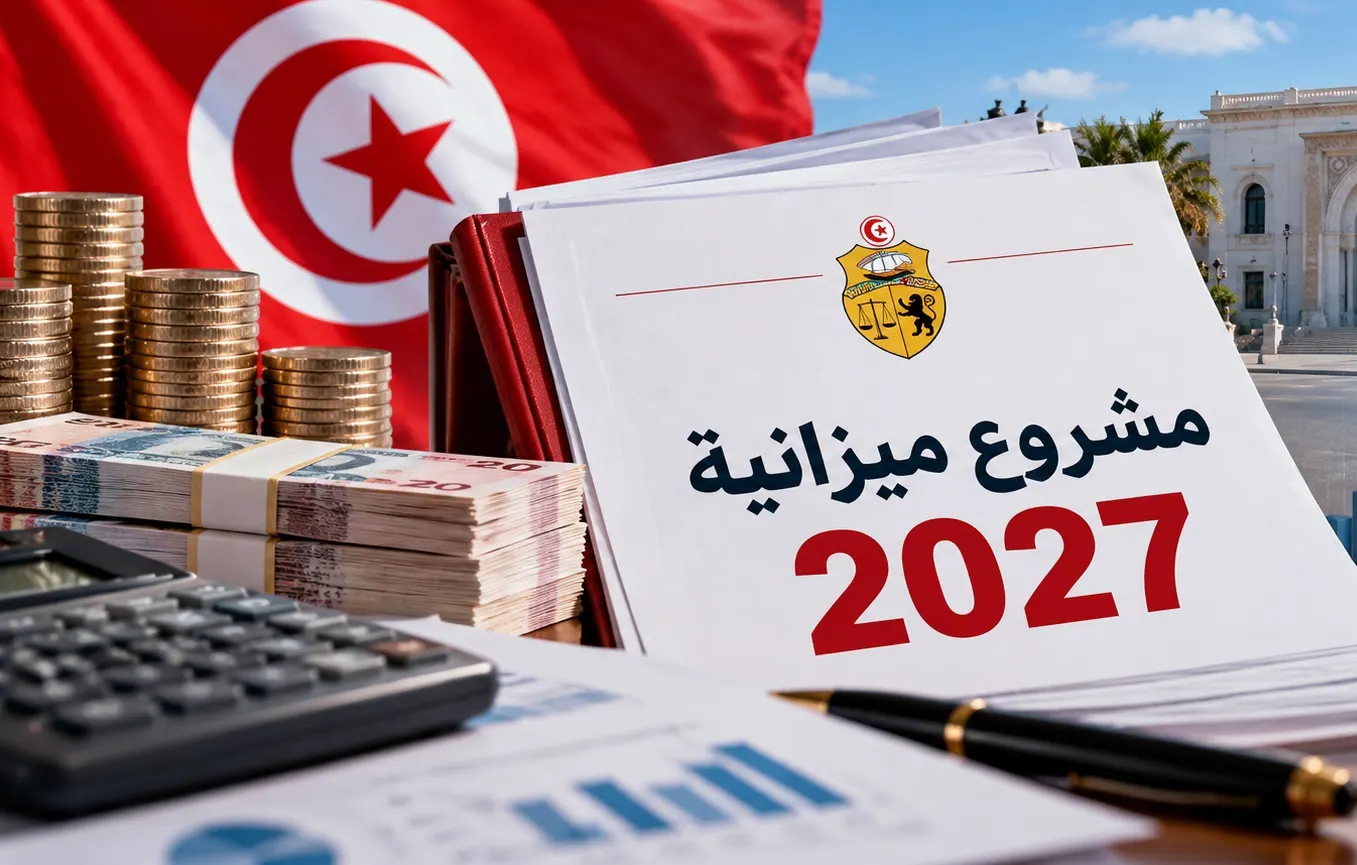
Tunisia's government has outlined its budget plans for 2027, with a focus on maintaining economic stability and promoting growth. The budget aims to keep the dinar stable, control inflation, and accelerate project implementation to boost economic and social returns on public investment. According to the finance ministry, the government plans to honor all its commitments, including paying off public debt on schedule. This move is expected to enhance the country's creditworthiness and attract investment.
The 2027 budget is based on optimistic assumptions about the global economy, with projected growth of 3.4% in 2027, up from 3% in 2026. The eurozone is expected to grow by 1.2%, up from 0.9%, while global inflation is forecast to decline to 3.9%. The price of Brent crude oil is expected to moderate to between $75 and $80 per barrel. These projections are crucial to Tunisia's economic planning, as the country relies heavily on imports.
A key objective of the 2027 budget is to reduce the budget deficit and increase the mobilization of domestic resources. The government aims to boost non-fiscal revenue and enhance transparency and governance in public finance management. This includes implementing measures to improve tax collection and digitize the fiscal and financial systems. By strengthening revenue collection, the government hopes to reduce its reliance on external financing.
The budget also focuses on supporting public enterprises and promoting regional development. The government plans to implement projects to improve infrastructure, including industrial zones, water and electricity networks, and essential services. These initiatives aim to enhance the business climate, attract investment, and stimulate economic and social development in regions. This approach is expected to create jobs and promote economic growth.
The 2027 budget is a crucial step in implementing Tunisia's 2026-2030 development plan. It marks a shift from defining a strategic framework to accelerating reforms and implementing projects on the ground. According to the prime minister's circular, the budget must strike a balance between fiscal sustainability and stimulating economic and social growth. The government aims to promote robust public finances and sustainable development.
The finance ministry is currently preparing the 2027 budget and finance bills, which will be submitted to the presidency for discussion in the Council of Ministers. The budget will then be transmitted to the Assembly of People's Representatives by October 15, in accordance with constitutional deadlines. This timeline is critical to ensuring that the budget is implemented on schedule.
The 2027 budget aims to consolidate Tunisia's economic recovery and promote sustainable growth. By maintaining economic stability, paying off debt, and investing in infrastructure and public enterprises, the government hopes to enhance the country's competitiveness and attract investment. The budget's success will depend on effective implementation and the government's ability to balance competing priorities.
Key points
- The 2027 budget aims to maintain the stability of the dinar and control inflation.
- The government plans to honor all its commitments, including paying off public debt on schedule.
- The budget focuses on supporting public enterprises and promoting regional development.