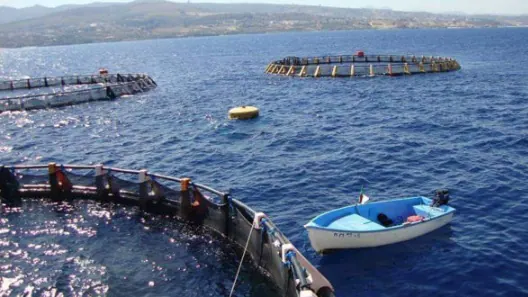
Tunisia is set to present its health monitoring and control programs for aquaculture products, established by the Ministry of Agriculture, Water Resources, and Maritime Fishing, in preparation for the upcoming mission by the European Union's Food and Veterinary Office (OAV) in November 2026. This mission is significant for the sector, as the European market accounts for around 50% of the total value of Tunisia's aquaculture product exports.
A working session was held on Monday, gathering the General Director of the Joint Professional Association for Marine Fishing Products with several institutions active in aquaculture, to review preparations for the visit. The session focused on the readiness of aquaculture institutions for the mission, particularly regarding health safety systems, to contribute to the confirmation of health approval for Tunisian institutions eligible to export to the European market.
The meeting also discussed the Collective's program to establish the "ASC" global sustainability and quality label, which can enhance the competitiveness of Tunisian products and open up new opportunities in high-value-added markets. The outline of the ASC label guide was presented, prepared in partnership with the Swiss SIPPO cooperation project, taking into account the updates made by the organization in 2025.
The session emphasized the need to continue preparations for an information day for aquaculture product exporters, with the participation of various sector stakeholders, to introduce the requirements of the ASC label and the stages of obtaining it. The meeting also addressed the main challenges facing the aquaculture sector, exchanging views on proposals and solutions to support institutions and improve their response to health and technical requirements.
According to the Joint Professional Association for Marine Fishing Products, Tunisia's aquaculture product exports increased by 2.9% in quantity and 1.9% in value during the first half of 2026, compared to the same period in 2025. The exports reached around 14,000 tons, valued at 329 million dinars, compared to 13.6 thousand tons and 323 million dinars in the first half of 2025.
The main exported products were fish, accounting for 7.3 thousand tons, followed by canned and semi-canned products at 3.3 thousand tons, and crustaceans at 2.9 thousand tons. The exports were distributed across over 37 markets, with Italy leading the list of importing countries at 37% of the export value, followed by Spain at 12%, Libya at 11%, and Algeria at 10%.
The imports of aquaculture products also increased during the same period, reaching around 39.6 thousand tons valued at 262.3 million dinars, compared to 36.9 thousand tons and 250.8 million dinars in the first half of 2025, recording a 7.3% increase in quantity and 4.6% in value. The upcoming EU experts' mission will assess Tunisia's readiness to meet European market requirements.
Key points
- The European market accounts for around 50% of Tunisia's aquaculture product exports.
- Tunisia's aquaculture product exports increased by 2.9% in quantity and 1.9% in value during the first half of 2026.
- The ASC label aims to enhance the competitiveness of Tunisian products and open up new opportunities in high-value-added markets.