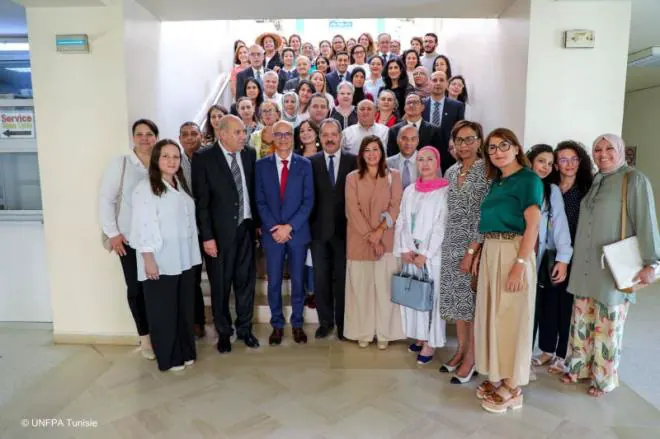
Tunisia's Faculty of Medicine in Tunis has hosted the inaugural conference for a new master's research program in "One Health." The program, launched in collaboration with the National Veterinary School of Sidi Thabet and supported by the United Nations Population Fund in Tunisia and international partners, seeks to train a new generation of experts and researchers. These individuals will be equipped to develop comprehensive and sustainable solutions to address health crises and the impacts of climate change.
The innovative academic program is based on an integrated approach that links human health, animal health, and environmental conservation. By adopting this approach, the program aims to foster a deeper understanding of the interdependencies between human, animal, and environmental health. This approach is critical in addressing the complex health and environmental challenges facing Tunisia and the wider region.
The launch event for the One Health master's program included the signing of a "One Health Charter" between the Faculty of Medicine in Tunis and the National Veterinary School of Sidi Thabet. This charter solidifies the commitment of both institutions to collaborate on the program, which targets professionals and graduates in health, life sciences, environment, agricultural sciences, and related fields. The goal is to enhance their competencies in addressing current and future health and environmental challenges.
The program's focus on One Health reflects a growing recognition of the interconnectedness of human, animal, and environmental health. By training experts in this field, Tunisia aims to strengthen its capacity to respond to health crises, such as pandemics, and environmental challenges, including climate change. This initiative is expected to contribute to the development of more effective and sustainable solutions to these pressing issues.
The collaboration between the Faculty of Medicine in Tunis and the National Veterinary School of Sidi Thabet represents a significant step forward in interdisciplinary education and research in Tunisia. By pooling their expertise and resources, the two institutions can provide a more comprehensive education to students, better preparing them to tackle complex health and environmental challenges.
The United Nations Population Fund in Tunisia and international partners have provided crucial support for the launch of the One Health master's program. Their involvement underscores the global importance of addressing health and environmental challenges through an integrated approach. The program is expected to have a positive impact not only in Tunisia but also in the broader region.
Key aspects of the program include its focus on practical skills and its aim to foster collaboration between different sectors. By emphasizing the development of competencies in One Health, the program seeks to equip graduates with the knowledge and skills needed to address complex health and environmental challenges effectively.
Key points
- The program aims to train experts capable of developing integrated and sustainable solutions to health crises and climate change impacts.
- The initiative is a collaboration between the Faculty of Medicine in Tunis and the National Veterinary School of Sidi Thabet.
- The program targets professionals and graduates in health, life sciences, environment, agricultural sciences, and related fields.