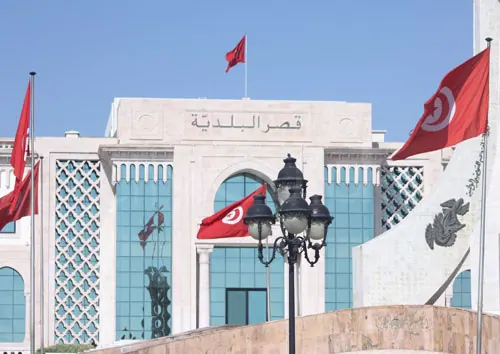
Tunisia has introduced a new decree that significantly enhances the governor's oversight on municipal action. The decree, described as a fundamental law governing municipalities, was hailed by local governance expert Mohamed Dhaifi as a major development in the country's municipal legislation. This new decree is the fifth major legal text to regulate municipal action since 1952. Dhaifi noted that the decree introduces substantial changes, particularly in the governor's increased control over municipal councils.
The new decree establishes a priori control mechanisms, requiring municipal councils to submit their deliberations to the governor for approval. This marks a significant shift from previous practices, where control was primarily exercised a posteriori. According to Dhaifi, this change prioritizes a priori control while maintaining the oversight powers of competent bodies, such as the Court of Accounts. The decree emphasizes that municipal decisions and projects must align with the state's general policy and national development plans.
The decree aims to reinforce the principle of state unity and coordination of interventions at local and regional levels. Dhaifi highlighted that the new decree grants municipal councils a more significant role in management but reduces the mayor's authority compared to previous texts. This redistribution of powers is expected to impact the functioning of municipal councils and their relationships with local authorities. The decree also introduces new obligations for members of municipal councils.
Members of municipal councils are now required to declare their assets, a measure that has raised questions about the entity responsible for receiving and monitoring these declarations. Dhaifi noted that the implementation of this provision is crucial to ensuring transparency and accountability within municipal councils. The decree's impact on local governance and the balance of power between municipal councils and governors remains to be seen.
The new decree has sparked concerns about the potential erosion of local autonomy and the increased centralization of power. Critics argue that this could undermine the effectiveness of municipal councils and limit their ability to address local issues. However, proponents of the decree argue that it will improve coordination and coherence in local governance.
The decree's implementation will depend on various factors, including the capacity of local authorities and the effectiveness of oversight mechanisms. Dhaifi emphasized that the success of the decree will rely on its enforcement and the ability of municipal councils to adapt to the new regulatory framework. The decree is expected to have far-reaching implications for local governance in Tunisia.
As the decree takes effect, stakeholders will be closely monitoring its impact on municipal action and local autonomy. The government's efforts to enhance governor's oversight on municipal action reflect broader efforts to improve governance and coordination in Tunisia. The decree's success will depend on its ability to balance the need for oversight with the need for local autonomy and effective governance.
Key points
- The new decree introduces a priori control mechanisms, requiring municipal councils to submit their deliberations to the governor for approval.
- The decree grants municipal councils a more significant role in management but reduces the mayor's authority.
- Members of municipal councils are now required to declare their assets, promoting transparency and accountability.