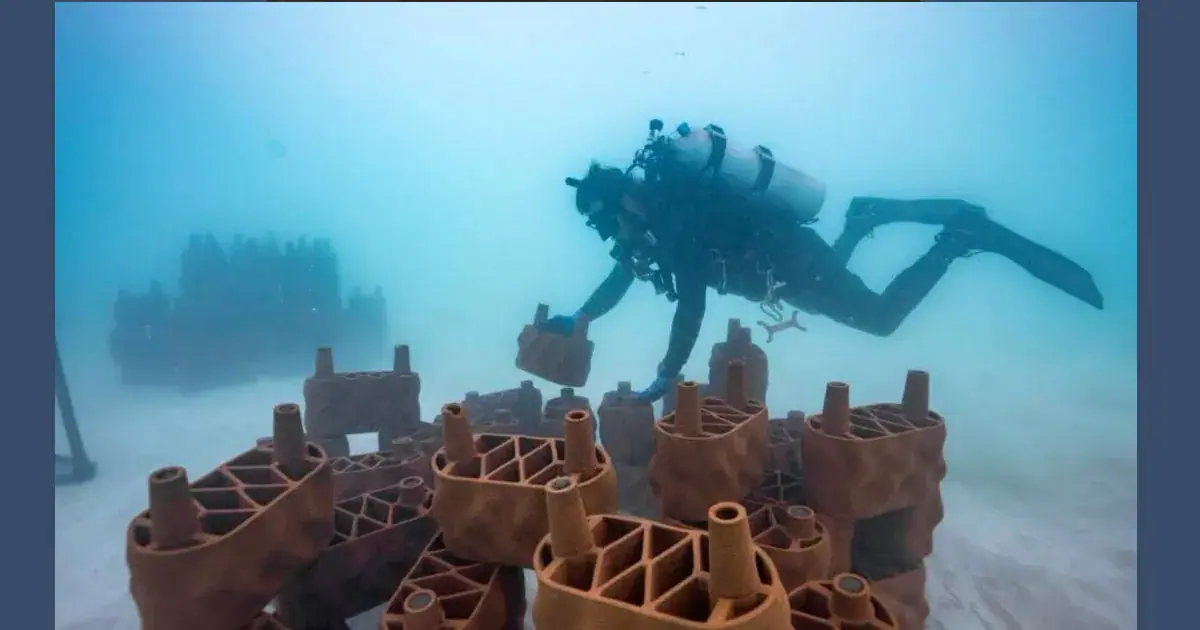
The Tunisian government has initiated a pilot project to install artificial reefs in the Kerkennah Islands, located off the coast of Sfax. The project, funded by the Global Environment Facility (GEF), aims to restore marine ecosystems, promote the replenishment of fish stocks, and preserve traditional fishing activities. The initiative involves local fishermen and is part of the Mediterranean FishEBM Med program, which focuses on ecosystem-based fisheries management and blue economy development.
The project, set to be implemented until March 2027, is being coordinated by the Regional Activity Center for Specially Protected Areas (CAR/ASP) under the United Nations Environment Programme (UNEP). Two local associations, Kantara Save Earth and the Association of Kraten for Sustainable Development, Culture, and Leisure (AKDDCL), are responsible for executing the project. The first phase involves conducting preliminary studies and creating artificial structures to establish habitats for marine life and promote biodiversity.
The second phase of the project focuses on scientifically monitoring the effects of the artificial reefs on ecosystems, establishing a mobile environmental education space, and developing an underwater trail for educational and naturalist purposes. The project places significant emphasis on involving local fishermen through consultations and participatory workshops, valuing their knowledge of the seabed and local marine dynamics, particularly in combating illegal fishing.
The Kerkennah Islands are a vital location for preserving traditional fishing practices in the Mediterranean. The islands are home to the "charfia," an ancient passive fishing technique that utilizes fixed structures made of palm fronds, harnessing currents and tides. This practice was inscribed on UNESCO's Intangible Cultural Heritage of Humanity list in 2020. The project aims to make the archipelago a model for sustainable marine resource management, balancing biodiversity conservation with the preservation of coastal communities' economic activities.
The project's objectives align with the goals of the Mediterranean FishEBM Med program, which seeks to promote ecosystem-based fisheries management and blue economy development in the region. By engaging local fishermen and stakeholders, the initiative aims to ensure the long-term sustainability of fishing practices and the conservation of marine ecosystems. The project's outcomes are expected to be replicable in other areas of the Mediterranean.
The installation of artificial reefs is expected to have a positive impact on the local fishing industry, which has faced challenges due to overfishing and habitat degradation. By creating new habitats for marine life, the project aims to enhance fish stocks and promote sustainable fishing practices. The initiative also seeks to raise awareness about the importance of marine conservation and the need for sustainable management of marine resources.
The project's success will depend on the continued involvement and support of local stakeholders, including fishermen, communities, and authorities. By working together, the project's objectives can be achieved, and the Kerkennah Islands can serve as a model for sustainable marine resource management in the Mediterranean. The project's outcomes will be closely monitored, and its results are expected to contribute to the development of effective conservation strategies in the region.
Key points
- The project aims to restore marine ecosystems and promote sustainable fishing practices in the Kerkennah Islands, Tunisia.