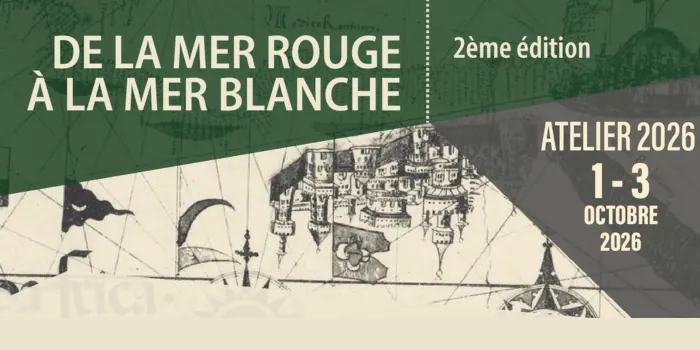
The workshop, titled "From the Red Sea to the White Sea," brings together historians, anthropologists, and researchers from Europe, Africa, and the Arab world to discuss the experiences of mixed-heritage populations under imperial rule between the 19th and 20th centuries. The event aims to explore the interconnectedness of the Red Sea and the Mediterranean, two maritime spaces that have been studied separately despite their shared histories. The workshop is organized by the Faculty of Legal, Political, and Social Sciences in Tunis, in partnership with several international institutions.
The 19th century saw significant changes in the Red Sea and the Mediterranean, with the opening of the Suez Canal in 1869 and the colonization of North Africa by European powers. These events led to increased mobility and cultural exchange between the two regions, resulting in the creation of mixed-heritage communities. However, the legacy of the slave trade and colonialism has continued to influence social hierarchies in these regions. The workshop seeks to explore these complex histories and their ongoing impact on modern societies.
The workshop will feature five panels and several keynote lectures, including a conference by M'hamed Oualdi on the trajectories of enslaved people between the Maghreb and the Americas in the 18th century. Other panels will examine inter-ethnic unions under colonial rule, citizenship and recognition, and the legacies of slavery and captivity in social structures. The event will also feature film screenings and debates, including a showing of "Siciliani d'Africa – Tunisia terra promessa" and a documentary by Lina Fruzzetti.
On October 3, the workshop will move to the Tunis Diocesan Library, where Francesco Dragone and Adnen el Ghali will give a public lecture on the city of Gedda as a crossroads of diversity. The same day, students and doctoral candidates will participate in training sessions on scientific writing and archival research, led by Italian researchers. The workshop is part of a larger research project on cultural exchange and identity, funded by the European Research Council.
The workshop is a collaborative effort between several institutions, including the Faculty of Legal, Political, and Social Sciences in Tunis, the University of Turin, and the Institute of Research for Development. The event has also received support from the Associazione per gli Studi Africani in Italia, reflecting its international scope and relevance. The workshop aims to promote a deeper understanding of the complex histories and cultural exchanges between the Red Sea and the Mediterranean.
The event's organizers hope that the workshop will contribute to a more nuanced understanding of the interconnectedness of the Red Sea and the Mediterranean, and the ways in which their shared histories continue to shape modern societies. By exploring the experiences of mixed-heritage populations and the legacies of colonialism, the workshop aims to promote greater awareness and understanding of the complexities of cultural identity and exchange.
Key topics to be discussed during the workshop include the impact of colonialism on social hierarchies, the experiences of mixed-heritage populations, and the legacies of slavery and captivity. The event will also examine the ways in which cultural exchange and identity have evolved over time, and the implications of these changes for modern societies.
Key points
- The workshop brings together researchers from Europe, Africa, and the Arab world to discuss cultural exchange and identity between the Red Sea and the Mediterranean.
- The event aims to explore the interconnectedness of the two maritime spaces and the experiences of mixed-heritage populations under imperial rule.
- The workshop features several keynote lectures, panels, and film screenings, and is part of a larger research project on cultural exchange and identity.