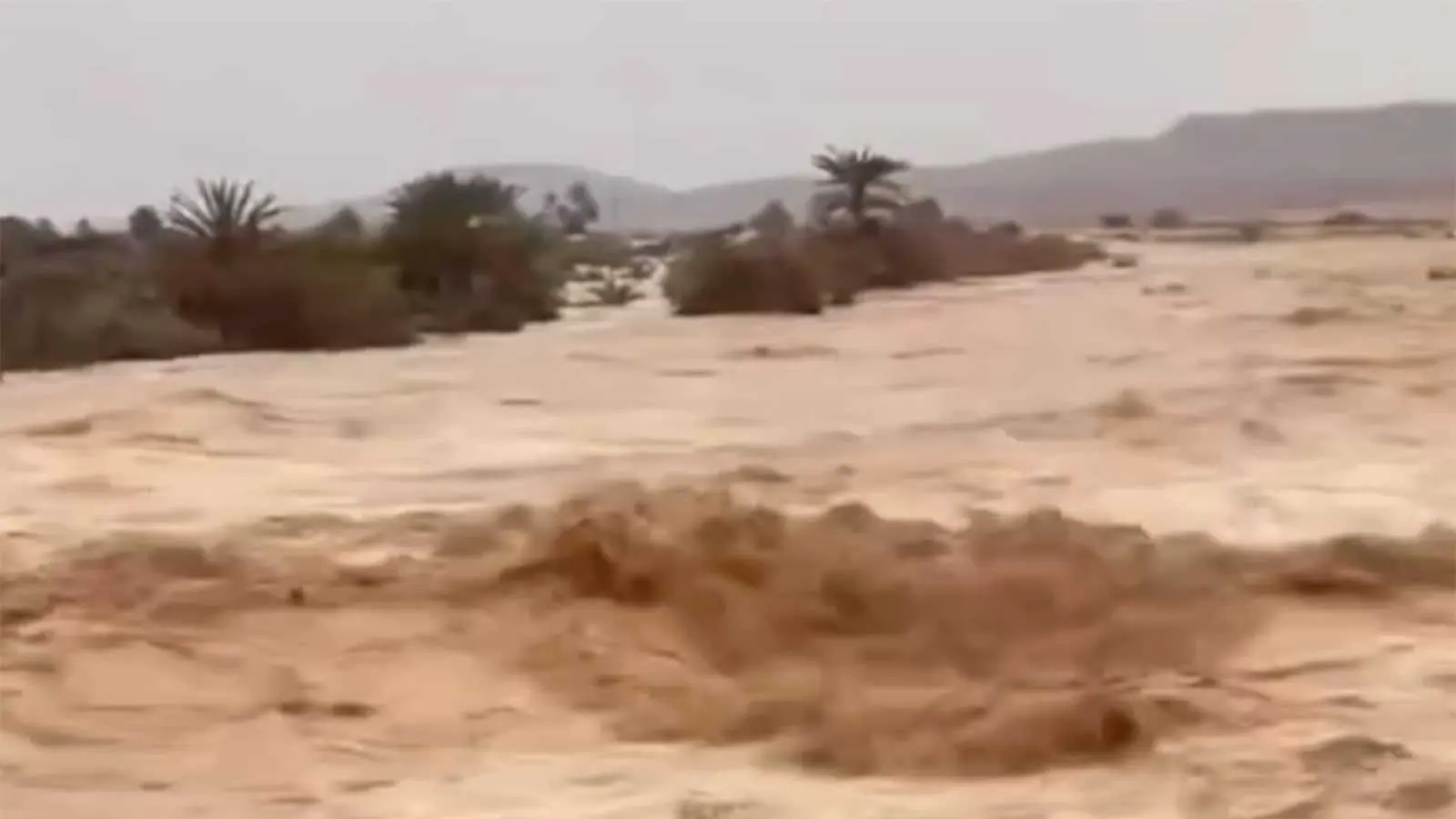
Heavy rainfall in western Libya has caused widespread flooding, affecting numerous towns and cities in the region. The floods, which occurred on Friday, have left thousands of people without electricity or access to clean water. Many residents have been trapped in their homes or vehicles, with some forced to navigate through knee-deep mud. The flooding has also caused significant damage to infrastructure, including roads and buildings.
The Libyan government has responded quickly to the crisis, with Prime Minister Abdelhamid Dbeibah ordering authorities to mobilize resources and provide immediate assistance to affected areas. Dbeibah has also instructed relevant services to work rapidly to restore power, water, and telecommunications to the affected regions. The government has coordinated with local municipalities to ensure a swift response to the disaster.
The town of Mizdah, located 165 km south of Tripoli, has been severely affected by the floods. The town's municipal spokesperson, Omar Kachaka, reported that the flooding had caused widespread power outages, significant material damage, and landslides. Mizdah, with a population of less than 30,000, is a semi-desert region that rarely experiences heavy rainfall.
The flooding in Libya is a stark reminder of the increasing frequency and intensity of extreme weather events caused by climate change. According to scientists, human activities are exacerbating the problem, leading to more frequent and severe natural disasters. The Libyan government will need to consider these long-term factors when planning its response and mitigation strategies.
The situation on the ground remains challenging, with many residents struggling to access basic necessities like food, water, and shelter. Social media images and videos have shown people trapped in their vehicles or attempting to navigate through the floodwaters. The government has urged residents to exercise caution and follow evacuation instructions from local authorities.
As the situation continues to unfold, the international community is monitoring the situation and offering support. The Libyan government has not yet requested formal international assistance, but aid agencies are on standby to provide assistance if needed. The government has assured residents that it is doing everything in its power to respond to the crisis and minimize the impact on affected communities.
The flooding in western Libya serves as a wake-up call for the region, highlighting the need for robust disaster preparedness and response measures. As the country continues to respond to the crisis, it will be essential to consider the long-term implications of climate change and invest in infrastructure and strategies that can mitigate the impact of future disasters.
Key points
- The floods have caused widespread damage and disruption in western Libya, with thousands of people affected.
- The Libyan government has responded quickly to the crisis, with Prime Minister Abdelhamid Dbeibah ordering authorities to mobilize resources and provide immediate assistance.
- The flooding is a stark reminder of the increasing frequency and intensity of extreme weather events caused by climate change.