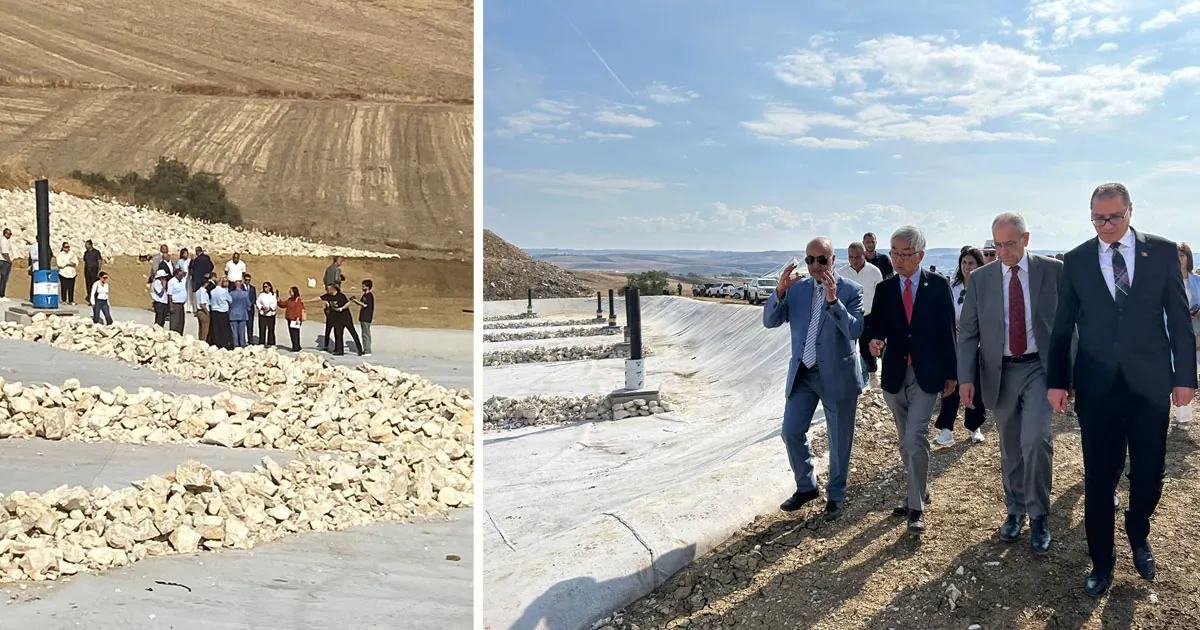
The extension of the waste disposal site in Béja, northwest Tunisia, has been completed using an innovative waste disposal method developed and implemented in Japan. The announcement was made on October 2, 2026, by the Japanese Embassy and the Tunisian National Waste Management Agency (ANGed). The project was part of a cooperation program announced in May 2025 to improve waste management at the site.
The program is part of the Joint Credit Mechanism (JCM) initiated by the Japanese government and the United Nations Industrial Development Organization (UNIDO). The JCM aims to promote the diffusion of low-carbon technologies to achieve the goals of the Paris Agreement. The project implemented the "Fukuoka Method," a semi-aerobic waste management technique developed in Japan.
The Fukuoka Method accelerates the decomposition and stabilization of waste through natural ventilation, reducing the production of harmful gases, including methane, a potent greenhouse gas. By introducing air into the landfill, the method improves the decomposition of organic matter. The ANGed engineers received training in Fukuoka, Japan, in May 2025, to master this innovative method.
The waste disposal site in Béja covers approximately 3800m² and is the first implementation of the Fukuoka Method under the JCM cooperation. The project is expected to reduce greenhouse gas emissions by 512 tCO2 per year. The Japanese government is pleased to support Tunisia in upgrading and strengthening its waste management infrastructure through the JCM.
Japanese Ambassador to Tunisia, Saito Jun, expressed his satisfaction with the project, citing the importance of cooperation between Japan and Tunisia in addressing environmental challenges. He congratulated the ANGed on its initiative and looked forward to further collaboration. Japan has been supporting Tunisia's efforts to improve waste management in recent years.
In February 2025, Japan helped establish a micro-cogeneration system at the Oued Laya waste disposal site in Sousse, in collaboration with ANGed and UN-Habitat. The pilot program converts 50m³ of biogas into over 60kW of electricity, powering 500 local households. Another pilot program was launched in April 2025 in Djerba to transform organic household waste into clean and renewable energy.
The extension of the Béja waste disposal site marks a significant step towards sustainable waste management in Tunisia. The project demonstrates the potential for innovative technologies to reduce greenhouse gas emissions and promote environmentally friendly practices. The cooperation between Japan and Tunisia serves as a model for future collaborations in the region.
Key points
- The project reduces greenhouse gas emissions by 512 tCO2 per year.
- The Fukuoka Method is a semi-aerobic waste management technique that accelerates decomposition and reduces harmful gases.
- Japan has been supporting Tunisia's waste management efforts, including a micro-cogeneration system in Sousse and a waste-to-energy program in Djerba.