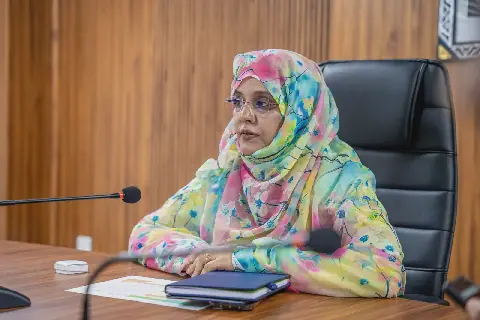
The issue of transboundary rivers and water management has returned to the forefront of African discussions, as Egypt hosts the 8th mid-year coordination meeting of the African Union and regional economic communities in the city of El Alamein. Egyptian President Abdel Fattah El-Sisi participated in the opening session, which reviewed progress on the African Union's 2026 theme of "ensuring sustainable water availability and safe sanitation systems to achieve Agenda 2063 goals." The meeting also focused on enhancing integration among regional economic communities and activating the African Continental Free Trade Agreement.
President El-Sisi emphasized that cooperation in managing transboundary rivers must be based on international law, consultation, coordination, and good neighborliness, while adhering to the principle of not causing harm to other countries. He stressed that each country has the right to develop and utilize its natural resources responsibly, without harming other nations. El-Sisi called for dealing with transboundary issues through cooperation and dialogue within a broader African framework to enhance management of shared water resources.
Transboundary rivers are watercourses that stretch across the territories of more than one country, affecting multiple nations. The construction of dams, changes in water flows, or establishment of large projects on a river's course in one country can have significant impacts on other countries sharing the river or its basin. Effective management of these shared resources has become a critical issue, particularly in Africa, which has a large number of shared river basins and lakes.
The Nile River is one of the most prominent transboundary rivers in Africa, shared by 11 countries, including Egypt, Sudan, South Sudan, Ethiopia, Uganda, Tanzania, Rwanda, Burundi, the Democratic Republic of Congo, Kenya, and Eritrea. The Nile Basin covers approximately 3.2 million square kilometers and is home to over 257 million people. The river's system consists of two main branches, the White Nile and the Blue Nile, along with other tributaries.
Another significant transboundary river in Africa is the Niger River, which flows through nine countries in West Africa, including Mali, Niger, Nigeria, Guinea, Burkina Faso, Benin, Côte d'Ivoire, Cameroon, and Chad. The Niger River serves as a vital source of water, agriculture, and economic activity for the people living in these countries. To manage the river's resources, several countries have established institutions, such as the Niger Basin Authority.
The Congo River Basin is one of the largest river basins in Africa, spanning across several countries, including the Democratic Republic of Congo, Republic of Congo, Angola, Cameroon, Central African Republic, Rwanda, Burundi, Tanzania, Zambia, and South Sudan. The basin is home to a vast and diverse ecosystem, making its management critical not only for water resources but also for agriculture, energy, and biodiversity.
Effective management of transboundary rivers in Africa requires cooperation and coordination among countries sharing these resources. The African Union has emphasized the importance of managing transboundary water resources, citing the need for enhanced regional cooperation to address the challenges and opportunities presented by these shared resources.
Key points
- The African Union's 2026 theme focuses on ensuring sustainable water availability and safe sanitation systems to achieve Agenda 2063 goals.
- Transboundary rivers in Africa, such as the Nile, Niger, and Congo, are critical for the livelihoods of millions of people and require effective management and cooperation among countries.
- Egypt's President Abdel Fattah El-Sisi emphasized the importance of cooperation and good neighborliness in managing transboundary rivers, based on international law and consultation.