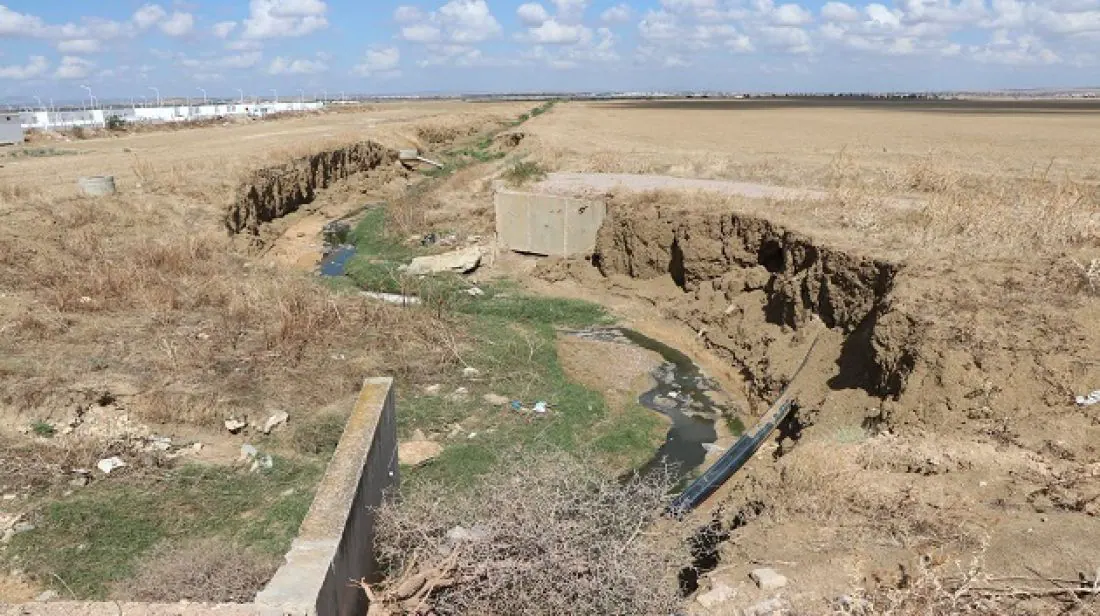
In a concerted effort to protect the Medjerda River from pollution, a multidisciplinary team from Tunisia's ministries of environment, interior, agriculture, and health conducted monitoring operations on factories and activities in the governorate of Manouba. The operations, which covered 18 sites, resulted in 11 environmental violations and three proposals for temporary closure. Four samples were taken from pollution sources that did not meet national standards.
The monitoring team found that several sites did not comply with national environmental standards and exceeded maximum discharge limits into the receiving environment. The operations are part of a broader campaign to safeguard the Medjerda River and its surrounding ecosystem. Further monitoring is planned for the governorates of Jundubah and Bajah. The team also inspected pollution sources in the governorates of Ben Arous, Zaghouan, and Siliana to protect the Melliane River.
The Melliane River basin spans three governorates: Ben Arous, Zaghouan, and Siliana. The river is approximately 160 kilometers long and originates from Jebel Berkou in Siliana, eventually flowing into the Gulf of Tunis. The river's water level varies depending on rainfall, reaching up to 200 cubic meters per second during floods. To mitigate pollution, ongoing and completed projects aim to build and upgrade wastewater treatment plants along the river.
Several wastewater treatment plants are being constructed or upgraded in the Melliane River basin. A new plant in southern Melliane 2 has a capacity of 90,000 cubic meters per day, with 60% of the work completed. The integrated industrial plant in southern Melliane is being renovated, with 70% of the work finished and expected to be operational by the end of 2026.
Additional wastewater treatment plants are being built or upgraded in the region. A plant in Khalidiyah has a capacity of 2,400 cubic meters per day and is already operational. The Al-Fahs plant is nearing completion, with 85% of the work finished and expected to be completed by the end of 2026. A new plant in Bir Al-Macharga has a capacity of 2,400 cubic meters per day, with 55% of the work completed.
The Tunisian government is also working on other environmental projects. A new wastewater treatment plant in Jebel Al-Wast is being built with a capacity of 1,750 cubic meters per day. The Al-Attar plant is part of a project to valorize treated wastewater in several governorates, including Tunis, Ben Arous, Zaghouan, Sousse, and Sfax.
The efforts to protect Tunisia's river basins and combat pollution are ongoing. The National Environment Protection Agency is working to monitor and address environmental violations. Key initiatives include the construction and rehabilitation of wastewater treatment plants, as well as public awareness campaigns to promote environmental conservation.
Key points
- Tunisia records 11 environmental violations in the Medjerda River basin.
- The government is investing in wastewater treatment plants to reduce pollution in the Melliane River basin.
- Environmental monitoring and enforcement efforts are being expanded to other regions in Tunisia.