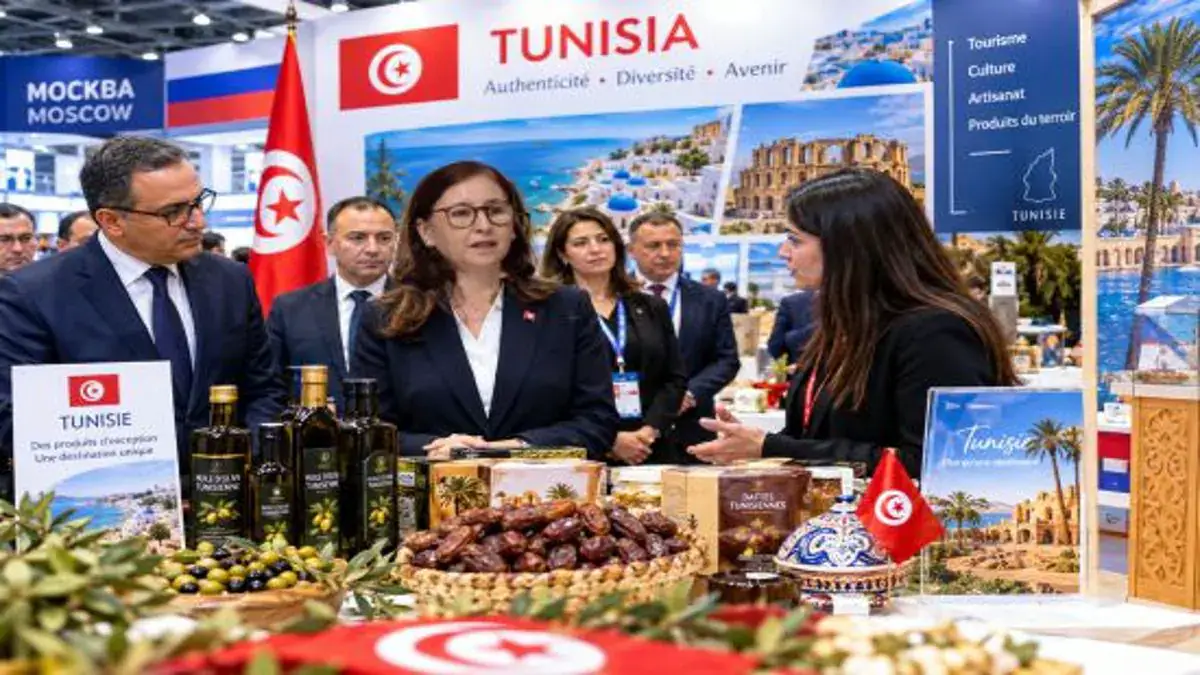
Tunisia's Prime Minister Sara Al-Zafrani Al-Zanzeri led a delegation to Moscow, where she visited the Tunisian pavilion at the Moscow exhibition. The pavilion showcased national products, including olive oil and dates, and promoted Tunisia's tourism sector. This visit aimed to strengthen economic ties between Tunisia and Russia, with a focus on increasing trade exchanges and diversifying exports. The Tunisian pavilion was organized by the Tunisian Embassy in Moscow, in collaboration with the Tunisian National Tourism Office and the Export Promotion Center.
The Tunisian pavilion featured samples of national food products, including olive oil and dates, which are in high demand in the Russian market. The exhibition also highlighted Tunisia's tourism sector, showcasing its natural, cultural, and heritage attractions. This combined approach reflects Tunisia's strategy to utilize international events to promote its products and build economic partnerships. By showcasing its products and tourism sector, Tunisia aims to attract more Russian tourists and enhance cooperation in the tourism industry.
During her visit, Prime Minister Al-Zafrani Al-Zanzeri emphasized the need to accelerate trade exchanges and diversify Tunisian exports. She highlighted the importance of opening up new opportunities for Tunisian businesses, particularly in high-value-added manufacturing sectors. This approach aligns with the directives of President Kais Saied, who has prioritized strengthening external economic relations and diversifying export partnerships. By expanding its trade relations with Russia, Tunisia seeks to reduce its dependence on traditional markets and increase its economic competitiveness.
The visit is part of a broader effort to enhance economic cooperation between Tunisia and Russia. The two countries have been working to strengthen their economic ties, with a focus on increasing trade exchanges and promoting investment. Russia has been seeking to expand its economic influence in Africa, and Tunisia is seen as a key partner in this effort. By participating in the Russian-African Summit, Tunisia aims to promote its export capabilities and explore new markets for its products.
The Russian-African Summit, which took place on October 28-29, brought together leaders from across Africa to discuss economic cooperation and development. Tunisia's participation in the summit reflects its commitment to strengthening its economic ties with Russia and other African countries. By engaging with Russian businesses and policymakers, Tunisia aims to attract new investment and promote its economic development.
To achieve its economic goals, Tunisia must develop a clear export strategy and improve its distribution channels. The country must also promote its products and address logistical and financial challenges associated with trade. By diversifying its exports and expanding its trade relations, Tunisia can reduce its economic vulnerability and increase its competitiveness in the global market.
The success of Tunisia's economic efforts will depend on its ability to translate diplomatic relations into tangible trade and investment opportunities. By building on its strengths in sectors such as olive oil and dates, Tunisia can increase its exports and promote its economic development. With a clear strategy and effective implementation, Tunisia can achieve its economic goals and strengthen its position in the global economy.
Key points
- Tunisia's Prime Minister Sara Al-Zafrani Al-Zanzeri visits Moscow to promote national products and enhance trade relations.