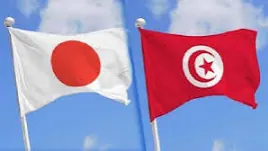
The Tunisian National Agency for Waste Management and the Japanese Embassy announced the completion of a project to expand a waste dump site in the governorate of Bajah. This initiative is part of the Joint Crediting Mechanism (JCM) launched by the Japanese government and the United Nations Industrial Development Organization. The project introduces a new approach to waste management, utilizing the Fukuoka method, also known as the semi-aerobic landfill technique.
The Fukuoka method, developed in Japan, is an innovative approach to managing waste by accelerating decomposition and stabilization through natural aeration. By introducing air into the landfill site, this technique facilitates the breakdown of organic materials and reduces the production of harmful gases, including methane, a potent greenhouse gas. This method is expected to significantly decrease greenhouse gas emissions.
The project, which covers an area of 3800 square meters in Bajah, aims to minimize the environmental impact of waste disposal. Engineers from the Tunisian National Agency for Waste Management received training in Fukuoka, Japan, in May 2025, to enhance their knowledge of this innovative technique. The training enabled them to effectively implement the Fukuoka method in Tunisia.
The implementation of the Fukuoka method is expected to result in an annual reduction of 512 tons of carbon dioxide equivalent (tCO2/year) in greenhouse gas emissions. This significant decrease is a direct result of the project's focus on reducing methane emissions and promoting sustainable waste management practices. The collaboration between Tunisia and Japan demonstrates a shared commitment to environmental protection.
The Joint Crediting Mechanism (JCM) is an initiative that aims to promote the use of advanced technologies in the field of decarbonization. By supporting the adoption of innovative techniques like the Fukuoka method, the JCM contributes to the achievement of the goals set out in the Paris Agreement. This partnership highlights the importance of international cooperation in addressing environmental challenges.
The project in Bajah serves as a model for sustainable waste management in Tunisia and the wider region. By adopting innovative techniques and promoting environmental protection, Tunisia and Japan demonstrate their commitment to addressing the challenges of climate change. The success of this project could pave the way for future collaborations between the two countries.
The Tunisian National Agency for Waste Management and the Japanese Embassy have emphasized the significance of this project in promoting sustainable development. The adoption of the Fukuoka method marks a significant step forward in Tunisia's efforts to improve waste management and reduce its environmental impact. This collaboration is expected to have a lasting impact on the country's environmental policies.
Key points
- The project reduces greenhouse gas emissions by 512 tons of carbon dioxide equivalent annually.
- The Fukuoka method is an innovative approach to waste management that accelerates decomposition and reduces methane emissions.
- The project is part of the Joint Crediting Mechanism, an initiative promoting advanced technologies in decarbonization.