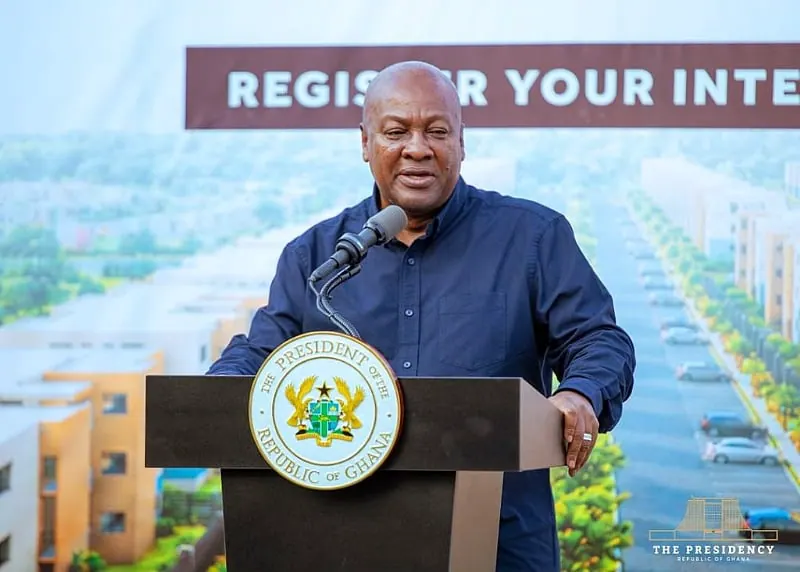
A Ghanaian business owner, Kwabena Owusu, has written an open letter to President Mahama, urging him to review taxation practices in the country to save businesses and jobs. According to Owusu, the cumulative burden of taxes, levies, penalties, and compliance costs from various agencies, including the Ghana Revenue Authority (GRA), District Assemblies, and Ghana Tourism Authority, is choking businesses. He notes that many businesses are forced to pay huge taxes even when they make little or no profit.
Owusu cites several businesses that have closed, downsized, or left Ghana, including Kama Groups, Koala, Game, Spur Supermarket, Glovo, Jumia Food, Dark and Lovely, and hotels. He argues that each closure results in thousands of jobs lost, families struggling, and local suppliers collapsing. This is happening at a time when Ghanaian universities produce hundreds of thousands of graduates every year, and Owusu believes that protecting businesses is crucial to absorbing these young people into the workforce.
In his letter, Owusu respectfully appeals for seven urgent actions from President Mahama. Firstly, he calls for a review of the cumulative tax burden on businesses, especially those operating on thin margins. This includes Corporate Income Tax, VAT, NHIL, GETFund Levy, COVID-19 Levy, Growth and Sustainability Levy, Withholding Tax, Business Operating Permits, Property Rates, and other charges. Owusu believes that this review is necessary to prevent businesses from being taxed to death.
Owusu also suggests that the government should distinguish between capital, turnover, and profit when taxing businesses. He argues that this will prevent the erosion of productive capital that businesses need to survive. Additionally, he calls for a review of assessment and collection practices, which he believes create severe cash-flow crises for viable businesses. A stronger consultation mechanism between GRA and the private sector is also necessary, according to Owusu.
Furthermore, Owusu urges President Mahama to protect employment in tax policy, particularly for companies that employ large numbers of Ghanaians. He also suggests that the government should investigate why major businesses are leaving Ghana, including the roles of taxation, operating costs, regulation, and the overall business environment. This inquiry will help identify the root causes of the problem and inform solutions.
Owusu believes that the Ghana Revenue Authority and other revenue agencies should prioritize compliance and payment plans over business closure. He argues that it is better for the government to receive some revenue consistently than to receive nothing when a business collapses. Enforcement should focus on protecting employment and business continuity while ensuring tax obligations are met.
In conclusion, Owusu emphasizes that a living business pays taxes, creates jobs, buys from Ghanaians, and grows the economy, while a dead business pays nothing. He urges President Mahama to create a fair, predictable tax system that protects both revenue and jobs. By taking action, the government can prevent further business closures and promote economic growth.
Key points
- The Ghanaian business owner, Kwabena Owusu, has called on President Mahama to review taxation practices to save businesses and jobs.
- Owusu suggests that the government should distinguish between capital, turnover, and profit when taxing businesses to prevent the erosion of productive capital.
- The Ghana Revenue Authority and other revenue agencies should prioritize compliance and payment plans over business closure.