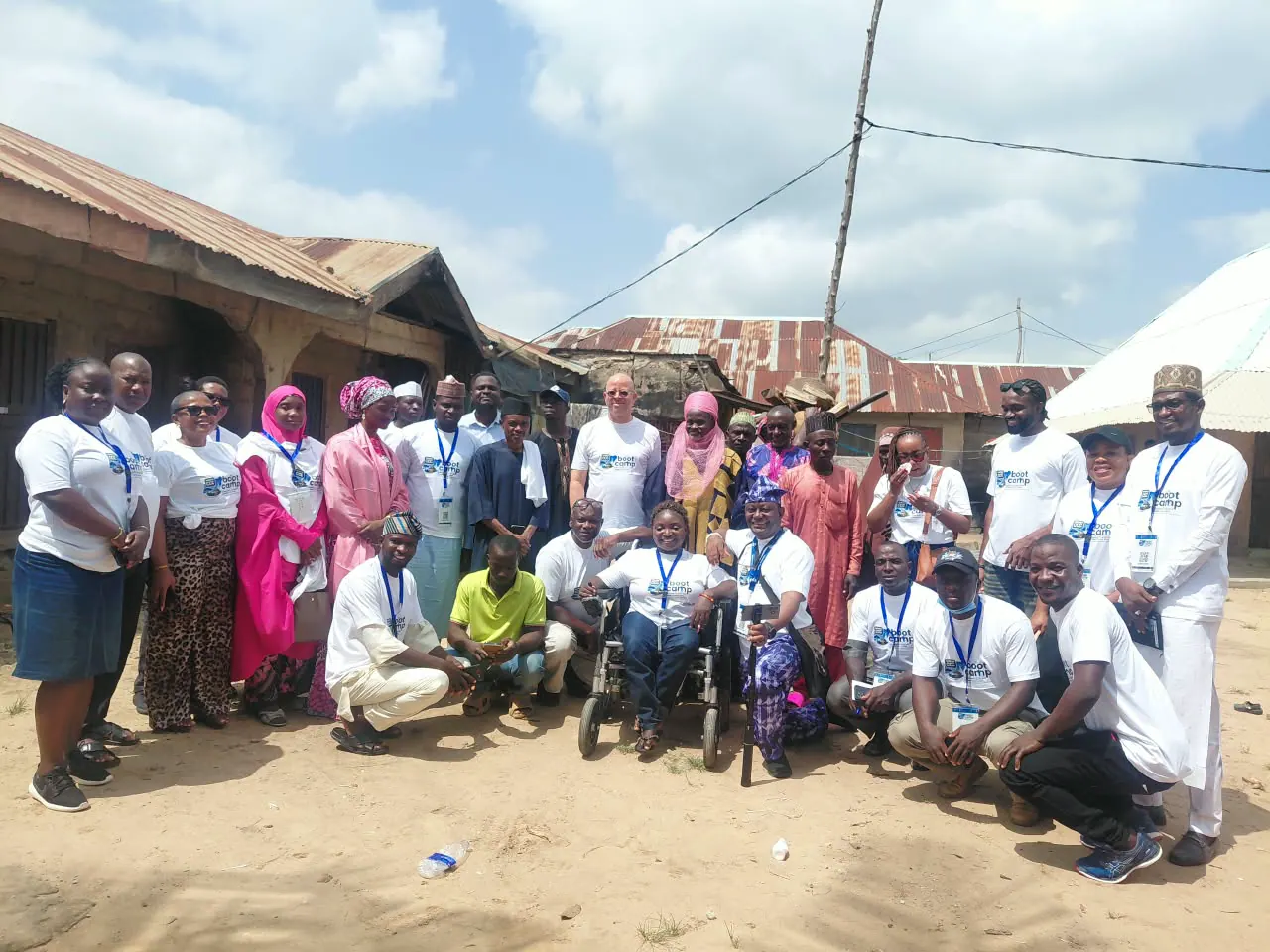
The District Head of Dakwa, Abuja Municipal Area Council (AMAC) Abuja, Alhaji Shuaibu Samu, has commended the establishment of a community internet hub in his area, citing its positive impact on digital access and opportunities for residents. The hub, which was set up by the Centre for Information Technology and Development, the Association for Progressive Communications, Hello World, and 48 Percent, has provided reliable and affordable internet services to the community. Samu described the initiative as a "life-changing opportunity" for residents who previously struggled to access internet services.
Before the establishment of the hub, access to reliable and affordable internet was a major challenge for the people of Dakwa. Samu noted that the hub has enabled youths to access information, learn new skills, and explore opportunities online without having to travel far from the community. He urged residents to take ownership of the facility and support efforts to keep it operational. The hub is being managed through a community-driven model, with users paying a small fee to maintain the equipment and keep the service running.
A Community Champion at the hub, Ismail Shuaibu, explained that the facility is being managed through a community-driven model to ensure its sustainability. According to him, users pay a small fee which is used to maintain the equipment and keep the service running. Shuaibu added that the facility has increased residents' familiarity with digital tools and online services, with many young people now using the hub to study, search for jobs, access online opportunities, and communicate with others.
The CITAD Community Networks Coordinator, Haruna Adamu Hadejia, said the initiative was aimed at bridging the digital divide and ensuring underserved communities were not left behind in the digital economy. He noted that CITAD and its partners had established similar community-centred connectivity initiatives in several locations in Bauchi State and the Federal Capital Territory. Hadejia emphasized that the impact of the initiative depended not only on providing internet infrastructure but also on how communities used and managed the facilities.
Hadejia stressed that connectivity was only the beginning, and what was important was how communities used the internet to improve education, access employment opportunities, obtain information, communicate, and support local development. He said the experience from Dakwa showed that involving residents in the management of community networks was important for their sustainability. The visit to the hub was part of the Nigeria Community-Centred Connectivity Initiative Capacity Building Bootcamp, which brings together stakeholders to strengthen community-led approaches to expanding meaningful and sustainable internet access.
The bootcamp, convened by Local Access Networks, a joint initiative of the Association for Progressive Communications and Rhizomatica, and hosted by CITAD, had participants from MAJI, Fantsuam Foundation, and Hello World. The initiative is supported by the UK Government's Foreign, Commonwealth and Development Office through its Digital Access Programme, the Swedish International Development Cooperation Agency, the World Association for Christian Communication, and 48percent.org. The stakeholders are working together to ensure that communities have ownership of these networks so that they can continue to benefit from them even after the initial intervention.
The establishment of the community internet hub in Dakwa has demonstrated the potential of community-led initiatives to improve digital access and create opportunities for residents. With the support of stakeholders and the involvement of residents in the management of the hub, the initiative is expected to have a lasting impact on the community. The hub has provided a platform for residents to access information, learn new skills, and explore opportunities online, and has also increased residents' familiarity with digital tools and online services.
Key points
- The community internet hub in Dakwa has improved digital access and created opportunities for residents, particularly youths and women.
- The hub is being managed through a community-driven model, with users paying a small fee to maintain the equipment and keep the service running.
- The initiative is part of a larger effort to bridge the digital divide and ensure underserved communities are not left behind in the digital economy.