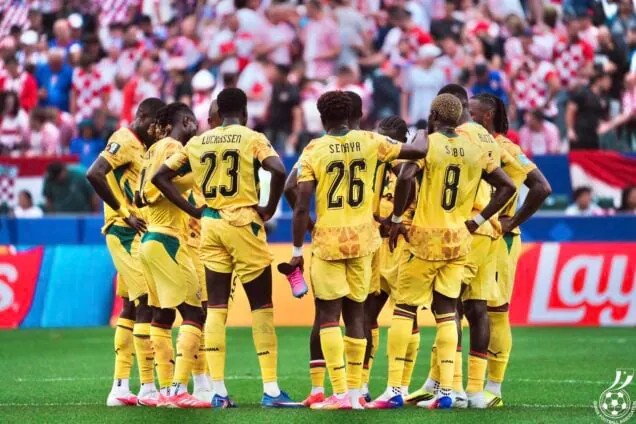
The Ghana Black Stars, once a dominant force in African football, have struggled in recent years, leading to criticism and a perception that they have become an "easy target" for other national teams. This decline is evident in their recent Africa Cup of Nations (AFCON) tournaments and World Cup qualifiers, where they have often failed to advance beyond the group stage or early knockout rounds. The team's losses to less-established nations, including defeats by teams like Gambia, have fueled this perception and made the situation worrying.
One major factor contributing to the team's struggles is the lack of stability in coaching. Over the past 15 years, the Ghana National Team has had 12 distinct managerial stints or appointments, including nine distinct head coaches and interim/caretaker managers. This frequent change of coaches disrupts the team's cohesion and strategy, hindering their performance. The list of past coaches includes Goran Stevanović, James Kwesi Appiah, Maxwell Konadu, Avram Grant, Charles Akonnor, Milovan Rajevac, Otto Addo, Chris Hughton, and Carlos Queiroz.
The constant changes in coaches and managers have harmed the team by disrupting stability, tactical continuity, and player confidence. This has resulted in chronic underperformance, which is strongly associated with high managerial turnover, signaling a deeper organizational crisis within the team. The Ghana Black Stars lack identity due to the high rate of coach turnover, leading to uncertainty about its playing philosophy. Constant manager turnover forces players to learn new systems, formations, and philosophies, hindering their performance.
The team's inconsistent and subpar performances have also been affected by the constant criticism from the public and media, which has adversely affected players' confidence and performance. As a result, Ghana's once-present fear factor has diminished, giving opponents greater confidence. Administrative challenges, including off-field issues, internal disputes, and corruption allegations within the Ghana Football Association, have impacted morale and preparation.
The Ghana Football Association faces challenges, including the imposition of players on the national team by their clubs, which can lead to sabotage or lack of support for the coach. Many football administrators are accused of charging players before imposing them on certain managers. The country has also ceased participating in Colts football, a sport instrumental in identifying talented individuals. The lack of access to soccer academies for talented youth from economically or socially deprived backgrounds has rendered the pursuit of soccer glory a difficult challenge.
Despite having won the African Nations Championship (AFCON) four times, the Black Stars experienced a period of success from 2008 to 2017, with six consecutive AFCON semi-final appearances. However, the team is now a target for soccer minnows in Africa and around the world. To improve its soccer performance, Ghana must shift from short-term fixes to comprehensive institutional reform, grassroots investment, and professional governance.
To regain its status as a football powerhouse, Ghana must revitalize grassroots and school sports, restore nationwide Colts football leagues and structured school sports competitions, and retain local talent by establishing professional contracts and incentives. The national team must include local players, and the FA must address dilapidated stadiums and poorly maintained domestic pitches while professionalizing Premier League Club management through transparent financial models.
Key points
- The team's struggles are attributed to poor results, organizational instability, leadership issues, and a failure to rebuild after their golden era.