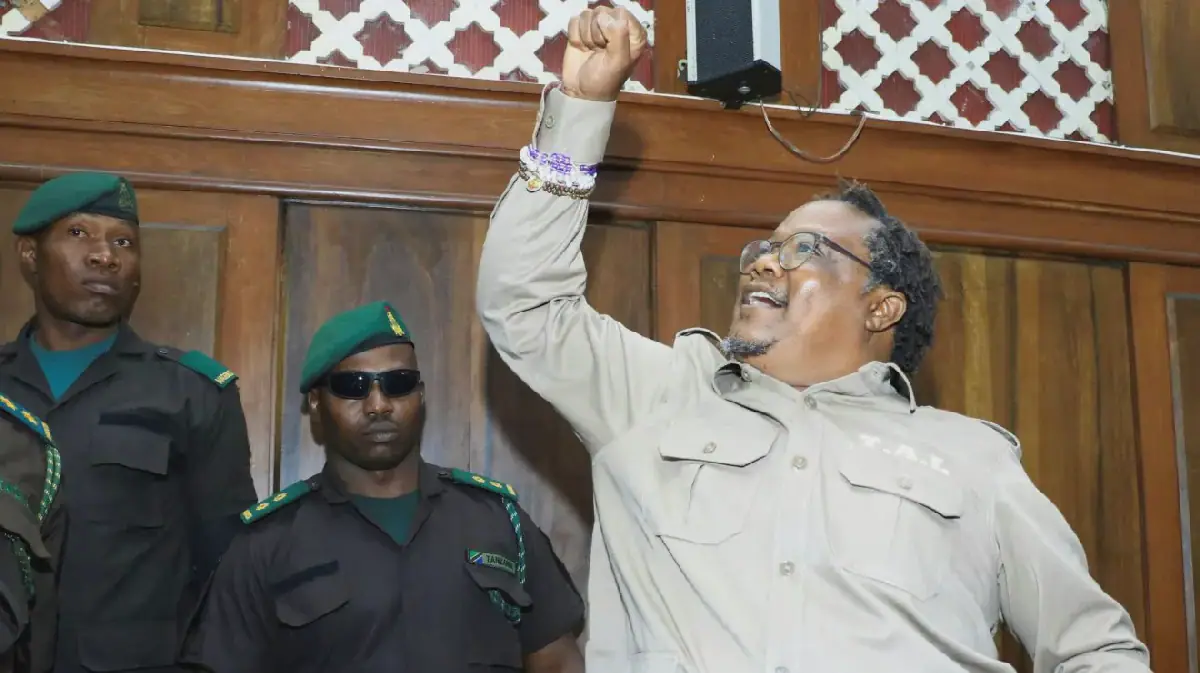
Tanzania's main opposition leader, Tundu Lissu, has been sentenced to four years in prison after being convicted of incitement. The verdict was delivered on Friday in Dar es Salaam under tight security. Lissu, chairman of the opposition party CHADEMA, was arrested in April 2025 over a speech that prosecutors claimed urged supporters to "block the election" and "mobilise rebellion".
Lissu denied the charges, arguing that his remarks did not break the law and that the prosecution was politically motivated. The trial was highly contentious and closely watched internationally. The United States Ambassador to Tanzania, William Trachman, said he was closely following the trial and its implications for the rule of law.
The conviction comes amid concerns over Tanzania's political freedoms and the treatment of opposition leaders. Lissu was acquitted of treason charges. CHADEMA spokesperson Brenda Rupia said Lissu would appeal the conviction. The party's chief legal counsel, Rugemeleza Nshala, also said he would seek bail pending the appeal.
Amnesty International condemned the verdict, describing it as a travesty of justice and calling for Lissu's release. The organization expressed concerns over the implications of the conviction for Tanzania's democracy. The US has also raised concerns over the situation in Tanzania, announcing in December 2025 that it was reviewing relations with the country over violence against civilians and other concerns.
The case is linked to deadly political unrest during Tanzania's October 2025 general elections. CHADEMA was excluded from the vote, and allegations of a crackdown on government critics followed. A commission appointed by President Samia Suluhu Hassan reported that at least 518 people were killed during the violence.
The government blamed protesters for the unrest and denied allegations that security forces used excessive force. President Hassan was declared the election winner with nearly 98 per cent of the vote. The international community has been closely watching the situation in Tanzania, with concerns over the country's democratic progress.
Lissu's conviction is expected to intensify international scrutiny of Tanzania's political freedoms and the treatment of opposition leaders. The US and other international partners have been critical of Tanzania's handling of the elections and the treatment of opposition leaders. Key points include Lissu's four-year prison sentence, concerns over Tanzania's democratic progress, and international scrutiny of the country's political freedoms.
Key points
- Lissu sentenced to four years in prison for incitement
- International community raises concerns over Tanzania's democratic progress
- Conviction expected to intensify scrutiny of Tanzania's political freedoms