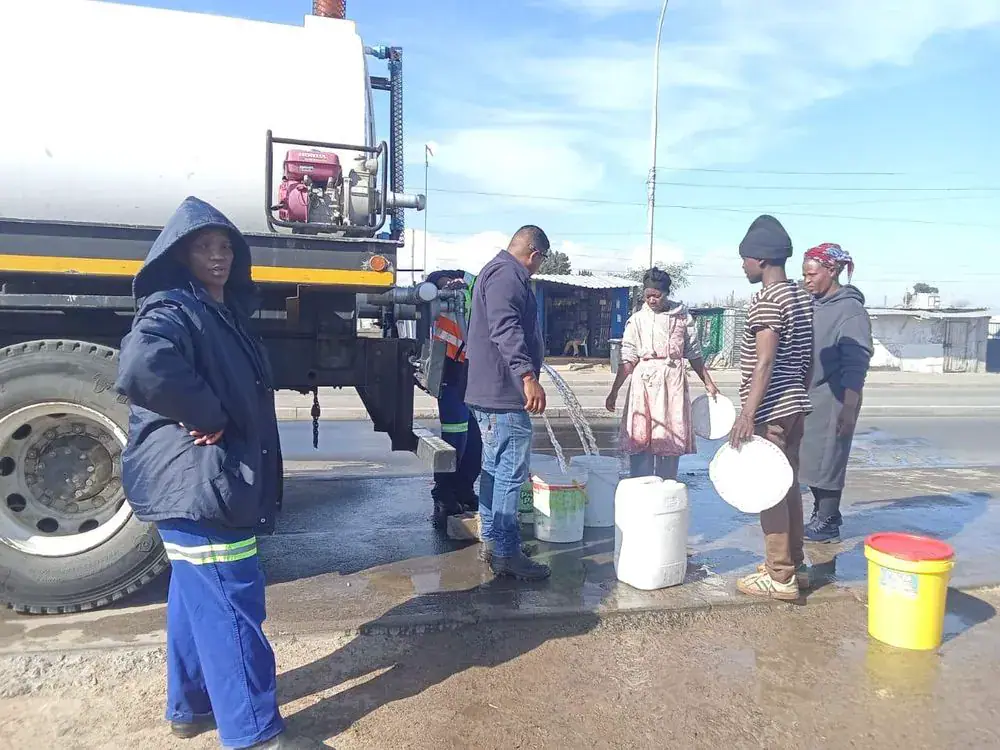
The city of Tshwane is gearing up for a potentially tumultuous coalition government following the 2026 local government elections. A recent water scandal in Bronkhorstspruit, where hundreds of residents fell ill from contaminated water, highlights the challenges facing the new administration. As one of the metropolitan councils that adopted a coalition government in 2016, Tshwane's next five-year term will mark a milestone in its coalition experience, interrupted only by a period of provincial administrative intervention during the COVID-19 pandemic.
In the 2021 municipal elections, the ANC secured a majority of only five seats over the DA in the metro council, with the EFF taking the third position, followed by ActionSA and Freedom Front Plus (FF+). The coalition dynamics have since shifted, with ActionSA initially part of a DA-led coalition before defecting to join the ANC, EFF, and GOOD in a new coalition. As the 2026 elections approach, opinion polls suggest a decline in ANC support, possibly benefiting the MK Party, while ActionSA, EFF, and FF+ maintain relatively stable support levels.
The ANC and DA are expected to be closely matched, with a difference of around 10% in favor of the ANC. This delicate balance could make ActionSA the kingmaker in the formation of the next coalition government. A DA-led coalition would likely rely on ActionSA and FF+, while an ANC-led coalition would need the support of ActionSA, EFF, and MKP. This scenario puts ActionSA in a strong bargaining position, particularly given the ANC's weakened state.
The formation of a coalition government may also depend on the ability of smaller parties to collectively secure around 10% of the seats, potentially replacing ActionSA as a coalition partner. In such a scenario, the definition of a coalition may need to be expanded to include a larger cluster of parties, making it challenging to manage and necessitating a comprehensive coalition agreement. The Local Government: Municipal Structures Act currently allows only two weeks for negotiating such an agreement and electing office-bearers.
An amendment to the Act, known as the Coalition Bill, is currently before Parliament but will not be finalized before the 2026 elections. The bill aims to extend the negotiation period by two weeks and require a formal coalition agreement to be published in the provincial gazette to be binding on all parties. It also seeks to limit the number of no-confidence motions within a 12-month period.
The ideal coalition, according to experts, should be as small as possible, consisting of the largest parties, to ensure stability. A grand coalition between the ANC and DA, for instance, would be an optimal option, similar to the German coalitions during the Merkel era. However, the ANC's Gauteng provincial leadership, including Premier Lesufi, has expressed opposition to such a coalition, preferring a relationship with the EFF and ActionSA.
The ANC's recent track record in Tshwane has been problematic, with the Madlanga Commission exposing serious criminal and unethical practices within the administration. A clean break with this history is necessary for the city's future. The 2026 local government elections will require a new type of political leadership that acknowledges the changing national landscape and the need for adaptability in the face of public skepticism and low trust in institutions.
Key points
- ActionSA is likely to play a crucial role in forming the next coalition government in Tshwane.
- The ANC and DA are expected to be closely matched in the 2026 local government elections.
- A comprehensive coalition agreement will be necessary to manage the complexities of a potentially large coalition cluster in Tshwane.