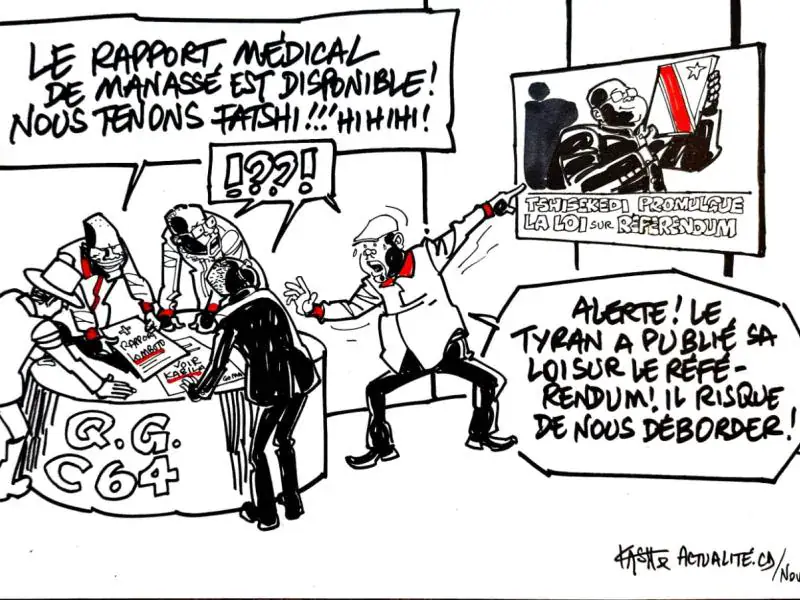
President Felix Tshisekedi of the Democratic Republic of Congo promulgated a law on November 9, 2026, outlining the conditions for organizing a referendum. This move has raised concerns among the opposition, who fear it could be a step towards changing the Constitution and allowing Tshisekedi to stay in power beyond 2028. The opposition is particularly worried about the interpretation of Article 5 of the Constitution and Article 220, which protects certain fundamental provisions, including the number and duration of presidential terms.
The opposition party of Prince Epenge, who is currently detained at Makala, has expressed concerns over the promulgation of the law. They accuse the government of trying to manipulate the Constitution to maintain Tshisekedi in power. The opposition is also preoccupied with the case of Manassé Lomboto, a 25-year-old whose death on September 15, 2026, at the Olympic Hospital in Kinshasa remains shrouded in mystery. Medical documents do not provide clear causes of death, citing only a "medical condition" and a coma.
The death of Manassé Lomboto has sparked concerns among the opposition, who claim that the government is trying to cover up the truth. The case has also raised questions about the role of the government in protecting human rights. Meanwhile, the promulgation of the referendum law has sparked debate about the future of democracy in the Democratic Republic of Congo.
The law on the conditions for organizing a referendum has been seen as a significant move by Tshisekedi to consolidate power. However, the opposition argues that this move is undemocratic and could lead to a constitutional crisis. The international community has been watching the developments in the Democratic Republic of Congo closely, with many expressing concerns about the country's democratic trajectory.
The opposition has called for calm and urged the government to engage in dialogue to address the concerns of all stakeholders. However, the government has not yet responded to the opposition's concerns. The situation remains tense, with many watching to see how the crisis will unfold.
The Democratic Republic of Congo has a history of political instability, and the current developments have raised concerns about the country's ability to hold free and fair elections. The international community has been urging the government to ensure that the electoral process is transparent and inclusive.
The promulgation of the referendum law has significant implications for the future of democracy in the Democratic Republic of Congo. The opposition's concerns about the government's intentions will need to be addressed to prevent further instability. The situation will require careful monitoring to ensure that the country's democratic institutions are protected.
Key points
- The opposition is concerned that the referendum law could be used to change the Constitution and allow President Tshisekedi to stay in power beyond 2028.