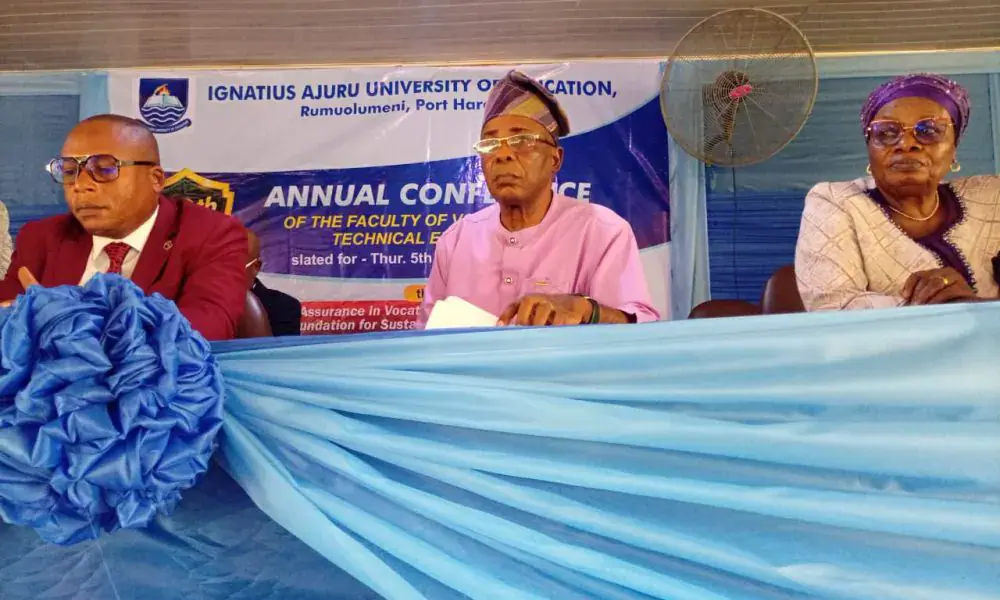
The Acting Vice Chancellor of Ignatius Ajuru University of Education, Prof. Okechuku Onuchuku, has urged state and local governments to provide adequate funding and an enabling policy for vocational and technical education. He made this appeal at the 10th Annual Conference of the Faculty of Vocational and Technical Education, IAUE. Onuchuku emphasized the need for collective responsibility among stakeholders, including educational institutions, industries, and government.
Onuchuku, represented by Prof. Isaac Ogundu, Dean of Vocational and Technical Education, Ndele Campus, highlighted the importance of quality human resources and opportunities for developing productive capacities to secure Nigeria's future. He stressed that attaining quality assurance in tertiary institution programs requires viewing them as strategic investments in human capital and national development.
Prof. Ogundu identified key factors for achieving quality assurance in vocational and technical education, including collective commitment from stakeholders, government support, and industry contributions. He emphasized that building a sustainable workforce is a collective responsibility that requires the commitment of government, educational institutions, employers, professional bodies, teachers, students, and society.
The conference, themed "Quality Assurance in Vocational and Technical Education: A Foundation for Sustainable Workforce in Nigeria," brought together stakeholders to discuss strategies for improving skills development. Prof. Hilary Wordu of the Faculty of Education, Rivers State University, noted that Nigeria's future will be determined by how effectively its citizens utilize their knowledge.
Wordu emphasized that the quality of education and the ability of individuals to apply their knowledge will be crucial in shaping Nigeria's workforce. He stressed that the country's future will not be determined solely by the number of people receiving education but by the quality of what they learn and can do with that knowledge.
The 10th edition of the conference provided a platform for stakeholders to reflect on achievements, assess challenges, and propose practical strategies for improving vocational and technical education. The event demonstrated the faculty's commitment to intellectual engagement and connecting educational research with practical societal needs.
The conference also featured a lead paper presentation by Prof. Wordu, who highlighted the importance of quality education in shaping Nigeria's future. The event showcased the faculty's determination to sustain intellectual engagement and address the practical needs of society, industry, and national development.
Key points
- Prof. Okechuku Onuchuku urges increased funding and collective responsibility to enhance vocational and technical education in Nigeria.