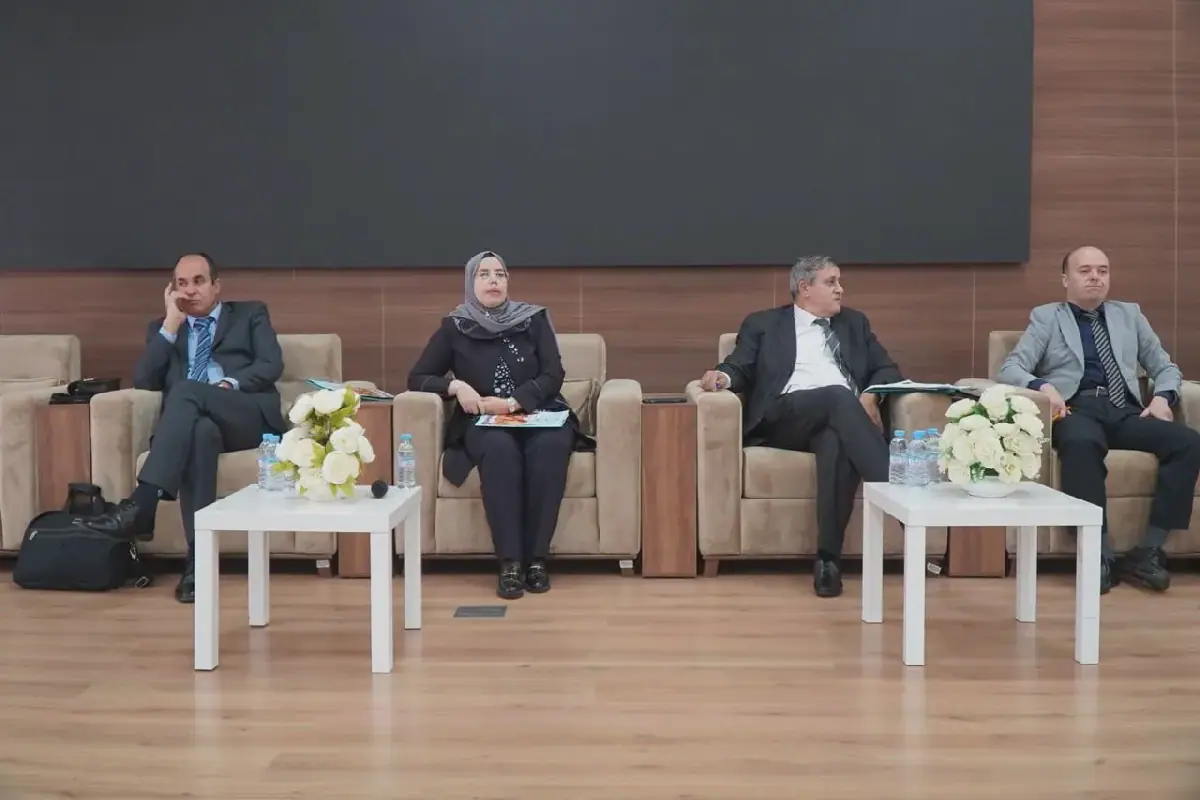
A national scientific symposium was held at Ibn Tufail University's Faculty of Legal and Political Sciences in Kénitra, Morocco, to discuss the country's territorial integrity and the future of Western Sahara. The event, organized in partnership with the Laboratory of Studies and Research in Law and Political Science, and the Research Team on Public Policies, Human Rights, and Sustainable Development, brought together professors, researchers, and students. The symposium aimed to examine the historical, legal, and political developments related to the Western Sahara issue.
In his opening speech, Ahmed Ajeghoun, Acting Dean of the Faculty of Legal and Political Sciences, emphasized the need to move beyond commemorating the Green March and focus on achieving tangible results in institution-building, development, and democracy. He highlighted that the Green March was not just a historical event but a demonstration of the Moroccan people's will and a symbol of national unity. Ajeghoun also stressed the importance of preserving territorial integrity, promoting economic and social development, and ensuring human dignity and equal opportunities.
Ajeghoun discussed the significance of the 2007 autonomy initiative proposed by Morocco, which he described as a realistic and credible solution to the regional conflict. He also highlighted the importance of the United Nations Security Council Resolution 2797, which marked a significant turning point in the national issue. The Acting Dean emphasized the need to link territorial integrity with development and social justice, and to promote a culture of citizenship and participation.
Wael Ouchene, Head of the Arabic Language Law Department, praised the Green March and the Unity Day as milestones that reflect the deep connection between the Moroccan people and the monarchy. He emphasized that these events represent a transition from a liberation phase to a construction phase, aiming to achieve comprehensive development. Ouchene also highlighted the importance of preserving national gains and continuing strategic projects, particularly in the southern regions.
Fatima Bchtaui, Professor and Head of the Research Team on Public Policies, Human Rights, and Sustainable Development, stressed that commemorating the Green March and Unity Day within the university setting is an opportunity for academic reflection and awareness-raising. She emphasized that the Moroccan university has a crucial role to play in addressing national issues through scientific research and public debate. Bchtaui also highlighted the importance of linking national memory to present-day challenges and future prospects.
Amal Benbrahim, a researcher at the Faculty of Legal and Political Sciences, discussed the challenges of ensuring international support for Morocco's position on Western Sahara. She emphasized the need to move beyond mere recognition and diplomatic positions to establishing lasting commitments and strategic partnerships. Benbrahim analyzed the specific positions of the United States, Spain, and the European Union, highlighting the complexities of decision-making within these entities.
The symposium concluded with a call to strengthen national unity, promote development, and enhance Morocco's international standing. The participants emphasized the importance of academic research and public debate in addressing national issues, particularly with regard to Western Sahara. The event provided a platform for experts and researchers to share their insights and perspectives, contributing to a deeper understanding of the complexities surrounding the Western Sahara issue.
Key points
- Moroccan academics discuss diplomatic gains and the future of Western Sahara at Ibn Tufail University symposium.