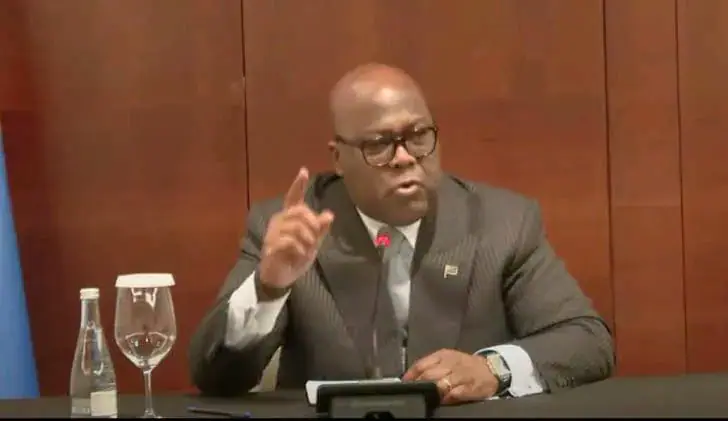
On October 30, Congolese President Félix Tshisekedi addressed the Congolese diaspora in Moscow, reaffirming his stance on national dialogue and his predecessor, Joseph Kabila. Tshisekedi emphasized that national dialogue will proceed without individuals affiliated with Rwanda's President Paul Kagame. He announced the formation of a committee to oversee the talks, stressing that participation requires renouncing past ties with Kagame. Tshisekedi criticized the M23 rebel group, labeling them as puppets controlled by Kagame.
Tshisekedi's remarks in Moscow come amid ongoing tensions with Kabila, who has been accused of attempting to undermine the current administration. The Congolese president accused Kabila of leaving behind a depleted army and accumulating wealth during his tenure. Tshisekedi claimed that Kabila's regime was characterized by misinformation and inefficiency. He also mocked Kabila's previous criticism, suggesting that he was unfairly labeled "Ivan the Terrible" and proposing an alternative moniker, "Tshilombo the Terrible."
Tshisekedi alleged that he is the target of a smear campaign orchestrated by his enemies, fueled by his popularity. He claimed that false accusations were made about his family's finances and that a plot was hatched in Belgium to discredit him. The president stated that he has engaged a team of lawyers to counterattack and promised a judicial response. Tshisekedi also discussed Kabila's refusal to grant a passport to opposition leader Moïse Katumbi, hindering his return to the country.
The Congolese president revealed a confidential conversation with Kabila, who reportedly expressed disdain for the Rwandans, citing their role in his father's assassination. However, Tshisekedi accused Kabila of subsequently allying with Kagame and the M23 rebel group, which has been condemned to death in absentia for its involvement in the rebellion. Tshisekedi characterized this shift as a betrayal, highlighting the stark contrast between Kabila's past and present stances.
Tshisekedi addressed the recent death of Manassé Lomboto, who passed away following an opposition march on September 15. The president attributed Lomboto's death to illness, rather than injuries sustained during the protest. He challenged Prince Epenge, an opposition figure, to explain his claims and denied allegations of dictatorship. Tshisekedi instead pointed to Kabila's past actions, accusing him of responsibility for the deaths of Christians and Bundu dia Kongo adherents.
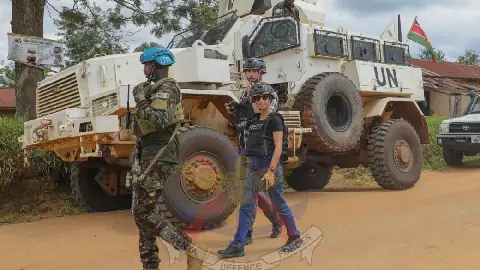
Tshisekedi discussed his recent meeting with Russian President Vladimir Putin, during which he presented a three-point plan for bilateral cooperation, including economic collaboration, support for peace processes, and diplomatic coordination. The Congolese president expressed disappointment with Western partners, particularly the United States, and sought Russia's assistance in pressuring Rwanda to withdraw its troops from Congolese territory. He also solicited support for the renewal of the MONUSCO mission's mandate, which expires on December 20.
Tshisekedi's visit to Moscow and his overtures to Russia have raised questions about the Congo's diplomatic alignment. However, the president's administration has insisted that diversifying partnerships does not imply choosing a side. Tshisekedi reiterated his commitment to implementing UN resolutions, including 2773 and 2808, and advocated for reform of the UN Security Council to ensure greater African representation.
Key points
- Tshisekedi refuses to engage in national dialogue with affiliates of Rwanda's Paul Kagame.
- The Congolese president accuses his predecessor, Joseph Kabila, of accumulating wealth and undermining the army during his tenure.
- Tshisekedi seeks Russia's support in pressuring Rwanda to withdraw its troops from Congolese territory and in renewing the MONUSCO mission's mandate.