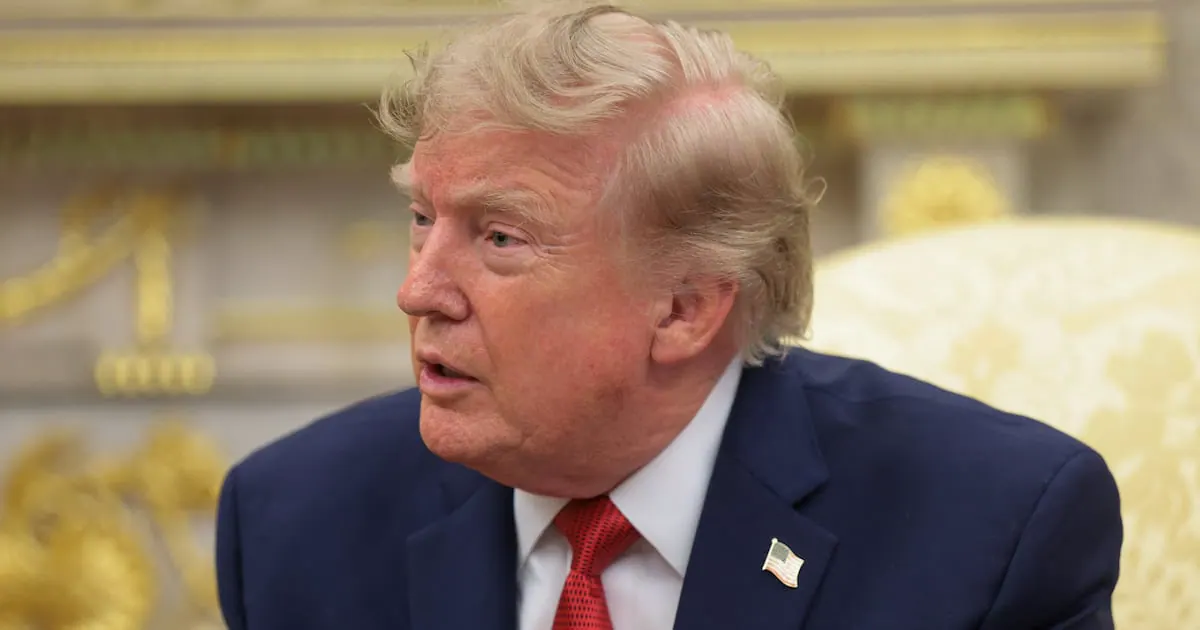
US President Donald Trump's move to ban several news outlets from the White House has sparked controversy and raised concerns about the erosion of press freedom. On Friday, Trump announced that he would ban CNN, MSNBC, and Politico from the White House, citing their coverage as "fake news". The ban is the latest in a series of measures by the Trump administration to limit press access and curb criticism from the media.
The ban has been met with fierce resistance from the affected outlets, which have filed a lawsuit in a Washington, DC, federal court, arguing that the ban is unlawful retaliation for their legally protected speech under the First Amendment. The lawsuit also claims that the ban violates their rights to due process. The outlets were given no advance notice of the ban and were told that their hard passes, which allow them to access the White House grounds, had been deactivated.
Legal experts say that Trump's justification for the ban - his dislike of the outlets' coverage - could be its undoing in a legal challenge. US courts have long held that the government cannot condition press access on favourable coverage once it has opened a space to the media. "They don't have to allow anyone in, but once they do, they cannot decide who gets in based on viewpoint or content," said University of Maryland journalism professor Lucy Dalglish.
The White House has defended the ban, saying that the outlets are capable of reporting from outside the White House. In a statement, the White House said that the "Fake News has no place demanding a spot in the President's Oval Office. The lies they smear are a disservice to the American public and tear at the very fabric of our democracy." However, this defence is unlikely to succeed in court, according to legal experts.
A US district judge, Timothy Kelly, who blocked Trump from banning a CNN reporter during his first presidency, has scheduled a hearing on the outlets' request for a temporary restraining order blocking the move. The press does not have unfettered access to the White House, and presidents have more discretion over access to tightly controlled spaces. However, the ban on CNN, MSNBC, and Politico appears to be a significant departure from the usual practice of allowing a range of media outlets to cover the president's activities.
The ban has also raised concerns about the Trump administration's broader attempts to limit press freedom. In March, a federal judge blocked the US defence department from implementing regulations that would allow officials to revoke reporters' Pentagon press credentials if they sought information that was not authorised for public release. The Trump administration is appealing against the ruling.
The outcome of the lawsuit is uncertain, but legal experts say that the ban faces long odds in court. "There has to be a non-arbitrary and compelling reason to restrict access, and to say that you disagree with someone's opinion has never been a compelling reason under the First Amendment," said First Amendment lawyer Douglas Mirell.
Key points
- The ban on CNN, MSNBC, and Politico may violate US laws prohibiting viewpoint discrimination by the government.
- The outlets have filed a lawsuit arguing that the ban is unlawful retaliation for their legally protected speech under the First Amendment.
- A US district judge has scheduled a hearing on the outlets' request for a temporary restraining order blocking the move.