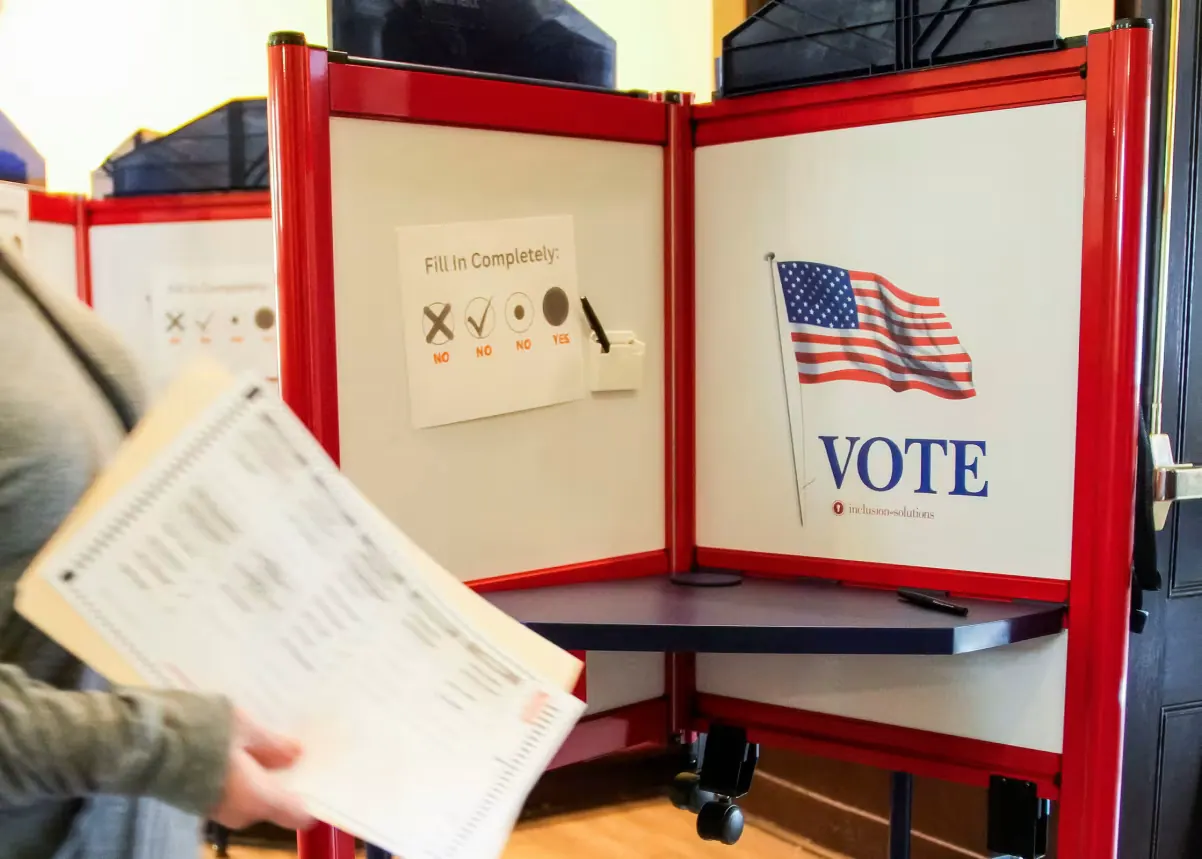
The Trump campaign is shifting its midterm strategy to focus on boosting voter turnout, as Republican candidates struggle with the president's low approval ratings. With control of Congress at stake, advisers believe Trump's best chance of helping his party is by increasing base voter turnout. A Trump adviser described the situation as "obviously going to be f***ing rough," but noted that the best-case scenario is replicating Democrats' 2022 performance, where they narrowly lost control of the House but kept the Senate.
Trump's team has planned an aggressive campaign schedule for October, with the president and Vice President JD Vance visiting battleground and deep-red states. The schedule, put together by senior advisers including chief of staff Susie Wiles, has Trump on the campaign trail for most days in October. Stops are planned in Alabama, Oklahoma, Florida, Texas, Michigan, and Ohio, with a focus on battleground districts. The goal is to "goose turnout 2-3 points" in key areas.
However, Republican candidates in some districts are distancing themselves from Trump, citing issues like the Iran War, economy, and immigration. Michigan Senate candidate Mike Rogers recently lamented high grocery prices and called for an end to the war with Iran. Similar sentiments were echoed by GOP Senate candidates in Iowa and Ohio. Some lawmakers have even voted to limit Trump's war powers or removed Trump references from their campaign websites.
Despite concerns about candidates distancing from Trump, a GOP official involved in strategy brushed off these worries, saying candidates "need to run the races they need to run." Trump's political team still believes his ability to drive turnout is a key asset for Republicans. One official noted that "the left is going to attack [Republican candidates] as being close to Trump no matter what, so why not get the benefit out of it, which is max turnout."
Trump's midterms strategy hinges on maximizing base voter turnout, as his approval ratings make it difficult to win over independents and swing voters. Sources working on midterm strategy told CNN that Trump's team is working off the central belief that they can still win with enough turnout. To achieve this, the campaign committees and Trump's political operation have been sharing data to target specific voters.
However, this strategy also carries risks, as Trump is a strong driver of Democratic turnout. Some Republicans have expressed concerns about candidates appearing alongside Trump, but one official noted that "the cake is already baked" and they need to "lean into" Trump's influence. White House spokesperson Davis Ingle defended Trump's ability to communicate with his coalition and motivate Republican voters.
The Trump campaign is also deploying Vice President JD Vance as a crucial surrogate, who is seen as staying on message and able to help raise money. However, Vance is still viewed as an extension of Trump and may not be an effective asset in truly competitive territories. The decision on where and when to send both men is driven by the campaign's massive data operation, aimed at maximizing their impact.
Key points
- The Trump campaign is focusing on boosting voter turnout to salvage midterm hopes.
- Republican candidates in some districts are distancing themselves from Trump.
- Trump's ability to drive turnout is seen as a key asset for Republicans.