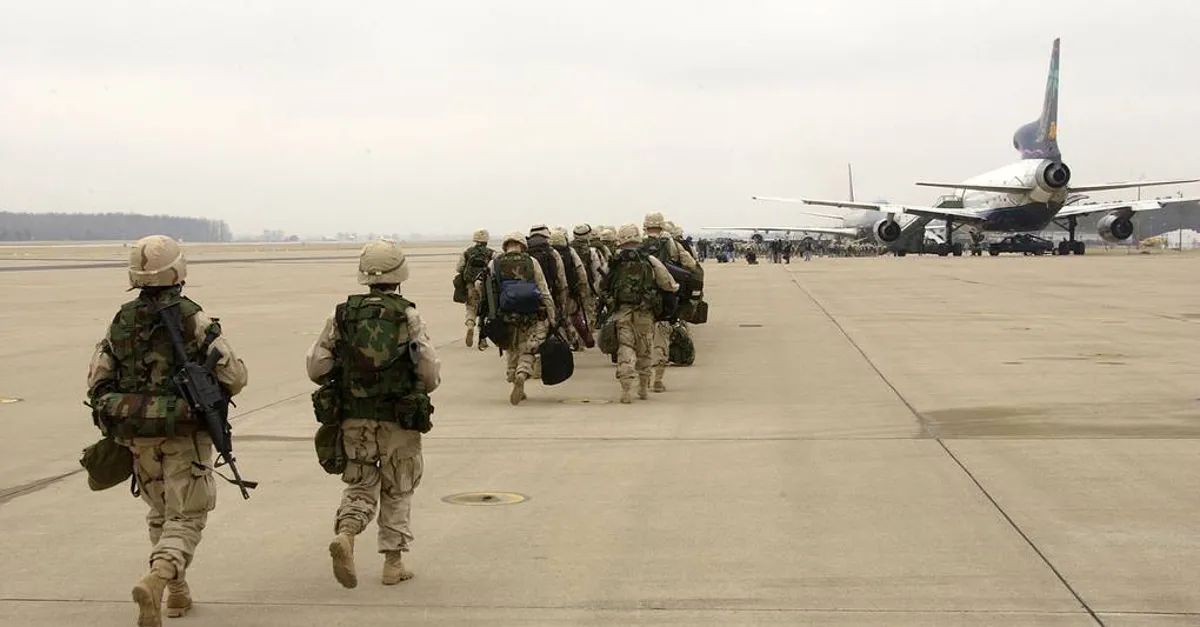
US President Donald Trump announced that the last American troops have left Iraq, marking the end of the US military presence in the country. Trump described the withdrawal as a "great day for America" and a victory for Iraq. The US military had been in Iraq since 2003, initially to overthrow Saddam Hussein's regime and later to combat the Islamic State (ISIS). The withdrawal was carried out in an organized manner, with troops and equipment being relocated from a base in Erbil.
The US military operation in Iraq was part of a broader campaign against ISIS, which had established a caliphate in parts of Iraq and Syria. The operation, known as Operation Inherent Resolve, was launched in 2014 and had made significant gains against ISIS. Trump said that the US had accomplished its mission in Iraq, which was to defeat ISIS and dismantle its caliphate. He also praised Iraqi Prime Minister Mustafa al-Kadhimi, expressing hope that he would be able to manage the country's affairs effectively.
The withdrawal of US troops from Iraq was carried out in accordance with an agreement between the US and Iraqi governments. The Iraqi government had requested that all foreign troops leave the country by September 30. The US Pentagon announced that the US and its allies had officially ended Operation Inherent Resolve in Iraq. The withdrawal is seen as a significant development in the region, marking a shift in the US military presence in the Middle East.
Trump drew a contrast between the US withdrawal from Iraq and the withdrawal from Afghanistan, which he said had been chaotic and had left behind military equipment and resulted in human losses. He emphasized that the US had maintained a clear mission in Iraq and had avoided getting bogged down in a long-term presence. The US military had been working closely with the Iraqi military to combat ISIS, and the withdrawal is seen as a significant achievement for the Iraqi government.
The US military presence in Iraq had been a subject of controversy, with some Iraqis viewing the presence of foreign troops as an occupation. The withdrawal of US troops is seen as a step towards greater Iraqi sovereignty and independence. However, concerns remain about the ability of the Iraqi military to maintain security in the country, particularly in the face of ongoing threats from ISIS.
The US withdrawal from Iraq has significant implications for the region, particularly in terms of the balance of power between different countries. The US has maintained a significant military presence in the Middle East, with troops stationed in countries such as Kuwait, Bahrain, and Qatar. The withdrawal from Iraq is seen as part of a broader shift in US military strategy in the region.
The future of US-Iraq relations is likely to be shaped by the withdrawal of US troops. The two countries have a long-standing relationship, with the US providing significant economic and military aid to Iraq. The US is also a key partner for Iraq in the fight against ISIS, and it is likely that the two countries will continue to cooperate on security issues.
Key points
- The US military presence in Iraq has ended, with the last American troops leaving the country.
- The withdrawal was carried out in accordance with an agreement between the US and Iraqi governments.
- The US is likely to continue to cooperate with Iraq on security issues, despite the end of the military presence.