Public transport fares in Ghana will increase by 8% effective Saturday, September 26, 2026. This is the first official increment in fares since a 15% decrease in May 2025. The announcement was made by the Ghana Private Road Transport Union (GERTRUDA) and the Ghana Road Transport Coordinating Council (GRTCC). The increase comes after some commercial transport operators began implementing arbitrary fare increases on certain routes, citing rising operational costs.
The new fares were arrived at following consultations between the Ministry of Transport and commercial road transport operators held from September 8 to 22, 2026. The adjustment will affect a huge number of commuters in the country, with over 80% of urban residents relying on public transport for daily commutes. Official statistics suggest that 84% of passenger trips in local cities are by public transport. A 2017 national urban mobility survey revealed that 84% of passenger trips in cities are made by public transport and 15% by private cars.
The 8% increase in transport fare will impact various services, including intra-city "trotro" services, shared taxis, inter-city long-distance transport, and haulage services. For intra-city "trotro" services, a fare of GH¢5 will increase to GH¢5.50, while GH¢10 will go up to GH¢10.80. A GH¢15 fare will rise to GH¢16.20, while GH¢20 will increase to GH¢21.60. For shared taxis, a journey of up to one kilometre will increase from GH¢1.70 to GH¢1.90.
The GPRTU and GRTCC said the adjustment took into consideration changes in the ex-pump prices of petroleum products, spare parts, vehicle maintenance, and other operational costs. They said the factors were weighed against the financial challenges facing drivers and commuters. Indeed, fuel prices have increased considerably this year, triggering agitations by private transport operators for increases.
The last adjustment in public transport fares was the 15% downward review in May last year. It followed an agreement between transport unions and the Ministry of Transport on the basis of decreasing fuel prices and the appreciation of the Ghana cedi. At the time, petrol experienced a sustained drop in price from around GH¢15 per litre in January 2025 to less than GH¢12 per litre.
The GPRTU and GRTCC have directed all commercial transport operators to comply with the approved fares and display the revised fare schedules at loading terminals and stations. They said operators who charged fares above the approved rates would face appropriate sanctions. The joint statement was signed by the General Secretary of the GPRTU, Godfred Abulbire, and the General Secretary of the GRTCC, Emmanuel Ohene Yeboah.
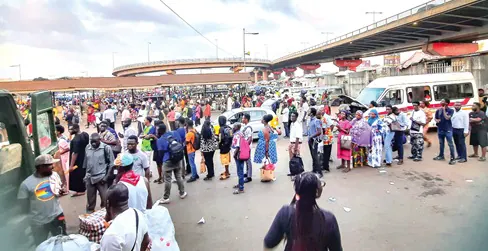
Some passengers and operators have reacted to the fare increase, with some saying it was necessary to enable commercial transport operators to meet rising operating costs. However, others have expressed concerns that the adjustment would put additional pressure on households already struggling with the high cost of living. The GPRTU has assured that it will work with transport unions, the Ministry of Transport, and the Ghana Police Service to ensure compliance with the approved fares.
Key points
- The 8% increase in transport fare will affect over 80% of urban residents who rely on public transport for daily commutes.
- The new fares were arrived at following consultations between the Ministry of Transport and commercial road transport operators.
- The adjustment will impact various services, including intra-city "trotro" services, shared taxis, inter-city long-distance transport, and haulage services.