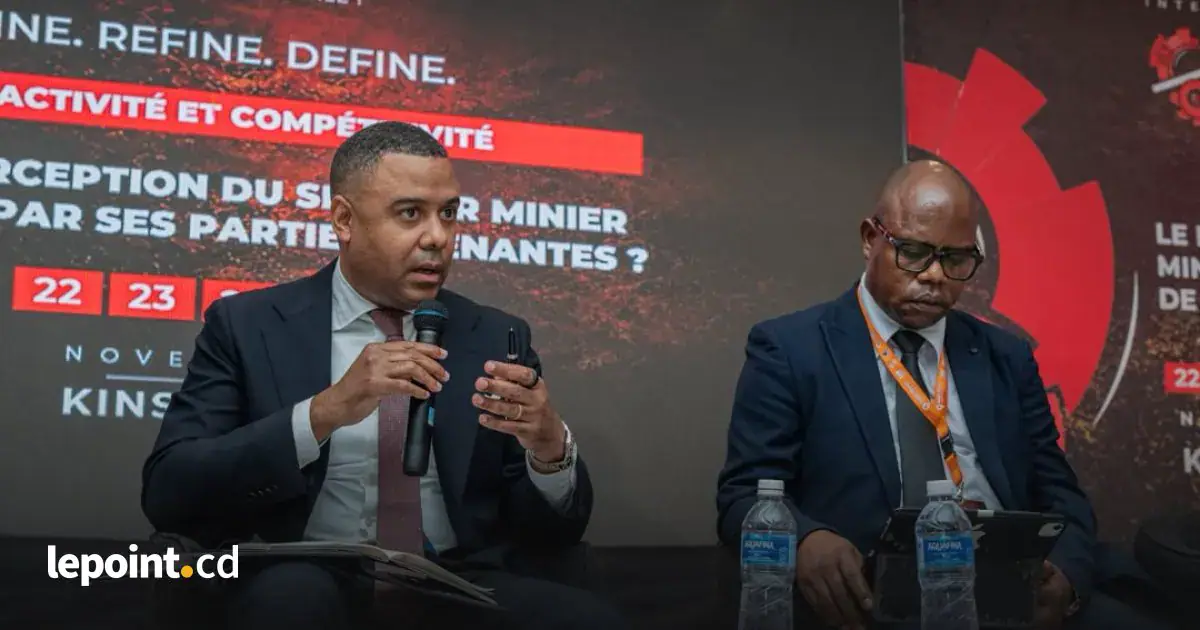
Trafigura, a global trading company, has been actively monitoring 48 artisanal cobalt suppliers in the Democratic Republic of Congo (DRC) over the past five years. The company conducted around 112 site visits during this period, according to Hervé Otschudi, Trafigura's executive director for the DRC. Otschudi presented this information at a Makutano Mining panel discussion in Kinshasa, highlighting the company's efforts to improve the artisanal cobalt supply chain.
Out of the 48 suppliers being tracked, 27 are currently under improvement plans, with nine showing significant progress in their ratings. This means that over half of the suppliers monitored by Trafigura are working to address concerns, and about a third have made notable improvements over the five-year period. The on-site monitoring is carried out by a responsible sourcing specialist based in Lubumbashi, ensuring that Trafigura is actively engaged with its suppliers.
Trafigura's involvement in the artisanal cobalt market is driven by commercial interests, as the company seeks to secure a stable supply of the critical mineral. According to Otschudi, the proportion of artisanal cobalt on the market can fluctuate between 5% and 25% depending on market trends and annual production. International buyers require transparency on the origin and price of the cobalt, which Trafigura aims to provide through its monitoring and improvement efforts.
Trafigura has also partnered with the Entreprise générale du cobalt (EGC), a subsidiary of the state-owned Gécamines, to commercialize cobalt from artisanal mining. The EGC holds the exclusive mandate to purchase strategic minerals from artisanal miners, and Trafigura's collaboration with the company aims to formalize the supply chain. Additionally, Trafigura, EGC, and US-based EVelution Energy signed a memorandum of understanding in May to establish a direct cobalt supply chain between the DRC and the United States.
Beyond its trading activities, Trafigura is investing in infrastructure projects in the DRC, including the rehabilitation and extension of the Lobito railway line. The company is a shareholder in Lobito Atlantic Railway, along with Mota-Engil and Vecturis, and has secured $753 million in loans from the US Development Finance Corporation and the African Development Bank to support the project. Trafigura is also investing in the electricity sector, including a 200-kilometer interconnection project between Kalumbila, Zambia, and Kolwezi.
The infrastructure investments are part of Trafigura's broader strategy to support the development of the DRC's mining sector. According to Otschudi, the company's revenue reached approximately $250 billion, with its latest annual report stating $240.3 billion for the year ending September 30, 2025. Otschudi expressed confidence that the DRC's strategic minerals will continue to attract investment, despite potential shifts in global demand and sourcing.
As Trafigura continues to expand its presence in the DRC, the company emphasizes its commitment to responsible sourcing and compliance with local regulations. Otschudi highlighted the importance of respecting Congolese norms, creating jobs, and paying taxes as key criteria for investors. With its ongoing efforts to improve the artisanal cobalt supply chain and invest in local infrastructure, Trafigura aims to play a constructive role in the development of the DRC's mining sector.
Key points
- Trafigura is monitoring 48 artisanal cobalt suppliers in the DRC, with 27 under improvement plans.
- The company has invested in infrastructure projects, including the Lobito railway line and a 200-kilometer interconnection project between Kalumbila, Zambia, and Kolwezi.
- Trafigura aims to formalize the artisanal cobalt supply chain and provide transparency on the origin and price of the mineral.