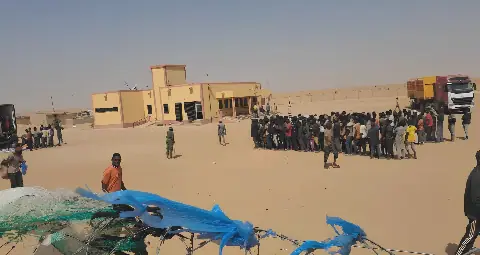
Small-scale traders across Africa play a vital role in connecting local markets and sustaining household incomes, yet they remain largely overlooked in policies designed to integrate African economies. The African Continental Free Trade Area aims to create a single, borderless continental market that boosts intra-African trade and lifts millions out of poverty. However, these traders face significant challenges, including complicated customs procedures and limited access to affordable finance. As a result, they often operate informally, outside of formal commercial arrangements.
Informal cross-border trade in Africa is estimated to be worth between $10 billion and $24 billion annually, with women accounting for around 70% of traders. In the Southern African Development Community, informal cross-border trade has been estimated at $17.6 billion. These figures highlight an important blind spot in trade statistics, which can lead policymakers to underestimate the extent to which neighbouring economies depend on one another. Accurate estimates would enable policymakers to align border infrastructure, tariff regimes, and support services with the real volume of commerce.
The African Continental Free Trade Area offers an important opportunity to expand trade between African countries and strengthen regional economic integration. However, reducing barriers for formal businesses does not automatically make cross-border trade accessible to everyone. Small-scale traders can face significant challenges, including corruption, harassment, and limited access to affordable finance. These challenges can make formal trading arrangements costly or impractical, particularly for people with limited capital.
To address these challenges, governments and regional institutions should make trade information and border procedures more accessible to small-scale traders. This could include clear guidance on customs requirements, simplified procedures for eligible small consignments, and stronger safeguards against harassment. Additionally, African countries need better data on informal cross-border trade, which would help governments understand what is being traded, where economic activity takes place, and which traders face the greatest barriers.
Traders themselves should have a voice in designing trade policy, particularly small-scale traders and women traders. Associations representing these traders can help policymakers identify which procedures create unnecessary costs and which protections are most urgently needed. Appropriate financial services, including digital payments and credit, could also help traders. However, formalisation should be approached carefully to avoid pushing some people out of cross-border commerce altogether.
The Organisation for Economic Co-operation and Development reported that official development assistance globally fell by 23.3% in 2025, with a further 6.9% decline projected for 2026. African countries cannot replace international assistance with trade, but the cuts make it increasingly important to strengthen economic activity and ensure that more people can benefit from regional markets. By recognising the importance of small-scale cross-border traders, policymakers can create more inclusive and effective trade policies.
Ultimately, the African Continental Free Trade Area must work for traders on the ground, not just formal businesses. By making trade information and border procedures more accessible, improving data on informal cross-border trade, and giving traders a voice in designing trade policy, policymakers can create a more inclusive and effective trade agreement. This would help to strengthen regional economic integration, boost intra-African trade, and lift millions out of poverty.
Key points
- Small-scale traders play a vital role in regional trade and economic transformation in Africa.
- Informal cross-border trade in Africa is estimated to be worth between $10 billion and $24 billion annually.
- The African Continental Free Trade Area must be more inclusive of small-scale traders to be effective.