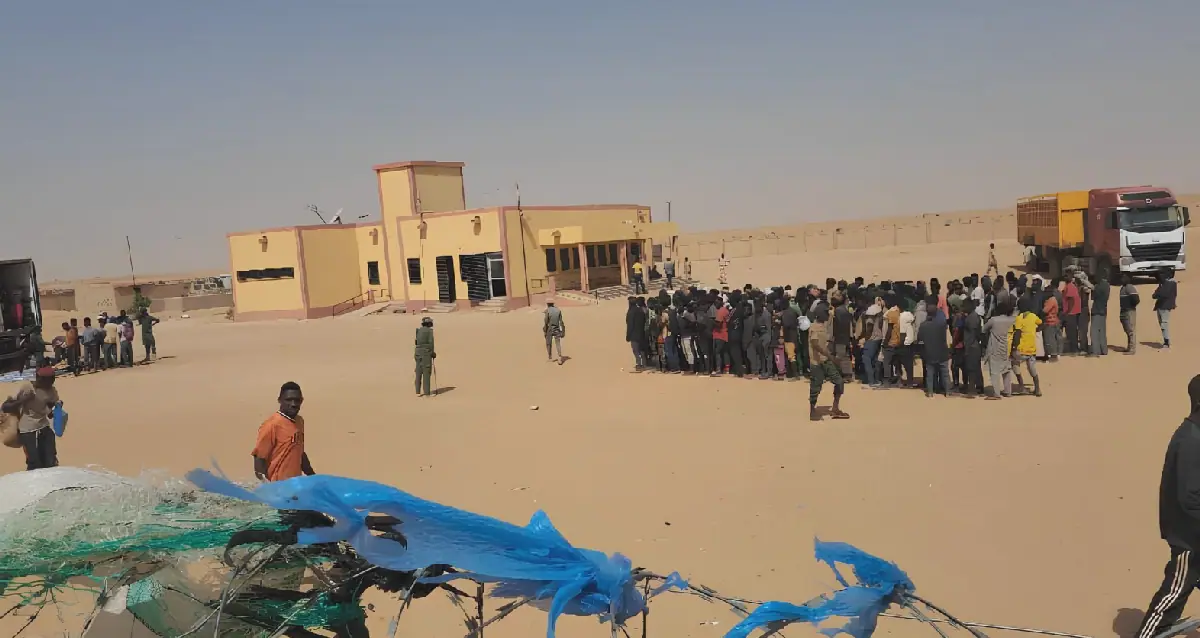
The Algerian government has expelled nearly 32,000 migrants to Niger since the beginning of the year, according to a report by the Nigerien NGO Alarme Phone Sahara (APS). The expulsions have taken place in difficult conditions, with many migrants facing harsh weather and inadequate care. This number is close to the record set in 2025, when 34,236 migrants were expelled from Algeria to Niger.
The expulsions have been a recurring phenomenon since 2014, with migrants from Niger and other African countries being regularly deported from Algeria. Many of these migrants are women and minors, and the process has been criticized for its impact on human rights. APS has denounced the "disastrous consequences" of these expulsions, including the death of a Togolese national in July due to severe burns sustained during the expulsion process.
Migrants from Niger are typically transported in convoys to the border town of Assamaka, where they are taken care of by local authorities. However, non-Nigerien migrants are often left stranded in the desert, with no assistance or care. They are forced to walk 15 kilometers to reach Assamaka, facing extreme weather conditions and risking their lives.
The situation has raised concerns about the impact on Niger's security and stability. The country's military government, which took power in 2023, has expressed fears that the massive influx of non-Nigerien migrants could disrupt the country's security balance. Niger is already facing jihadist attacks on several fronts, and the government is struggling to cope with the humanitarian crisis.
Despite the alarming situation, APS has observed a recent decrease in expulsions, suggesting that the Algerian government may be changing its policy. According to the NGO, Algerian authorities have started expelling more people by plane directly to their countries of origin, rather than sending them to the Nigerien border.
The humanitarian crisis at the Algeria-Niger border has resulted in significant loss of life. In 2025, at least 35 migrants died in the desert, according to APS. The NGO has repeatedly called for improved care and protection for migrants, as well as greater accountability from the Algerian and Nigerien governments.
The situation remains a pressing concern for humanitarian organizations and governments in the region. With the year drawing to a close, it remains to be seen whether the trend of expulsions will continue, and what impact this will have on Niger's already fragile security situation.
Key points
- Almost 32,000 migrants have been expelled from Algeria to Niger since January.
- The expulsions have been criticized for their impact on human rights, with many migrants facing harsh conditions and inadequate care.
- The situation has raised concerns about the impact on Niger's security and stability.