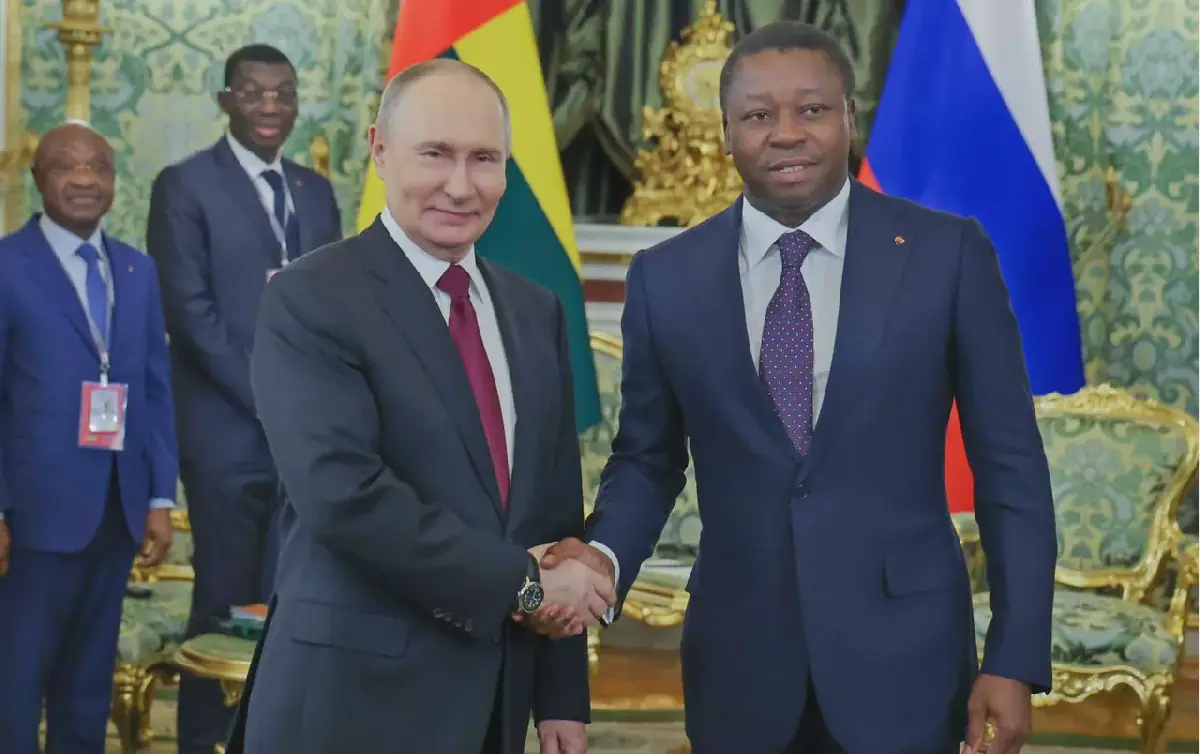
Togo's President Faure Gnassingbé participated in the third edition of the Russia-Africa Economic and Humanitarian Forum in Moscow on October 28, 2026. The forum focused on promoting shared growth through commerce, investments, energy infrastructure, payment systems, digital transformation, and food security. The event brought together African leaders and Russian partners to discuss ways to strengthen economic ties.
During the forum, President Gnassingbé outlined Togo's priorities for cooperation with Russia, which include energy, agriculture, industrial transformation, and scientific and technical training. He emphasized the need for a balanced partnership based on three pillars: sovereignty, peace, and economic transformation. This approach aims to ensure that both countries benefit equally from their cooperation.
In his address at the forum's closing plenary session on October 29, President Gnassingbé highlighted the importance of sovereignty in any cooperation. He stressed that African countries should define their own priorities and choose their partners freely, based on mutual respect. He also emphasized the need for cooperation to address the root causes of crises, including poverty, unemployment, and lack of access to basic services.
The Togolese government has signed two cooperation agreements with Russia in the sectors of education, culture, and humanitarian action, as well as a memorandum of understanding on human rights. These agreements aim to strengthen ties between the two countries and promote cooperation in areas of mutual interest. President Gnassingbé's visit to Russia follows a recent trip to China, where he also engaged in discussions on trade, infrastructure, and technology.
Critics argue that President Gnassingbé's frequent foreign trips have not led to significant economic benefits for Togo. Despite numerous visits and agreements, the country's economic situation remains challenging. The president's opponents accuse him of prioritizing his own interests over the needs of the Togolese people. The government's spending on international travel has also raised concerns about the use of public funds.
President Gnassingbé has been in power for over 21 years, and his country's economic development has been slow. The opposition and civil society groups have long called for greater transparency and accountability in the government's dealings. The president's recent trips to Russia and China have sparked renewed debate about the effectiveness of his foreign policy approach.
As Togo continues to face economic challenges, President Gnassingbé's government will likely face increasing pressure to deliver tangible results. The country's future development will depend on its ability to attract investment, create jobs, and improve living standards for its citizens. The success of President Gnassingbé's foreign policy initiatives will be closely watched by Togolese citizens and international observers alike.
Key points
- Togo's President Faure Gnassingbé emphasized the importance of sovereignty and a balanced partnership with Russia during the Russia-Africa Economic Forum.