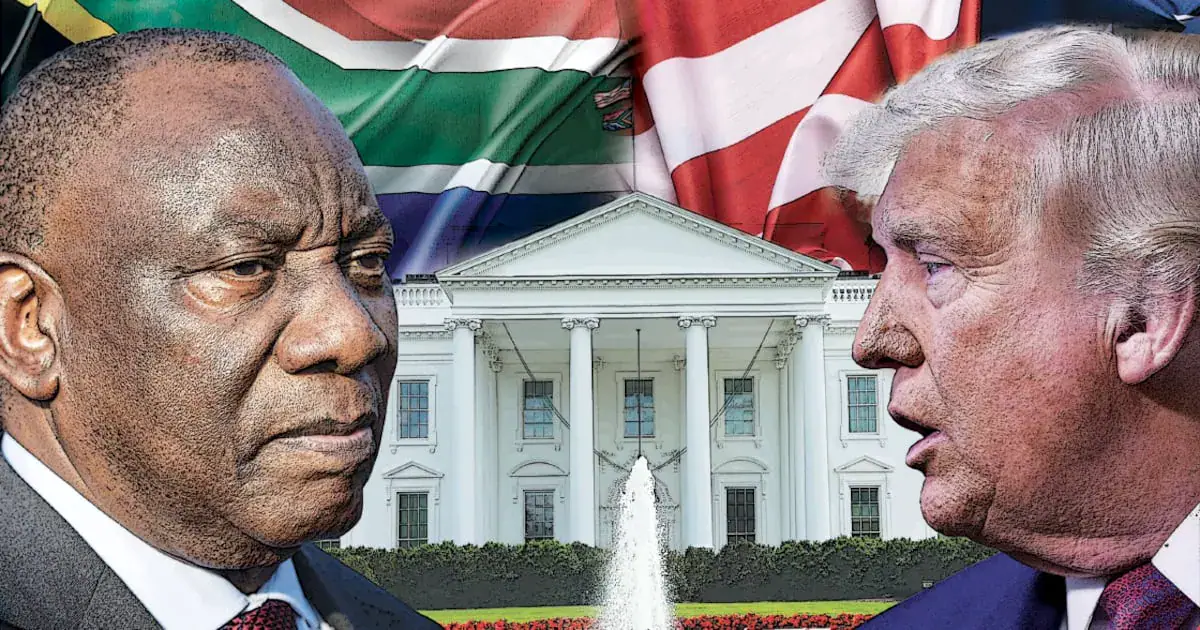
The loss of Agoa benefits will raise the cost of doing business with the US, despite alternative systems governing trade between the two countries. US President Donald Trump wrote to President Cyril Ramaphosa, informing him that South Africa would be excluded from Agoa provisions starting next year. The country's exports to the US will now be administered through the Generalised System of Preferences (GSP) and the World Trade Organisation's (WTO's) most favoured nation (MFN) provisions.
The exclusion from Agoa does not terminate all trade between South Africa and the US, but it does raise the cost of doing business with the US and the cost of some South African goods in the US. According to Saul Levin, executive director of Trade and Industrial Policy Strategies, the removal of Agoa benefits is small compared to the earlier Trump tariffs. The MFN rate, which South Africa is now subject to, is not significantly higher.
The value of South African exports to the US that enjoy Agoa preferences amounts to about $1.6bn to $1.7bn. GSP benefits have largely been integrated into, or run alongside, Agoa. Bilateral trade between the US and South Africa reached $28.8bn in 2025. Between 74% and 90% of total South African goods exported to the US are administered under MFN rules, making up the balance of South Africa's roughly $16.5bn in annual US-bound exports.
Levin said it is clear that Trump does not consider South Africa a strategic partner, and it is unlikely that the country will be back in Agoa during his term. The removal of South Africa from Agoa further contributes to the declining relationship between the two countries and undermines the importance of the US working with one of the largest economies in Africa. There are now 19 African countries excluded from Agoa, which undermines the overall usefulness of the measure.
Critical minerals are an important consideration in US trade with South Africa and the region. Trade in these commodities is robust and considerable, largely by private companies, and at this stage not impacted by bilateral relations or threats of retaliatory trade action. The direct economic impact of removal from Agoa is limited, and South Africa's removal is not a surprise, according to Levin.
Trade, industry and competition minister Parks Tau said that while Agoa is important, it does not constitute the totality of the economic relationship between the two countries. In 2025, about 89% of South African exports to the US entered under ordinary WTO most favoured nation terms, while about 10% entered under Agoa, down from 28% in 2024. Agoa exports were valued at about $1.7bn in 2025, down from $4bn in 2024.
The outcome of the midterm elections in the US has opened a fresh opportunity for South Africa to avert its exclusion from Agoa. Terry Gale, chair of Exporters Western Cape, proposed that a mission to the US should carry a clear presidential mandate and be supported by credible representatives of business, organised labour and the government. This mission must arrive with practical proposals to address substantiated concerns within South Africa's constitutional framework.
Key points
- The loss of Agoa benefits will raise the cost of doing business with the US.
- The removal of South Africa from Agoa further contributes to the declining relationship between the two countries.
- A comprehensive bilateral trade agreement between the US and South Africa would be a good thing, but these agreements take time to negotiate and agree.
Reporting sources
- SA faces higher US trade costs after Agoa exit · The Rand Daily Mail