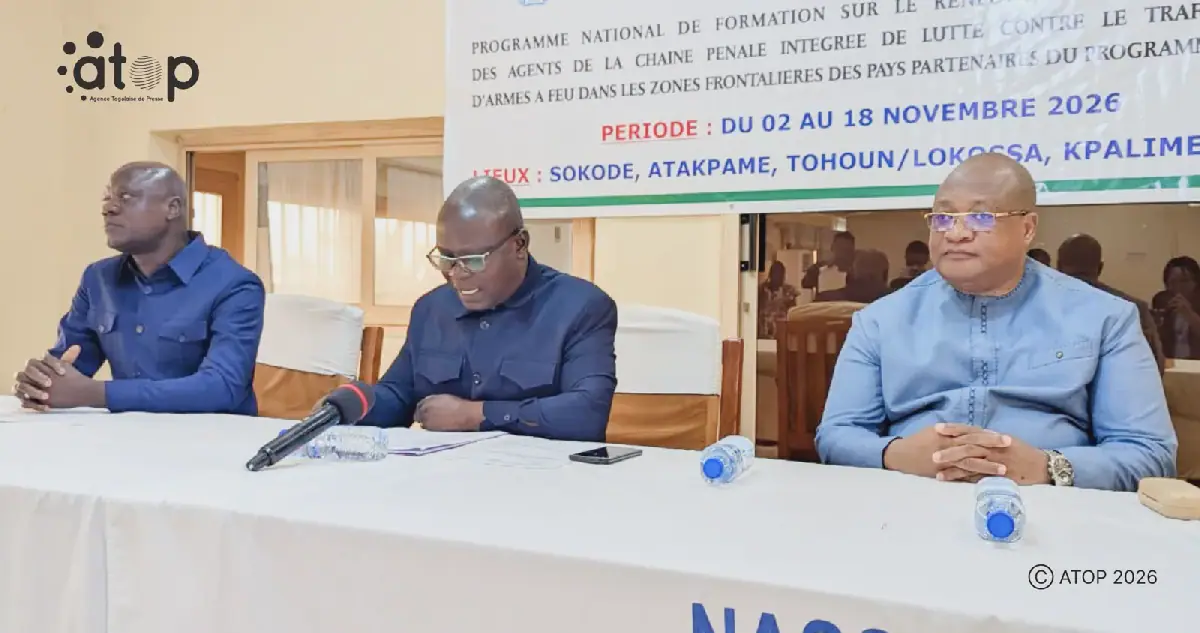
In a significant move to combat illicit trafficking of firearms, 25 actors from the integrated penal chain of Togo's Central region gathered in Sokodé for a two-day workshop. The event, held on November 11-12, aimed to strengthen their capacities in addressing this pressing issue. Organized by the National Commission for the Fight Against the Proliferation, Circulation, and Trafficking of Light and Small Arms (CNLPAL), the workshop is part of the "KAFO VI" program. This program focuses on enhancing the penal chain in border areas of partner countries.
The workshop received technical and financial support from the United Nations Office on Drugs and Crime. Its primary goal was to enhance the technical and operational capacities of the concerned actors. This will enable them to effectively control, detect, trace, investigate, and prosecute offenses related to firearms trafficking. The training also covered judicial processing of terrorism-related cases. Participants were equipped with techniques for controlling, detecting, tracing, investigating, and prosecuting these offenses.
The workshop provided a platform for improving inter-agency cooperation at border areas. Dr. Tohouleba Pia-Abalo, Secretary General of the Governor's Office, emphasized that illicit firearms trafficking is a significant transborder threat. It affects several countries in the sub-region, including Togo, fueling organized crime and destabilizing economies. Dr. Tohouleba stressed that the success of the program relies on the active and proactive engagement of the actors. They must build a collective and sustainable fortress against the illicit proliferation of arms at border posts.
Paka Mazah, Coordinator of the KAFO VI program, highlighted the importance of this initiative. It aims to curb arms trafficking and enhance security in vulnerable areas of the country. With the acquired skills, agents will be able to conduct effective border searches, investigations, and prosecutions. These efforts will lead to the judgment of traffickers in court. The workshop brought together representatives from various agencies, including customs, armed forces, judicial police officers, magistrates, and penitentiary administration agents.
Sokodé is the fourth stage of this workshop in Togo, following previous sessions in Lokossa (Benin), Kpalimé, Tohoun, and Atakpamé. The program seeks to strengthen the penal chain in border areas, enhancing cooperation and response to illicit trafficking. By equipping officials with the necessary skills, the program aims to create a robust defense against arms trafficking. This will contribute to regional security and stability.
The training covered established operational procedures and techniques for detecting and tracing firearms. Participants learned about investigative methods and prosecutorial strategies for handling firearms trafficking cases. The workshop's interactive sessions fostered collaboration and knowledge sharing among the various stakeholders. This exchange will help build a cohesive approach to addressing the issue.
The enhanced capacities of the penal chain actors will contribute to improved security in Togo's Central region. The program's impact will be felt in the region's border areas, where the threat of illicit firearms trafficking is most pronounced. By building a strong and coordinated response, Togo is taking a significant step towards mitigating this threat. The program's success will depend on the continued engagement and cooperation of the various stakeholders involved.
Key points
- The workshop aimed to enhance the technical and operational capacities of 25 actors from Togo's integrated penal chain.
- The program focuses on strengthening the penal chain in border areas of partner countries.
- The training covered techniques for controlling, detecting, tracing, investigating, and prosecuting offenses related to firearms trafficking.