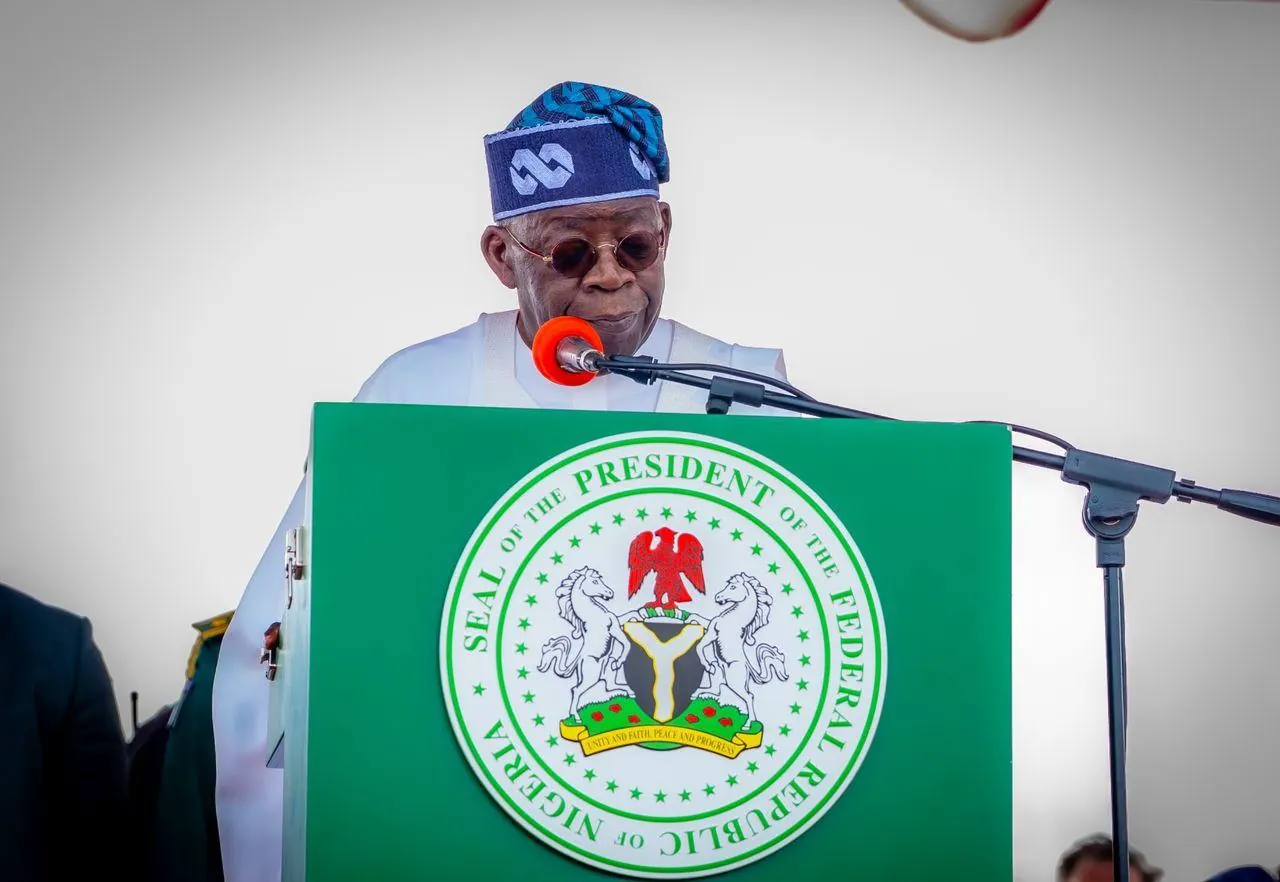
President Bola Tinubu has announced that his administration will prioritize jobs, enterprise, and industrial growth as Nigeria enters a new phase of economic policy. In his Independence Day address to the nation, Mr. Tinubu emphasized the need to convert Nigeria's large young population into an engine of production rather than a source of economic hardship. He stated that prosperity requires more than just cheaper goods, but productive work. Nigeria's youthful population, with millions entering adulthood every year with talent, energy, and ambition, presents a great demographic strength that must be harnessed.
The president's statement follows economic reforms introduced by his administration since 2023, including the removal of the petrol subsidy, exchange-rate reforms, tighter monetary and fiscal measures, and changes aimed at improving government revenue and investment. These reforms mark a shift from economic reforms to what Mr. Tinubu described as an "age of prosperity." The government plans to support businesses, revive industries, expand digital connectivity, and invest in skills employers need. This includes using Nigeria's gas resources to power new industries and support businesses working to revive factories in the country's industrial centers.
To achieve these goals, Mr. Tinubu said the government will use Nigeria's gas resources to power new industries and support businesses. The administration will also expand digital connectivity into communities that have waited too long to participate in the modern economy. Additionally, the government will invest in the skills employers demand and support Nigerian businesses with the infrastructure and finance they need to grow. This, according to the president, will enable more goods to be produced locally and more Nigerian companies to compete in international markets.
The president highlighted his desire to see more Nigerians making things, with more Nigerian farms feeding cities and supplying factories. He also wants to see Nigerian businesses selling Nigerian goods to the whole world, with young Nigerians building unicorns and creating opportunities for others. To facilitate this, the government will provide access to credit through the Credit Corporation, CREDICORP, allowing working Nigerians to acquire vehicles, solar systems, digital devices, and other essential assets without having to accumulate years of savings.
Mr. Tinubu emphasized that access to credit is a crucial component of the government's strategy to expand economic participation. The administration will continue to support businesses through infrastructure and finance, ensuring that access to capital is an important part of the new prosperity agenda. The president linked private-sector expansion to job creation and increased domestic production, saying the government's responsibility is to create conditions for Nigerian businesses to expand.
Despite acknowledging that millions of Nigerians still struggle to meet basic needs, Mr. Tinubu expressed optimism about the future. He attributed the difficulties to decades of low productivity, inadequate infrastructure, insufficient opportunity, and weak institutions. The president promised continued support for vulnerable households and stated that the government's long-term objective is not simply to expand social assistance but to build an economy capable of creating productive opportunities and lifting people out of poverty.
Mr. Tinubu concluded by stating that Nigeria has laid the foundation for lasting prosperity and called on Nigerians and businesses to participate in the next phase of economic development. He expressed confidence that with discipline and sustained growth, the country can create millions of productive opportunities across the nation. The president's message marks a new era of economic policy, shifting from reforms to prosperity.
Key points
- President Bola Tinubu outlines a new economic policy focusing on jobs, enterprise, and industrial growth.
- The government plans to support businesses, revive industries, and expand digital connectivity.
- Access to credit will be a crucial component of the government's strategy to expand economic participation.