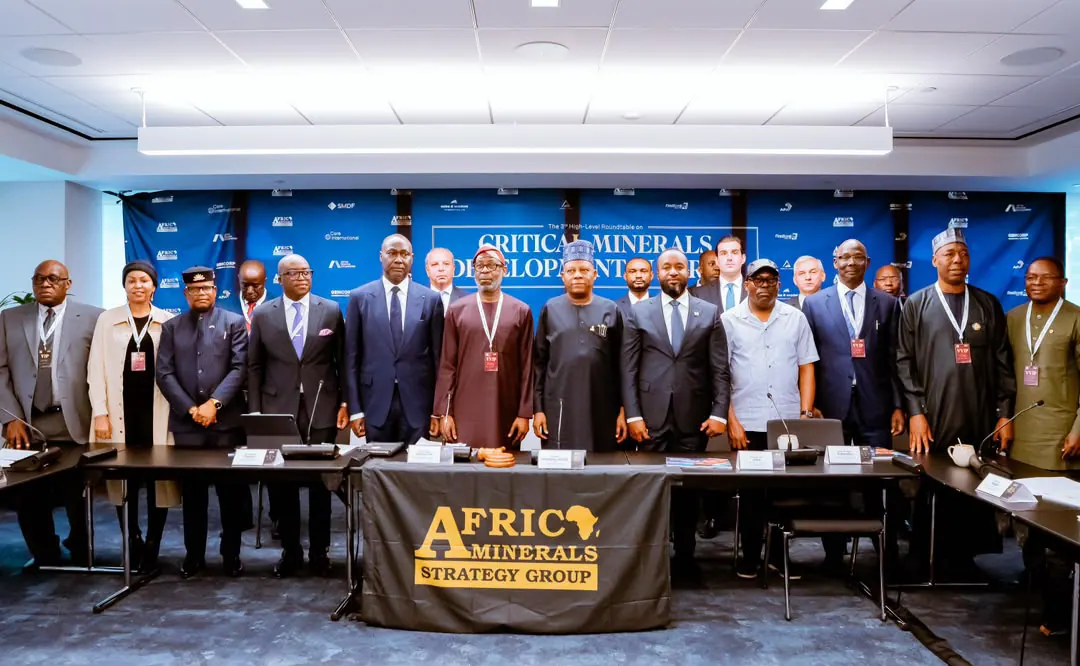
President Bola Tinubu has urged African countries to adopt a unified approach to manage their critical mineral resources effectively. Speaking at the third Africa Minerals Strategy Group High-Level Roundtable in New York, Tinubu emphasized the need for a coordinated strategy to keep more of the wealth generated by the continent's resources in Africa. He argued that the current model, where Africa exports raw materials and imports finished products at higher prices, is disadvantageous to the continent.
Tinubu, represented by Vice-President Kashim Shettima, made the call on Monday in New York at the third Africa Minerals Strategy Group (AMSG) High-Level Roundtable on Critical Minerals Development in Africa. The roundtable focused on moving Africa from the extraction and export of raw resources to processing, manufacturing, and value addition. The theme was "From Resources to Wealth: Continental Cooperation for Mineral Value Addition, Data Sovereignty, Innovative Financing and Critical Minerals Security."
The President said Africa's mineral-rich communities must begin to see tangible benefits from the resources extracted from their lands, including jobs, infrastructure, technology transfer, industrial development, and opportunities for African businesses. He identified processing, refining, battery production, component manufacturing, African technologies, and competitive skills as essential components of the transition. Tinubu also showcased Nigeria's mining-sector reforms, citing a sharp rise in mining revenue and new lithium-processing investments.
Tinubu warned that the existing model leaves Africa at a disadvantage because the continent exports raw materials and subsequently imports finished products at significantly higher prices. He called for an aggressive alliance among African countries to ensure that critical minerals are processed and transformed within the continent before being integrated into global supply chains. This approach, he argued, would give African markets scale, industries integration, financing reach, and negotiations authority.
The President emphasized that the measure of mineral wealth should not be the volume extracted or the revenue collected alone, but the extent to which mining improves the lives of citizens. He said jobs, industries, infrastructure, technology transfer, African enterprise participation, and prosperity retained across generations should determine whether Africa is successfully converting its resources into wealth. The United Nations has similarly warned that Africa risks repeating the long-standing pattern of exporting raw materials while receiving a disproportionately small share of the wealth generated from them.
Tinubu warned against fragmented negotiations among African countries, which could diminish the continent's collective negotiating strength. Rather than compete against one another for mining investments, he urged African countries to integrate their markets, mobilise African capital, and coordinate their positions when negotiating with external partners. This approach, he argued, would enable Africa to simultaneously strengthen its own industrial base and contribute to global prosperity, the energy transition, and secure international partnerships.
The Nigerian leader maintained that Africa could no longer claim to be wealthy while its mineral-rich communities remained poor and its raw materials continued to fuel industrial growth elsewhere. He declared that the future being fashioned from African minerals must have room for African ambition. The President's call for a continental strategy has been seen as a crucial step towards ensuring that Africa benefits from its natural resources and achieves sustainable economic growth.
Key points
- President Bola Tinubu calls for a continental strategy to end raw mineral exports and retain more wealth generated by Africa's resources.
- Tinubu urges African countries to integrate their markets, mobilise African capital, and coordinate their positions when negotiating with external partners.
- The President emphasizes that the measure of mineral wealth should be the extent to which mining improves the lives of citizens, not just the volume extracted or revenue collected.