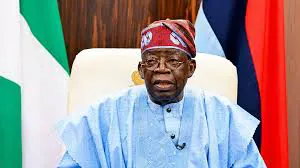
President Bola Ahmed Tinubu has declared that Nigeria's economic priorities have shifted from correcting the country's economic course to achieving "shared and widespread prosperity." In a nationwide address on Thursday to mark Nigeria's 66th Independence Anniversary, Tinubu stated that the country has reached a turning point. He emphasized that the emergency treatment is over, and the foundation has been repaired, leading to a change in the central economic task before the nation.
According to Tinubu, for three years, the overriding purpose was to correct the nation's course. However, the government's new objective is "simple: shared and widespread prosperity." He stressed that prosperity should not be measured only through the size of the economy or statistical indicators but by improvements in the everyday lives of Nigerians. This vision of prosperity encompasses personal aspects, moving beyond abstract numbers or better statistics.
Tinubu described his vision of a Nigeria where farmers can work safely and earn decent returns, factories have reliable electricity, businesses can access credit, and young people can secure productive employment. He envisions a country where food and transportation are affordable, education is accessible, and families can face the future with confidence. This, he emphasized, is the promise that must now be fulfilled.
The President identified reducing the cost of living as a priority of the next phase of his administration. He stated that the government will achieve this by lowering the cost of producing and moving the things Nigerians consume. This approach aims to make essential goods and services more affordable for the general population.
Tinubu noted that Nigeria has the resources and population needed to achieve greater food self-sufficiency. His government will focus on expanding agricultural production and infrastructure to ensure a more stable food supply. This includes expanding mechanized irrigation and dry-season farming, improving access to seeds and fertilizer, and investing in storage and transportation.
The government is also developing transport infrastructure to improve connections between farms, factories, and markets. Tinubu mentioned that they are building and completing the roads, railways, and ports that connect farms and factories to markets. This development aims to reduce production and distribution costs, ultimately helping to lower prices paid by consumers.
According to Tinubu, reducing production and distribution costs will lead to lower prices in the market. He explained that when a farmer produces more cheaply, when fewer crops are lost between the farm and the market, when a manufacturer spends less on electricity, and when the business environment fosters fair competition, all those savings will ultimately find their way into the price of goods in the market.
Key points
- President Tinubu shifts Nigeria's economic focus to achieving shared and widespread prosperity.
- The government aims to reduce the cost of living by lowering production and distribution costs.
- Nigeria is working to achieve greater food self-sufficiency by expanding agricultural production and infrastructure.