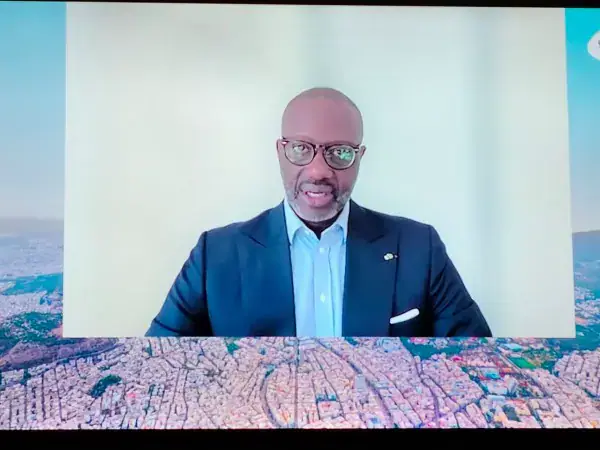
Tidjane Thiam, the president of the PDCI-RDA and former Ivoirian minister, has spoken out against what he describes as unrelenting and inexplicable attacks against him. In an interview with a private television channel in New York, Thiam discussed his views on Africa's economic prospects, highlighting the need for education, long-term investment, and mobilization of local savings to drive development. He emphasized that Africa has the necessary resources to play a significant role in the global economy but must transform its potential into sustainable wealth.
Thiam stressed the importance of changing the narrative about Africa, which he believes is often misrepresented in international decision-making circles. He pointed out that the continent's vast territory, rich natural resources, and significant demographic weight make it a crucial player in the 21st century. The former minister cited the growing trade relations between China and Africa, which reached $348 billion in 2025, compared to $414 billion between China and the United States during the same period.
The former Crédit Suisse and Prudential executive advocated for a shift away from economic models that rely heavily on raw material extraction. He suggested that African countries should invest in large international companies that process and market their products, citing the example of Côte d'Ivoire and Ghana investing in companies like Nestlé, Mars, or Hershey. This approach, he argued, would help reduce the impact of international price fluctuations and capture a larger share of the value created downstream from production.
Thiam emphasized the importance of education, particularly for women, in driving demographic change and economic development. He noted that access to education for women directly contributes to controlling population growth and improving development conditions. The former minister also highlighted the need for African countries to develop sovereign wealth funds and long-term savings mechanisms to ensure that revenue from natural resources is reinvested in assets that generate sustainable income.
Thiam praised the creation of a sovereign wealth fund in Côte d'Ivoire, an idea he claimed to have advocated for in his economic program. Drawing on his experience at Prudential, he explained how life insurance and pension funds can contribute to financing economies. He cited successful experiments in Vietnam and Indonesia, where extensive networks of agents collected savings from populations and reinvested them in local infrastructure, health, and investment projects.
The PDCI-RDA president also criticized economic systems in which rent-seeking and corruption hinder entrepreneurs from fully developing their activities. He called for an end to the phenomenon of "fonctionnaires milliardaires" (billionaire civil servants) and instead advocated for the emergence of "entrepreneurs milliardaires" (billionaire entrepreneurs). Thiam urged African leaders to adopt a long-term vision and planning approach, citing the example of Japan's transformation in the late 19th century.
Thiam concluded by emphasizing the need for African countries to invest in human capital and develop private financial institutions to mobilize domestic resources and finance development. He cited Guinea, Morocco, and Niger as examples of countries that have established sovereign wealth funds at different stages of development, but stressed that these initiatives must be amplified to have a significant impact on the continent.
Key points
- Tidjane Thiam criticizes unrelenting attacks against him and emphasizes education and investment in Africa's development.