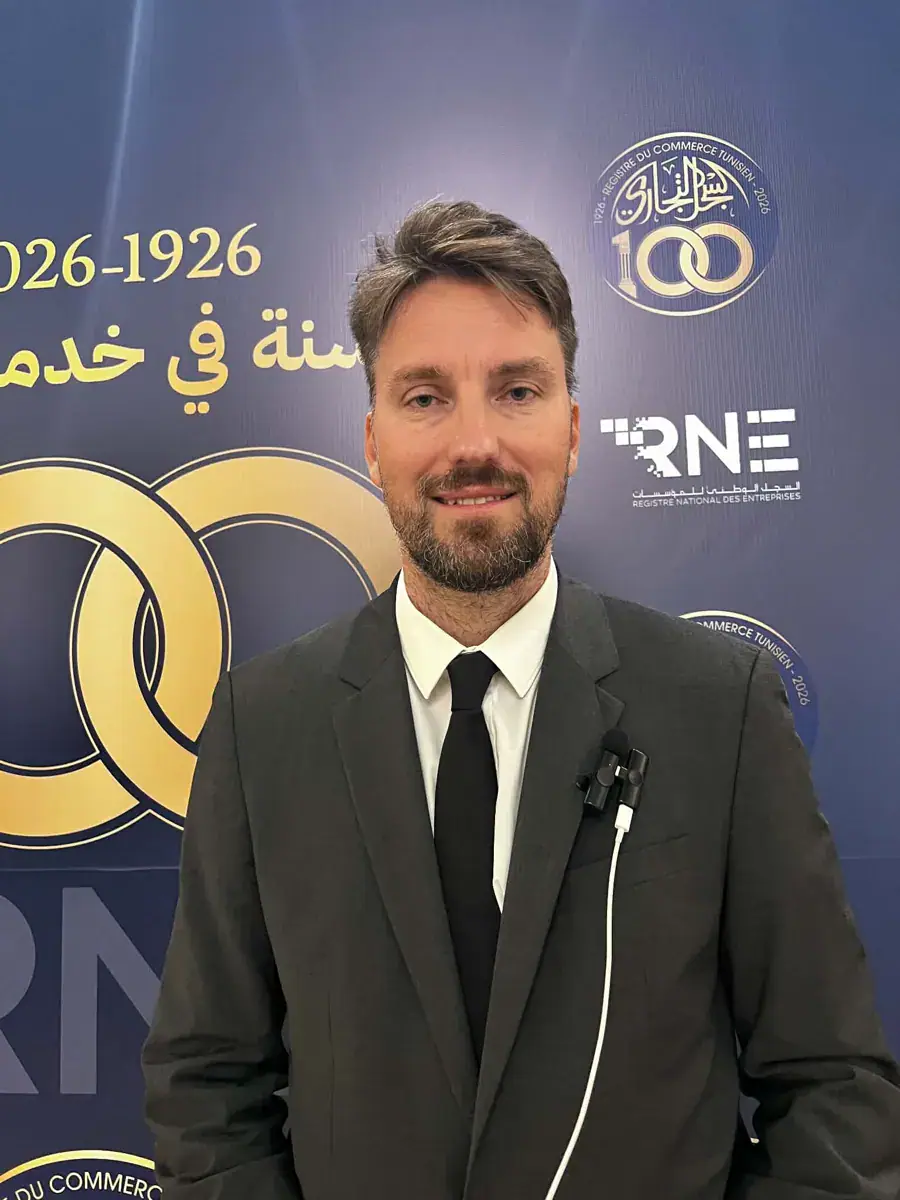
On the occasion of the 100th anniversary of the National Register of Enterprises (RNE), Thomas Denfer, president of the Francophone Alliance of Commercial Registers, commended the Tunisian institution's significant digital transformation during a colloquium held in Tunis. Denfer emphasized that the emergence of common standards within the Francophone space could enhance the reliability of registers, facilitate information exchange, and better protect the economy against money laundering risks.
Denfer posed a central question at the colloquium: "Are we moving towards a Francophone model of legal forms?" He noted that the international scene is gradually witnessing the emergence of common standards for company registration. The Francophone Alliance has analyzed around 15 different commercial registers and observed the appearance of a common model based on readability, interoperability, and data digitization.
According to Denfer, a readable, interoperable, and digitized system enables companies to officially exist on the Francophone scene. Such a system also facilitates information exchange between register holders, strengthens the fight against money laundering, and allows for harmonized digital services. The Francophone Alliance of Commercial Registers, created four years ago, brings together around 20 member countries and works to share experiences and expertise to modernize registers and improve the legal security of companies.
Denfer expressed his congratulations to the current and past teams of the RNE on its 100th anniversary, highlighting the considerable work done to preserve, digitize, and make the history of Tunisian companies accessible. He praised the genuine digitalization effort over the past decade, with an exponential acceleration in recent years, and commended RNE's Director General, Adel Chouari, for taking into account the institution's history.
Denfer emphasized that the commercial register is a vital pillar of economic development, not only in Tunisia but also in Francophone countries and worldwide. He described it as a foundation of trust, enabling entrepreneurs to operate with confidence and promoting a healthier economy. A reliable register, according to Denfer, allows entrepreneurs to trust each other, thereby enhancing entrepreneurship.
The Francophone Alliance's efforts aim to establish common standards and best practices for commercial registers, ultimately contributing to a more secure and transparent business environment. By promoting digitalization and interoperability, the alliance seeks to facilitate cross-border transactions and foster economic growth.
In conclusion, Denfer stressed the significance of a reliable register in promoting entrepreneurship and economic development. He expressed his admiration for Tunisia's progress in digitalizing its National Register of Enterprises, highlighting its potential to become a model for other countries in the region.
Key points
- A reliable commercial register is essential for promoting entrepreneurship and economic development.
- The Francophone Alliance of Commercial Registers aims to establish common standards for commercial registers to enhance reliability and interoperability.
- Tunisia's digital transformation of its National Register of Enterprises serves as a model for other countries in the region.